Baby Talking Stages When to Expect The First Words
Pexels

Written by Mindsmaking Medical Writer

Fact Checked by Mindsmaking Professionals
2nd, February, 2026
From babbles to “mama” and “dada”, every sound counts! Explore your baby’s speech journey, the milestones to expect, myths to forget, and when it might be time to check in.
There’s nothing sweeter than hearing your baby’s first “mama” or “dada.” One moment it’s all coos and cries, and the next, your little one is talking back, a tiny reward for every sleepless night. Every baby finds their voice at their own pace. Some start babbling early, others wait until they have more to say, and both are perfectly normal. Here’s a simple guide to what to expect, how speech develops, and when to seek a little extra help if needed.
Key Takeaways
The baby talking stage begins before babies ever say their first words. Baby coos, babble, giggle, and squeal are part of speech milestones babies go through before they form their first words.
From birth to when a child turns five years old, they move from cooing to babbling, mimicking, to first words, and conversation. Parents play a role through talking, reading, naming, and responding to nurture communication development at every age.
Many factors influence speech development milestones, such as genetics, environment, hearing, daily interactions, personality, bilingual exposure, and even family dynamics. They shape the pace of language milestones in children.
There are plenty of myths and misinformation around baby talking stages, such as boys talk later than girls, screens teach speech, bilingual homes delay speech, baby talk delays speech, teething delays speech, and no speech means something is wrong.
Parents can be concerned if their child isn't babbling by 9 months, says no first words by 15–18 months, can't follow simple instructions after 18 months, says few or unclear words by age 2, doesn't respond to their name, and doesn't remember words.
How Babies Learn to Talk
Long before that first adorable “mama” or “dada,” your baby is already learning the art of communication. It starts quietly in those soft coos, gummy smiles, and giggles that melt your heart. Even before they’re born, babies can recognize familiar voices, and by the time they’re in your arms, they’ve been listening to your tone and rhythm for months.
Every sound they make from the early coos to the cheerful “ba-ba-ba” babbles is a little experiment in speech. They’re testing how their mouth moves, how sound feels, and how quickly those noises get your attention. And let’s be honest, who doesn’t come running when they hear an excited “baaaa!” from the nursery? Those moments aren’t just cute, they’re practice runs for real conversation.
Babies learn to talk through listening, watching, and copying. They study how your lips move, the way your voice rises and falls, and they try to mimic you in their own way. When you talk to them during everyday moments, “Let’s put on your socks” or “Time for milk” you’re doing more than chatting. You’re building their understanding of language. The real magic happens in the back-and-forth when you answer a coo with a smile or respond to a squeal with words. That’s where connection happens, and where communication truly begins.
Baby Speech Development Timeline and How to Help
There’s a possibility that each baby’s talking stage journey would be different. Here’s what typically happens at each age and how you can help your little one along the way:
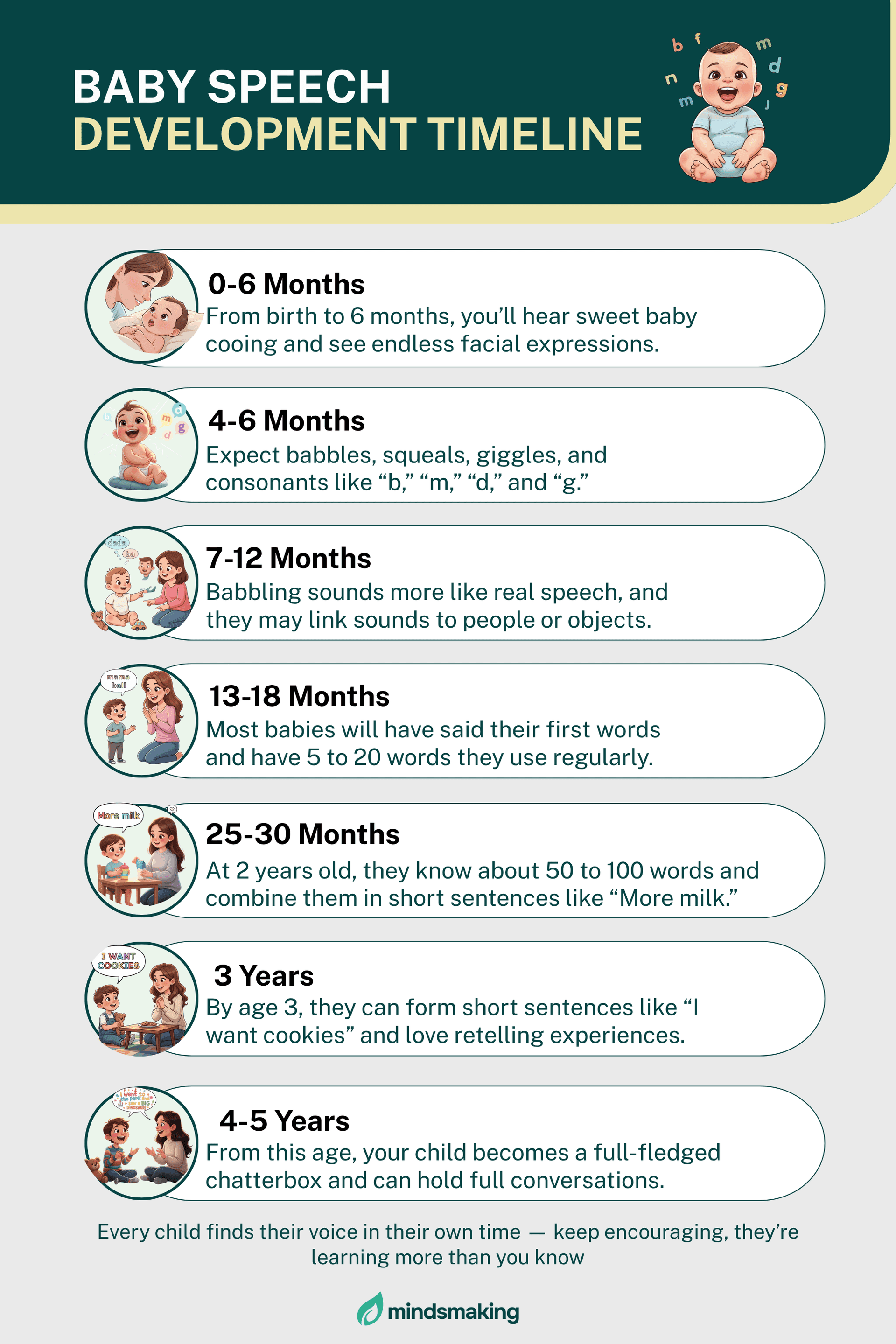
0 - 6 Months
From birth to 6 months, your baby might not be saying words yet, but trust me, they’re communicating a lot. In these early speech milestones, you’ll hear sweet baby cooing and see endless facial expressions. Babies at this stage learn rhythm and tone through your voice and would even try to make some sounds you make. When you smile and talk, they’re soaking in the sounds long before they can understand words.
How to Help: Talk, sing, and narrate things to them. Describe what you’re doing: “Mommy’s making breakfast!”. Repeat their coos back as this teaches them that sounds are meaningful. Maintaining eye contact strengthens emotion, and even reading baby books to them gives them a feel for speech patterns and sounds.
4 - 6 Months
Around this age range, your baby might start experimenting with new sounds. Expect squeals, giggles, and consonants like “b,” “m,” “d”, and “g.” These babbling stages are your baby’s way of saying, “Listen to me!”. They’ll also begin to respond to your voice, make happy sounds when you smile, and have questioning looks when your voice changes.
How to Help: Encourage those precious “talking” moments by treating every babble like it matters because it does. Imitate their sounds, exaggerate facial expressions, and use words you hope will be their first, like “mama” or “dada.” Every playful interaction helps build their language skills
7 -12 Months
At this stage, things could get more exciting as babbling starts sounding more like real speech. Babies could link sounds to people or objects, like saying “mama” when they see you. They understand simple words like “no,” “bye,” or “milk” and even respond to their name. These are huge speech development milestones that show that the bridge between sound and meaning is forming in their head.
How to Help: When talking to your child, you can label everything, like saying, “Here’s your cup,” or “That’s your teddy.” Keep your sentences short and clear, read interactive books to them, use gestures like waving, and celebrate every attempt at speech with enthusiasm.
13 - 18 Months
Cue the applause, as at this stage, most babies would have said their first words! You’ll start hearing first words often like “mama,” “dada,” “no,” and “uh-oh”, and may have 5 to 20 words they use regularly. They will begin to imitate speech rhythms and understand simple instructions like “come here.” Speech progression will also accelerate at this stage, and your baby’s chatter starts resembling true communication.
How to Help: Talk slowly and clearly to your child and repeat new words often. Name emotions and actions to them, like “You’re happy!” or “We’re walking!” This is because toddlers learn best through repetition and everyday experiences. Avoid correcting and instead, model the correct version gently, for example, “Yes, that’s a dog!”.
25 - 30 Months
Around age two, most children know about 50 to 100 words and start combining them in sentences like “More milk,” or “Mommy go”. These short phrases mark massive language development progress as they begin using pronouns and exploring cause-and-effect words like “because.”
How to Help: When they speak, expand on what they say. If your toddler says, “Car go,” you can reply, “Yes, the car is going fast!” as this encourages richer communication development. Read to your child daily, ask open-ended questions like “What do you see?”, completely avoid baby talk, and encourage your child to use their words to express feelings and needs.
3 Years
Most three-year-olds are little narrators in the making. They can form short sentences like “I want cookies” and love retelling experiences. You’ll hear a mix of clear and fuzzy words, but even strangers can usually understand about 75% of what they say. Their speech progression reflects complex language milestones, like understanding prepositions such as “in” or “on” and plurals like “dogs” or “cats”.
How to Help: Engage in conversations and ask questions that invite detail, such as, “What happened at the park?” Model good grammar to your child and sing songs, because rhythm boosts memory and word retention. Also, read rhyming books as they are good for speech development milestones.
4 - 5 Years
From 4 to 5 years of age, your child is a full-fledged chatterbox. They can hold full conversations, tell stories with beginnings and endings, and use longer sentences with confidence. They understand humor, ask questions nonstop, and experiment with complex words, making their speech resemble mini versions of adult language patterns.
How to Help: Encourage storytelling and imagination by asking your child to make up stories or describe pictures. Play word games, sing songs, and read aloud to them daily. Correct gently through modeling, not criticism, and keep screen time minimal, as real conversation is what fuels strong language development.
What Affects When Babies Start Talking?
The truth is that there’s no stopwatch for baby talking stages. One baby may serenade the entire family with babbles or words like “mama” at 9 months, while another waits until 18 months to even say a word, and both can turn out to be excellent communicators later on. The timeline of speech development milestones is influenced by several fascinating factors that go far beyond just practice. Factors such as:
Genetics and Family Speech Patterns
If everyone in your family were an early chatterbox, your baby might follow suit. Genetics can influence speech progression, vocabulary, and even how easily a child picks up new sounds. Some families are naturally talkative, especially with dinner-table debates, while others are quieter, and babies from such families will reflect that rhythm. Don’t worry if your baby isn’t copying Aunt Sara’s toddler’s chatter; it’s not a competition, it’s biology doing its thing.
Exposure to Language
Babies learn language through exposure and immersion. The more they hear, the more they learn. Talking, reading, and singing to a baby are like the brain's workout for communication development. Imagine your baby’s brain lighting up every time you describe your morning coffee or sing a lullaby; it’s building neural pathways for language development. Children exposed to a rich variety of words daily tend to have stronger vocabularies and reach speech milestones faster.
Hearing Ability and Health
Healthy ears make happy talkers, as babies rely on hearing to imitate and learn sounds. Frequent ear infections or undiagnosed hearing loss can delay speech development in children. If your baby doesn’t react to noises or turns their head inconsistently toward sound, it’s worth checking with a pediatrician. Sometimes, a simple hearing test can make all the difference in supporting language development.
Environment and Interaction
The environment a child thrives in plays a bigger role than most parents realize. Babies thrive on interaction and not just words, and when a home is filled with laughter, reading, and music, it's a fertile ground for speech progression. On the other hand, too much background noise, like constant TV or tablet screen time, can drown out meaningful conversations and speech patterns, leading to speech delay. Real conversations with eye contact, pauses, and tone are where the magic of speech development happens.
Personality and Temperament
Let’s not forget personality! Some babies are naturally observant, content to watch their surroundings, absorb what’s going on, and then suddenly start talking one day. While others are outgoing chatterboxes from day one. No style is better than the other; it’s simply different routes on the same journey of language development.
Bilingual Homes
Contrary to old myths, growing up in a bilingual household doesn’t delay speech. It might just be that your baby mixes words, but that’s a sign of linguistic brilliance, not confusion. With time and consistency on your end, they’ll get it right as they’re building two or more vocabularies at once.
Read This Next
No posts available
Myths About Baby Talking
You probably hear a lot of conflicting advice about your baby, and it can be confusing or even alarming. So let’s bust some of the most common myths about baby talking stages because it’s easy to get lost in the noise. And the truth is that most of these claims are about as reliable as a toddler’s promise not to do something again. Here are some common myths:
Boys Talk Later Than Girls
This is one myth that refuses to die because most new moms hear it all the time! While some studies show tiny differences in speech milestones, they’re not enough to crown girls as the top talkers in the baby talking stage. Every baby, either a boy or a girl, has its own language development rhythm, and what really matters is how often they’re spoken to, engaged with, and encouraged to express themselves. With time, they’ll start talking.
Watching Educational Videos Helps Speech
Sorry to break it this way, but screen time doesn’t teach speech, YOU do. Instead, excessive screens without human conversations will cause speech delay. Real human interaction is the secret ingredient in communication development. Even the so-called “educational” shows can’t replace the magic of eye contact, facial expressions, and back-and-forth conversation. If your baby is going to babble at a screen, make sure it’s yours, not a cartoon’s.
Bilingual Homes Cause Delays
This isn't true. Being exposed to two or more languages doesn’t slow down speech progression in children; it enriches it! Bilingual babies might mix words early on, like “bye-adiós!”, but they’re building mental flexibility and stronger language milestones for later. In fact, bilingualism strengthens memory and problem-solving skills.
Teething Causes Speech Delay
Teething may make babies grumpy, but it doesn’t block baby talking stages. Those swollen gums might make them less eager to babble for a few days, but the moment they’re comfortable, they’ll be back to their normal chatty selves.
Baby Talk Is Bad
The idea that baby talk is bad couldn’t be further from the truth. That singsong voice you naturally use the one that’s higher, slower, melodic, and full of silly faces is actually perfect for helping your baby learn to talk. Babies love it because it makes sounds easier to hear, words easier to understand, and even helps them pick up the emotions behind what you’re saying. Every time you stretch out a “Hiiii baby! Who’s a gooood baby?” or giggle with them while talking, you’re not just being playful, you’re teaching them language without even realizing it. The only thing to watch out for is after about a year old, when it’s important to model words correctly instead of keeping mispronunciations. Until then, go ahead and coo, sing, and exaggerate your baby is learning and loving every second of it.
Speech Delay Means Something’s Wrong
A later talker doesn’t automatically mean developmental problems, as some kids simply focus on walking, climbing, or exploring before speech takes the center stage. While it’s good to stay aware of late talker signs, remember that variation is normal, but if your gut says to check, you can talk to your pediatrician for an assessment.
When to Be Concerned About Speech Delay
It’s completely normal to wonder if your baby’s quiet phase means something more. Every child develops speech at their own pace, but there are a few signs that might mean your little one could use a bit of extra support. The goal isn’t to panic, it’s to notice these patterns early so your baby can thrive. Here are some signs to watch for:
No Babbling by 9 Months
By 9 months, most babies are usually experimenting with babbling sounds like “ba-ba” or “da-da.” If a baby hasn’t started making these sounds, it could suggest a hearing issue or a slower speech progression. Sometimes, they’re simply focused on motor skills instead of sound. However, it’s worth keeping an eye on. You can mention it to your pediatrician, as early intervention works wonders. A quick check of hearing and oral development can make all the difference in supporting communication development.
No First Words by 15 - 18 Months
By 15 to 18 months, most toddlers have said their first words like “mama,” “dada,” or “no.” If a child hasn’t yet, they might be a late talker, which is fairly common. However, consistent silence or no attempt to imitate sounds might need assessment. You can keep enriching your baby’s world with talking, singing, and naming things. But if there’s no progress by 18 months, a visit to a speech-language pathologist can offer reassurance or helpful strategies.
Difficulty Following Simple Instructions After 18 Months
By 18 months, a toddler should understand simple directions like “come here” or “give me the toy.” Trouble following them could suggest a delay in language development or comprehension rather than just expression. You can start by reducing the distractions and making sure your child’s hearing is tested. Understanding words is important for speech development, and difficulties here can often be gently corrected with guided practice and support.
Few or Unclear Words by Age 2
Two-year-olds typically use around 50 words and combine them into simple phrases like “more milk”. If a child says a few words or phrases that are hard to understand, they might need help refining language development. You can encourage plenty of conversation and limit screen time. Ask them questions, read interactive books, and celebrate little attempts at speech. If clarity or vocabulary isn’t improving, seek advice from a pediatrician or therapist specializing in speech progression.
Loss of Previously Learned Words or Skills
If a baby once said “mama” or “bye-bye” and suddenly stops using those words, it’s worth taking note of as regression in speech progression can sometimes indicate a hearing change, a developmental shift, or a condition affecting communication development. Babies naturally cycle through phases, but a consistent loss of vocabulary should be discussed with a pediatrician.
No Response to Name or Sounds
If a baby doesn’t turn toward you when you call their name or react to everyday noises like a doorbell or music, it might point to a hearing issue or a delay in language development. Since listening is the foundation of all speech milestones, early hearing check-ups are important. Sometimes, frequent ear infections can muffle sound and make it harder for babies to pick up on speech patterns.
Limited Use of Gestures
Pointing, waving, and nodding are not just cute; babies use these gestures to communicate before words fully arrive. A lack of gestures after 12 months may signal a challenge with communication development or social engagement. Gestures show your baby understands meaning and wants to connect, even before their vocabulary grows.
Frustration or Tantrums Related to Not Being Understood
If a toddler frequently has a meltdown or throws a tantrum when trying to express themselves, it might be more than the “terrible twos”; they could be struggling with trying to express themselves or word recall. Imagine wanting to say “milk” but not having the word yet, frustrating, right? This emotional reaction often motivates toddlers to communicate, but prolonged difficulty may indicate a need for speech progression support.
A Word From Mindsmaking
A baby’s talking stage is a journey and not a race with other children. Every baby finds their voice in their own unique way, shaped by readiness, curiosity, and countless everyday moments of connection. So, celebrate every new sound, gesture, and word your baby makes as each “da-da,” “bye-bye,” and high-pitched squeal is a sign of growing confidence from understanding language.
Your encouragement, smiles, and conversations will boost their progress far more than any milestone chart ever can. Remember, your baby is learning to communicate in their own perfect time. Whether the words come early or later, what truly matters is that they feel heard, supported, and loved along the way.
Was this article helpful?
How many stars are you giving this article?
Leave a comment
Your email address will not be published.