24-Month-Old Toddler Development and What to Expect

Written by Mindsmaking Medical Writer

Fact Checked by Mindsmaking Professionals
16th, December, 2025
Your toddler is now 24 months, and this marks the 2-year-old milestone. They can now speak more clearly, move more freely than before, play, and interact. Even emotional development is showing at the same time.
Just like that, your toddler is now 2 years old, and it is impossible not to pause and marvel at how much has happened in the past 24 months. From that sleepy newborn phase, your toddler is now full of energy, curiosity, and personality. They are exploring every corner of the house, climbing onto anything that moves, and insisting on doing things all by themselves, most of the time just to show you how independent they have become.
At this stage, growth is happening in every way. Physical milestones such as running, climbing, and improved coordination are becoming more obvious, while cognitive skills and language milestones are developing as they pick up new words, form short sentences, and figure out how the world works. Your toddler is also learning to handle big feelings and express themselves more clearly.
Remember that every child develops at their own pace. Some may be ahead in speech, while others take their time to explore or observe. Note that milestones are guides to your toddler's development, not deadlines. With this breakdown of 24-month-old toddler development and what to expect, you can better understand, support, and celebrate your toddler’s unique growth.
Key Takeaways
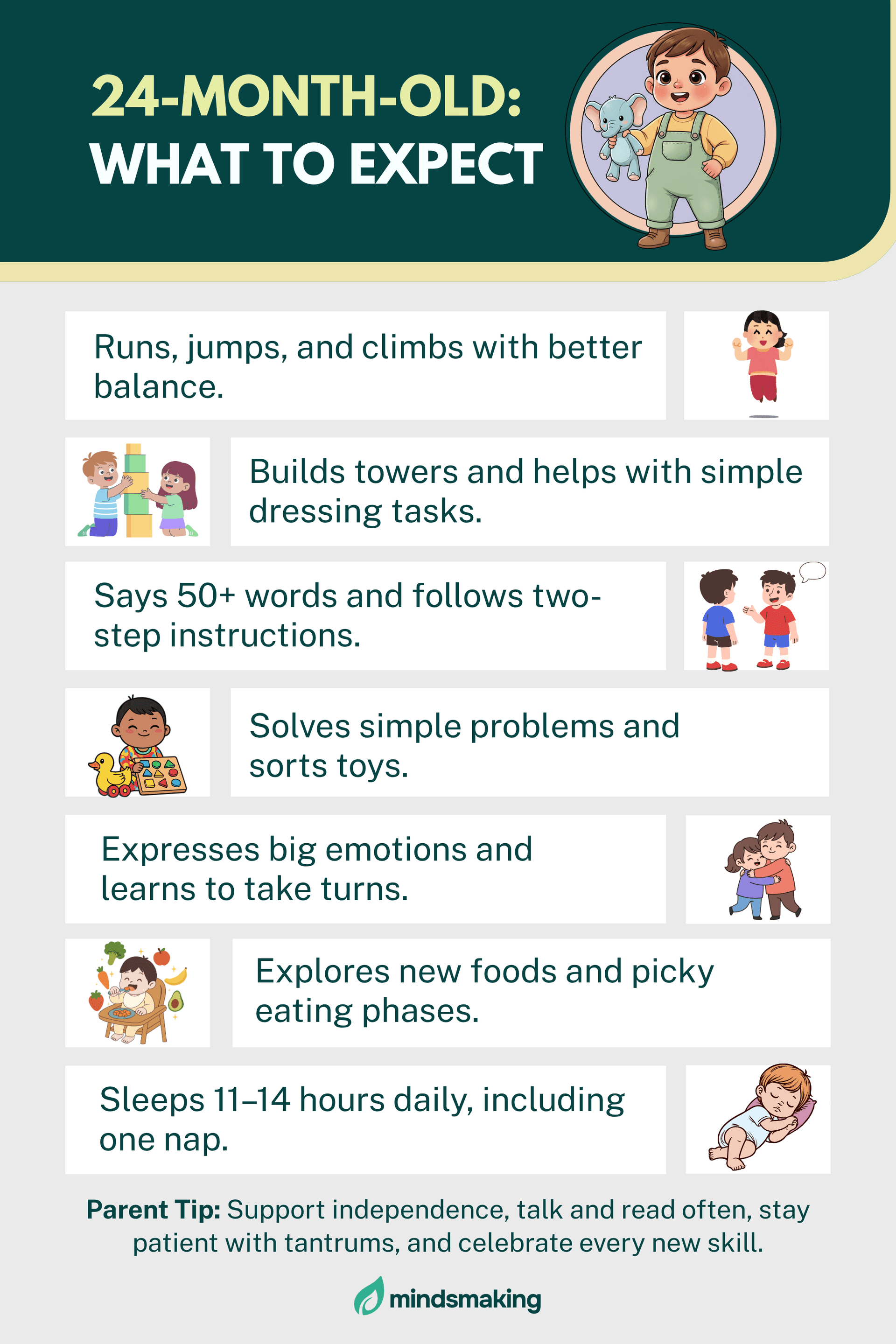
At 24 months, your toddler’s body grows stronger and more coordinated; they can run, climb, build, draw, and feed themselves, each action showing growing confidence, independence, and control.
Your toddler’s language is growing fast with more words, short sentences, and clear attempts to express needs and ideas. Each word and question shows how quickly their speech, understanding, and confidence are developing.
Your toddler is now thinking, exploring, and solving problems with curiosity and creativity; every pretend play, puzzle, and discovery shows growing memory, imagination, and understanding of how the world works.
Your toddler is learning to express emotions, show affection, and assert independence, which is a sign of growing confidence, empathy, and social awareness.
At 24 months, your toddler needs 11–14 hours of rest and a colorful mix of healthy foods, even if appetite changes from day to day.
Simple daily activities like reading, playtime, and small responsibilities help your 2-year-old grow more independent, confident, and socially aware while making learning fun.
If your 2-year-old loses skills, struggles with speech, balance, or following instructions, it is best to talk to your pediatrician for early support.
Physical and Motor Development
By 24 months, your toddler is no longer a baby who just watches the world. Their body grows stronger every day, and their motor skills develop fast. They have the energy to run, jump, climb, and explore, while their hands handle more precise tasks. Each new skill is a milestone that shows how independent and capable your toddler has become. Here is what to expect as your 24-month-old toddler is developing:
Physical and Motor Development

Running and jumping
Your toddler can run steadily across the room, weave around furniture, and chase after toys with confidence. They also take little jumps that look like bouncy hops or mini leaps. Each of these activities strengthens their legs, improves balance, and builds confidence. You may have a few heart-stopping moments when they try to jump off low furniture, but it is part of their learning and adventurous spirit.

Climbing and using stairs
Your toddler may climb onto low chairs, couches, or small play structures and walk up and down stairs while holding a railing or your hand. When they do this, it helps build strength, balance, and independence. You will often find yourself nearby, ready to offer support, and that is completely normal.

Kicking and throwing a ball
Your toddler can kick a ball forward or toss it with their hands. Accuracy is still developing, but each of these actions improves coordination, supports cognitive skills, and brings plenty of fun. Expect the ball to land in unexpected places as your child is learning to practice and play.

Building towers
Your toddler can stack four or more blocks into a tower. When the tower falls, it teaches problem-solving, hand-eye coordination, and patience. Each attempt to restack is leading them towards development.

Drawing and scribbling
Your toddler now experiments with crayons and makes circular or horizontal marks. Each of these marks builds fine motor skills, early cognitive skills, and creativity. Keep extra paper handy because some of the artwork might end up on walls or tables, and that is just part of exploring.

Helping with dressing
Your toddler may enjoy helping with simple dressing tasks such as pulling off socks, lifting shirts, or handing you items. Each of these actions shows growing independence, body awareness, and self-confidence. Praise their efforts, even if it takes longer, and they will want to do it more.

Feeding with utensils
Your toddler can use a spoon and fork with more control, even if spills happen. This practice offers them a chance to practice coordination, build confidence, and try healthy toddler meals. Let your toddler take the lead sometimes no matter how messy it gets.
Language and Communication Development
At 24 months, your toddler’s voice is quickly becoming one of your favorite sounds. They are talking more, expressing themselves in new ways, and making real attempts to hold short conversations. You will notice them trying to repeat your words, respond to your questions, and communicate what they want with surprising clarity. This is a truly exciting part of the 24-month-old toddler development and what to expect in their growing communication skills.
Vocabulary explosion: Your toddler’s word bank is expanding fast. They may now say around 50 or more words and love using them throughout the day. You will hear names of people, favorite foods, and familiar objects. Once you hear them speak, just know that this is showing you how quickly their speech and memory are improving.
Sentence formation: Your toddler is beginning to join words together to make short, simple sentences like “More juice” or “Me go.” These little sentences help them express needs and ideas clearly and mark an exciting step in their language milestones.
Following instructions: At this age, your toddler can follow simple two-step instructions, such as “Pick up the ball and bring it here.” They enjoy completing these small tasks because it gives them a sense of independence and accomplishment. It also strengthens their understanding of daily communication.
Asking questions: Your toddler’s curiosity is growing stronger every day. You may hear them asking one- or two-word questions like “Go bye-bye?” or “That mine?” These early questions show how their cognitive skills are developing as they begin to use language to explore and make sense of the world around them.
Using pronouns: You will start hearing more words like “me,” “mine,” and “I.” This new awareness of ownership and identity often comes with a few “mine” battles, which are completely normal. It is part of your toddler's signs of emotional development and shows that they are learning to see themselves as a unique individual.
Cognitive Development
Your toddler’s mind is full of curiosity and imagination at this stage. They are starting to think more deeply, explore how things work, and make sense of their surroundings. You can see it in the way they play, experiment, and copy what adults do. This shows how fast their thinking and understanding are growing during the 24-month-old milestone. Here is what to expect:
Symbolic thought: Your toddler’s pretend play is becoming more creative. They may feed a doll, talk on a toy phone, or pretend to cook just like you. These moments may look like simple play, but they help your toddler understand imagination, symbols, and how one thing can represent another.
Object permanence: By 24 months, your toddler now understands that things exist even when they can’t see them. They can find toys hidden under several layers or remember where they last saw a favorite item. This shows that their memory and thinking abilities are becoming stronger.
Problem-solving: You will notice your toddler figuring out how things work. They may turn a doorknob to open a door, push buttons to make sounds, or stack objects to reach something high. Each of these actions shows how well they understand cause and effect and how eager they are to test new ideas.
Sorting and organizing: Around 24 months, your toddler may start sorting shapes, colors, or toys into groups. You might see them separating blocks by color or matching similar objects. These are not just smart actions to laugh about with family, they show your toddler's growing attention to detail, early math skills, and better reasoning abilities.
Read This Next
No posts available
Social and Emotional Development
Your 24-month-old is becoming more expressive, social, and sure of themselves. You will notice stronger emotions, sweet moments of affection, and a growing desire to do things their own way. This stage can feel like a roller coaster, but it is also a beautiful part of your toddler’s emotional and social growth. Here is what to expect:
Independence and defiance: Your toddler now wants to do things alone, whether it is feeding, dressing, or choosing a toy. This independence often comes with the word “no,” even when they mean “yes.” It can feel challenging, but it is a healthy sign that your toddler is learning to make choices and express opinions.
Big emotions and tantrums: Mood swings are common at this age. One moment your toddler is laughing, and the next, they may be crying over something small. These tantrums often happen because they cannot yet fully express what they feel or want. Staying calm and helping them name their feelings can make a big difference.
Parallel play: Your toddler enjoys playing near other children but may not yet play directly with them. This is called parallel play, and it is an important step toward future social skills. Watching and imitating others teaches your toddler how to share, take turns, and connect.
Showing affection: You will notice your toddler becoming more loving toward familiar adults. They might give spontaneous hugs, kisses, or bring you their favorite toy. These sweet gestures show that they are forming emotional bonds and even beginning to understand empathy.
Separation anxiety: At this stage, your toddler may still feel uneasy when you leave, but it usually does not last long. Their confidence is growing, and they are learning that you always come back. Gentle goodbyes and consistent routines can help make separations easier.
Sleep and Nutrition
Your toddler’s body is growing quickly, and both sleep and nutrition play a big role in keeping that growth steady and healthy. Around 24 months, most toddlers need about 11 to 14 hours of sleep in a full day, including one afternoon nap. A consistent bedtime routine like reading a story, taking a warm bath, or enjoying quiet cuddle time helps them wind down easily. You might still face bedtime resistance, but that is normal as your toddler learns independence and adjusts to predictable sleep habits.
When it comes to food, your toddler needs a balanced diet with a mix of fruits, vegetables, grains, proteins, and dairy. Small, colorful portions work best, especially when mealtime feels fun and pressure-free. They may not always eat much, but repeated exposure to different foods builds healthy eating habits over time. You are not just feeding their body; you are teaching lifelong nutrition skills.
Picky eating and appetite changes are completely normal during the 24-month-old toddler development stage. Growth slows slightly after age two, so your child may eat less or change their food preferences from one day to the next. Avoid turning meals into a battle and keep offering healthy toddler meals. Trust their appetite, and remember that over time, they will get the nutrients they need from the variety you provide.
Tips for Supporting Your 2-Year-Old’s Development
To support your baby’s development at 24 months, focus on activities that build independence, language, and social skills while keeping things fun and stress-free. With a little patience and the right support, you can help them achieve greater milestones.
- To handle tantrums, stay calm and set consistent boundaries. Offer small choices to give your toddler a sense of control.
- To encourage language, repeat and expand on their words. Read books, sing songs, and talk often to build vocabulary.
- To promote independence, let your toddler help with simple tasks like putting away toys or feeding themselves.
- To support social skills, arrange short playtimes with other children to help them learn sharing and taking turns.
- To start potty training, watch for signs of readiness like staying dry or showing interest in the toilet. Go slow and avoid pressure.
When to Talk to Your Pediatrician
Every child develops at their own pace, but sometimes certain signs can hint that your toddler may need extra support. At 24 months, you know your child best and if something feels unusual about their progress, you will feel it. Talking to your pediatrician early can help identify what is going on and ensure your little one gets the help they need to keep growing confidently.
- If your toddler does not use short two-word phrases like “more milk” or “mummy come,” it may be a sign of delayed language development.
- If your toddler struggles to follow simple instructions such as “pick up your shoes” or “come here,” it might mean they need help understanding or processing language.
- If your toddler cannot walk steadily or seems to lose balance easily, it could point to a delay in physical milestones that should be assessed.
- If your toddler loses skills they previously had, such as using words or gestures they once knew, it is important to mention this to your pediatrician.
- If your toddler does not copy your words or actions, such as waving, clapping, or repeating sounds, it could suggest a need for more developmental support.
- If your toddler does not seem to understand how to use common objects like a spoon, cup, or toy phone, it may indicate a delay in cognitive skills that needs attention.
A Word from Mindsmaking
Your toddler is growing into a confident little explorer, talking more, moving faster, and showing a clearer sense of who they are. Definitely, this stage is full of excitement, surprises, and little milestones that make every day feel special.
Keep observing your toddler as they try new skills and discover more about themselves. Celebrate their progress, support their curiosity, and enjoy watching their personality shine through each moment.
Was this article helpful?
How many stars are you giving this article?
Leave a comment
Your email address will not be published.