Toddler Tantrums: 5 Common Triggers and How to Stop Them Before They Start


Written by Mindsmaking Medical Writer

Fact Checked by Mindsmaking Professionals
22nd, December, 2025
If you’ve ever watched your calm, smiling toddler suddenly have a meltdown out of nowhere, you’re not alone. There is a reason for every tantrum. Find out 5 common triggers of toddler tantrums and how to stop them before they start.
If you’ve ever watched your calm, smiling toddler suddenly have a meltdown out of nowhere, you’re not alone. Toddler tantrums can leave even the most patient parents questioning their parenting skills and sometimes, their sanity. But the truth is, these emotional outbursts can often feel confusing and unpredictable to most parents. However, there’s always a reason for every tantrum.
Tantrums aren’t a sign of “bad behavior.” They’re a part of early childhood emotional development, which is a natural, healthy process of learning to handle overwhelming feelings. Toddlers simply don’t have the words yet to express themselves or even control their emotions, so they do what they can, which is to cry it all out.
In this article, we’ll unpack the 5 common triggers of toddler tantrums to help you recognize what sets them off before the storm hits. To understand more about tantrums as a part of toddler development, you can also check out our article on 5 things to know about toddler tantrums.
Key Takeaways
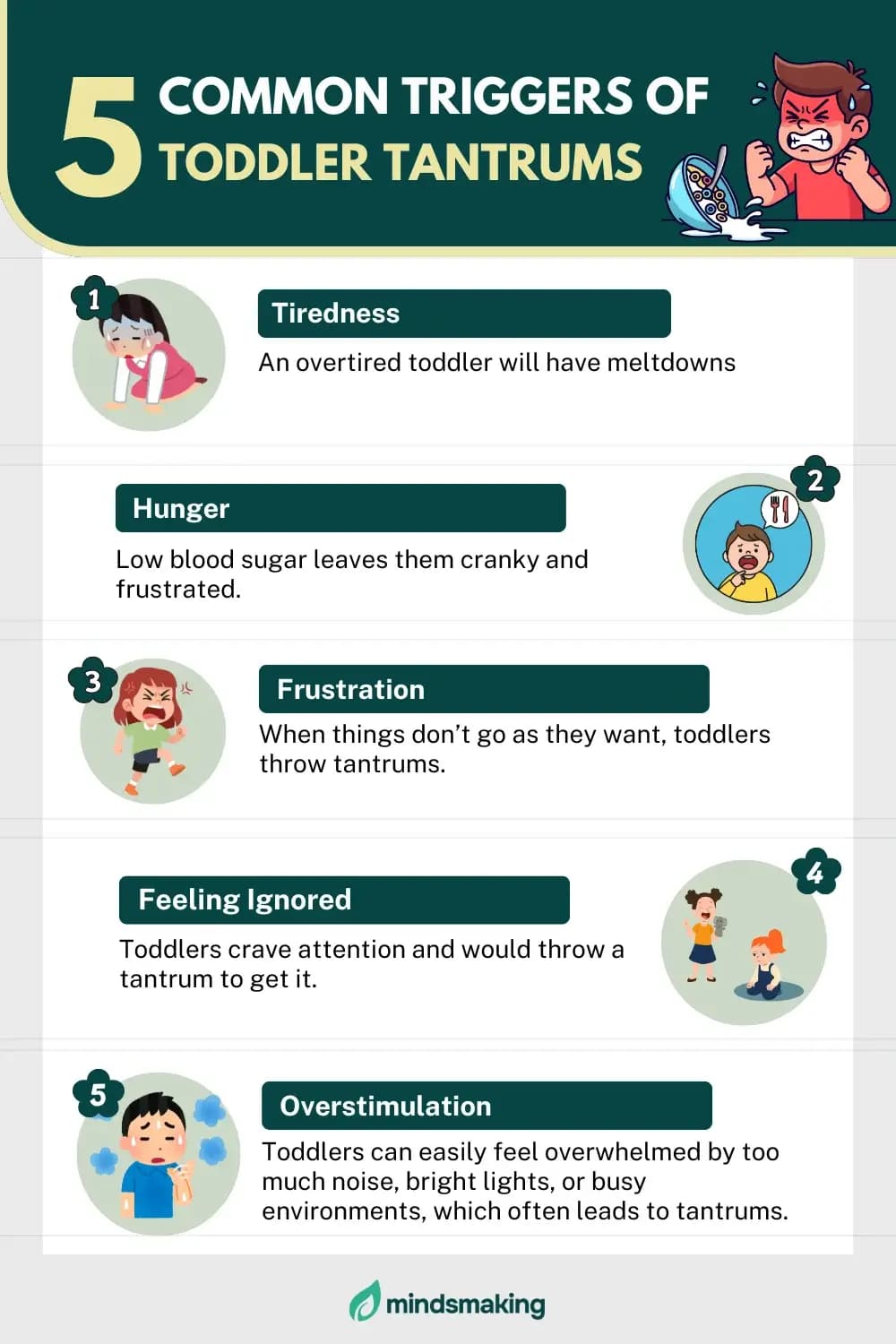
Tiredness in toddlers can lead to tantrums because fatigue steals their emotional balance, leaving them with no reserves to handle frustration or disappointment. Signs of tiredness include eye rubbing, yawning, whining, and refusing to cooperate.
Hunger can lead to tantrums in toddlers because it causes their blood sugar levels to drop, and this affects their mood and can lead to crankiness and even frustration.
When a toddler is frustrated from not having things go their way or as they expect, they throw a tantrum.
Toddlers will throw tantrums just to get a parent's attention. Toddlers crave attention, and when they aren’t getting it, they will go as far as having a meltdown just to have it.
Too much noise, movement, or excitement can overwhelm the senses of toddlers, and this can lead to tantrums. Signs of overstimulation could include covering the ears, crying, or zoning out.
Tiredness
If you’ve ever tried reasoning with a toddler who’s missed their nap, you already know that no amount of pep talk is a match for exhaustion. A tired toddler can turn the simplest moments, like putting on socks or being given the “wrong” cup, into a full-blown Oscar-worthy tantrum. When fatigue hits, your child’s ability to regulate emotions pretty much runs out, and suddenly, every “no,” “wait,” or “time for bed” becomes the end of the world.
You’ll often see the warning signs long before the explosion hits, such as eye rubbing, yawning, whining, refusing to cooperate, or that unmistakable dazed stare they have that looks like they’re about to lose it. When a meltdown comes after a missed nap or a late bedtime, that’s not defiance; it’s biology, as it’s been found that sleep deprivation affects mood, focus, and impulse control, making a tantrum from tiredness more likely to happen.
How to Prevent It:
Stick to a predictable nap and bedtime routine, even on weekends or busy days. Toddlers thrive on consistency, and adequate rest is your best defense against tired-time tantrums. Watch for early signs of fatigue, such as rubbing their eyes, zoning out, or becoming clingy, and act quickly by offering quiet time or a nap before the meltdown starts. If you’re out and about, bring comfort items like a blanket or soft toy to help them relax. And when a nap just isn’t possible, keep activities calm and low-stimulation until they can rest properly.
And if the meltdown already hits? Take a deep breath and remain calm. For more survival strategies and tips on how to diffuse a tantrum, check out our article on 10 Ways to Calm a Tantrum Without Saying a Word and Things Not to Do During a Tantrum.
Hunger
We’ve all been there: that stage where even adults lose patience when lunch runs late. Now imagine being two years old, unable to say that you’re starving, while watching someone hand you apple slices instead of a meal you want; cue the meltdown. Hunger is one of the most common causes of toddler tantrums, as it leads to low blood sugar, which affects mood and leads to crankiness and frustration.
When your child is hungry, their energy dips, and suddenly, your once-cheerful child is lying on the floor, wailing because you didn’t give them a marshmallow when they asked. This isn’t mischief; their little brains need fuel to regulate emotions, and when that fuel runs low, everything just feels unbearable.
Most toddlers don’t yet know the words to say “I’m hungry” or “I need a snack.” Instead, they communicate through tears or random bursts of rage. Many parents even mistake these hunger tantrums for disobedience when, in reality, the child just needs a handful of something nutritious. So, if tantrums tend to happen around mealtime or snack time, hunger is most likely the hidden culprit.
How to Prevent It:
Keep snacks and meals on a regular schedule to prevent your toddler from reaching that hungry–angry stage (yes, the “hangry” phase is real). Offer balanced, energy-boosting snacks like fruit slices, yogurt, or whole-grain crackers between meals, especially during outings or long errands. Avoid long gaps without food, and always have a backup snack in your bag for surprise meltdowns. If your toddler starts getting irritable, try offering a healthy bite before correcting their behavior. You might be amazed at how quickly calm returns once their tummy’s full.
Frustration
Frustration is one emotion toddlers seem to have mastered long before patience. If you’ve ever watched your child try to jam a puzzle piece that clearly doesn’t fit, or scream because their sock or zipper won’t cooperate, you’ve witnessed one of the biggest causes of toddler tantrums in action.
Toddlers are wired to want independence, but sometimes their still-developing motor skills can’t always keep up with their ambition. Your toddler could be trying to build a tower with their LEGO blocks, but it keeps toppling over, and they just don’t understand why, which leaves them irritated. Because they’re still developing emotionally, they don’t understand just yet that the world isn’t always easy to navigate, and this makes small challenges feel enormous.
Common triggers include anything that blocks their growing sense of autonomy, such as not being able to open a snack pack, failing to stack blocks just right, or being told “not now” when they want to do something. It’s like they’re shouting, “I can do it!” but their motor skills didn’t get the memo.
You might often want to swoop in and fix things quickly, but doing too much can actually add to the frustration. Instead, try offering gentle help: “Would you like me to start it for you, and you finish?” That small collaboration keeps their confidence intact and reduces frustration.
Feeling Ignored
Let’s be honest, it's almost like toddlers have an incredible radar for knowing exactly when you’re busy. The second you take a phone call, open your laptop, or dare to talk to another adult, they come to you seeking attention.
Toddlers crave attention, and when they feel unseen or unheard, their feelings take a hit, and they may want to act out. That’s when they throw things or act clingy and stick to you like glue. It’s their way of trying to get your attention and saying, “Hey! Look at me! I still matter!”
The truth? They just wanted your eyes on them, not your screen. This kind of tantrum moment stems from a simple human need toddlers have, which is wanting connection, and when they feel disconnected, they react big.
How to Prevent It:
Build short bursts of focused attention into your day. Even five to ten minutes of undistracted play or conversation can make your toddler feel secure and seen. When you need to focus on something else, like taking a call or cooking, let them know beforehand (“Mommy needs to talk on the phone for a minute, then we’ll play again”). This helps them understand what’s happening instead of feeling brushed off. Praise them when they play independently or wait patiently, it reinforces that calm behavior also earns your attention. If the tantrum happens anyway, focus on reconnection once the crying settles.
Find out some Calming Words to Say After a Tantrum for simple ways to soothe and calm your toddler, because after the tantrum fades, what your child needs most isn’t correction, but connection.
Read This Next
No posts available
Overstimulation
Too much noise, color, or activity can flip a switch in a toddler's developing brain faster than you can imagine. They’re not being dramatic; it could simply be due to sensory overload. Toddlers are still learning how to process the world around them, and when surrounded by constant chatter, music, flashing screens, or bustling crowds, their senses could get overwhelmed.
Signs of sensory overload often include the child covering their ears, hiding behind you, crying suddenly, or trying to escape the situation altogether. These moments can feel frustrating, but they’re actually your toddler’s way of saying, they’re overwhelmed with everything.
Overstimulation is one cause of toddlers' tantrums, and they sneak up quietly, then explode all at once. Imagine being bombarded by different sounds, smells, and movements all at once for a period of time; you would definitely want a timeout, too. For toddlers, it’s even more intense because they don’t yet have the control to manage those sensations.
How to Prevent It:
Keep a close eye on your toddler’s environment and try to strike a balance between excitement and calm. If you’re heading somewhere busy, like a birthday party, shopping center, or family gathering, plan for short stays or quiet breaks. Notice early signs of overstimulation, such as fussing, turning away, or covering their ears, and step outside or into a quieter space before the situation escalates. Limit screen time and loud background noise at home, and create calm-down zones with soft lighting and familiar toys. Sometimes, the best way to reset your toddler’s mood is simply giving them space to breathe, cuddle, or sit quietly in your arms.
A Word From Mindsmaking
Tantrums are a normal and unavoidable part of childhood development, playing a crucial role in learning self-control and emotional regulation. While it can be exhausting for you, these outbursts are opportunities to understand your child better and guide them gently through life’s frustrations.
Most tantrums have clear triggers, and by paying attention to the signs, you’ll soon start anticipating meltdowns before they explode. Understanding the triggers helps you respond with empathy, not frustration.
Frequently Asked Questions
At what age do toddler tantrums usually start?
Toddler tantrums typically begin around 18 months, when children start asserting independence but don’t yet have the words to express their needs. These early meltdowns often peak between the ages of 1 to 3 years, then gradually decrease by age 4 as language skills improve.
How long do toddler tantrums last?
Most toddler tantrums are short-lived as they usually last between two to fifteen minutes maximum.
Are tantrums a sign of bad parenting?
Tantrums are a natural part of toddler growth and not a sign of bad parenting. Most toddlers don’t have the communication skills to express themselves and lack emotional regulation, that's why they turn to tantrums to express themselves.
How can I calm my toddler during a tantrum?
To calm your toddler, be patient, empathetic, and offer physical comfort. Speaking softly, offering reassurance, and acknowledging their feelings, rather than arguing, can help toddlers feel understood and safe.
How can I prevent tantrums before they start?
You can maintain consistent sleep schedules, offer regular meals and snacks, and provide attention when your toddler needs it to help prevent tantrums.
Can screen time trigger tantrums?
Overexposure to screens or abrupt transitions away from devices can lead to frustration or overstimulation in toddlers, and this can lead to tantrums.
Is it okay to give in to stop a tantrum?
Occasionally, giving in may be necessary when it comes to their safety, but consistently yielding to tantrums can reinforce unwanted behaviors.
Can tantrums be a sign of developmental delay?
Most tantrums are normal, but unusually intense or frequent meltdowns with extreme aggression, or delayed language development may be a sign of a delay and should be checked out with a pediatrician.
What’s the difference between a meltdown and a tantrum?
A tantrum is often goal-oriented, as a child wants something, while a meltdown is being emotionally overwhelmed without control or intent.
Do all toddlers outgrow tantrums?
Most toddlers gradually outgrow frequent tantrums as their language, problem-solving skills, and emotions develop by the age of 4. By preschool age, tantrums usually become less frequent and less intense, though occasional meltdowns are still normal.
Was this article helpful?
How many stars are you giving this article?
Leave a comment
Your email address will not be published.