Teething in Babies: What to Expect and How to Help
Getty Images


Written by Mindsmaking Medical Writer

Fact Checked by Mindsmaking Professionals
9th, February, 2026
You may sometimes find yourself trying to figure out which symptoms are truly from teething and which ones might be coming from something else. Find out the signs of teething, how to soothe your baby, what to avoid, and when to be concerned.
Teething in babies is a natural developmental milestone in infancy, where tiny milk teeth begin to push through the gums. But while it’s a normal and exciting biological process, it also comes with its own challenges and a set of unforgettable moments for both baby and parents.
Babies may experience discomfort, irritability, and changes in behavior, all of which are totally normal. Parents often find themselves wondering what symptoms are from teething and what’s something else. But the truth is, most symptoms vary widely, but with the right strategies, they’re absolutely manageable.
Key Takeaways
While most babies begin teething between 4 to 7 months old, some may start earlier or later. Teeth generally appear in a predictable order: the first teeth are usually the lower front incisors, followed by the upper ones, and by age 3, they will have all 20 primary teeth.
Before a tooth emerges, babies may show early teething signs such as fussiness, disrupted sleep, excessive drooling, swollen gums, chewing on hands or objects, and a mild increase in temperature.
To soothe your baby's teething pain, you can give a gentle finger massage, offer teething toys and chewing aids, use cool aids like a cold, wet washcloth, and provide comfort with cuddles and distractions.
You should avoid offering your teething baby choking hazards, benzocaine teething gels, belladonna teething tablets, and completely frozen items, as these can worsen gum inflammation or pose serious health risks.
To care for your baby’s teeth, schedule a first dental visit by age one and practice gentle brushing with an infant toothbrush and a rice-sized smear of baby toothpaste. Also, avoid putting your baby to bed with milk or juice to prevent cavities.
While mild irritability, sore gums, and drooling are normal signs of teething, persistent fever, vomiting, diarrhea, extreme fussiness, or a lack of teeth by 12–15 months requires professional advice from a pediatrician.
When Do Babies Start Teething?
Babies grow at their own pace, and teething doesn’t follow a strict schedule, as not all babies are the same. Some little ones sprout teeth early, while others take their sweet time, and both are perfectly normal. You could be staring into your baby’s mouth this week, wondering if you see a tooth or just a bubble of spit, and the next, there’s a tiny tooth sticking out.
Most parents see the earliest signs of teething in their baby between 4 to 7 months old, though some babies may start earlier and some much later. A few babies even wait until after their first birthday before a tooth shows, and this can be alarming if you’re comparing milestones with other babies, but truly, there’s no need for panic.
When those first teeth do make an entrance, they typically follow a familiar order, which is the bottom front teeth first, followed by the top front teeth. After that, things roll along gradually, starting with the canines and molars. However, some babies have sprouted their canines first before other teeth, almost resembling vampire fangs, but like we said earlier, babies grow differently, so these were found normal, just not the usual.
By the time your child hits their third birthday, they should have all 20 primary teeth in place, and their smile will look a little less like a baby’s and a lot more like a toddler's. Every single one of those teeth plays a role in chewing, jaw development, and early speech development, which they should be good at by that age.
Remember, there is no “right” time for sprouting the first teeth in babies. Some babies start at 4 months, some earlier, and others at 12 months. What matters most is watching your child eventually hit their milestone and knowing that their teeth will come when they’re ready.
Common Signs and Symptoms of Teething
Before you ever spot that tiny white tooth peeking through, your baby may already be sending you signs of teething. And often, these signs show up at the most unpredictable moments, like right when sleep is finally improving, like right when your child’s sleep patterns are finally improving, or when you thought you had settled into a routine. But the good news is, these early clues are common and manageable.
One of the earliest teething signs you will notice is a change in behavior. A once easygoing baby might suddenly become clingy, fussy, or extra emotional. Their sleep patterns can even change overnight, leaving you wondering if you’re raising a night owl. These changes are usually the result of teething discomfort, as gums ache from the pressure of the incoming teeth.
You could also notice oral symptoms like endless baby drooling, constant chewing, tender or swollen gums, and biting their hands, toys, or anything you put in their mouth. These shifts happen because chewing helps them counter the pressure of tooth eruption and gives natural pain relief for teething.
Your baby could also tug their ears, rub their cheeks, or refuse food, especially if the sucking movement makes the gum pressure worse. A mild warmth or a temperature increase can also appear, but keep in mind that a high fever is not normal for teething. So, if your baby’s temperature goes higher or persists, it’s probably something else and needs immediate attention.
Symptoms like severe rashes, high fever, diarrhea, and vomiting are not caused by teething but are often mistaken for teething symptoms. They may occur around the same time by coincidence, but they shouldn’t be blamed on teething in babies. So, if you notice such signs, it’s time to check in with a pediatrician.
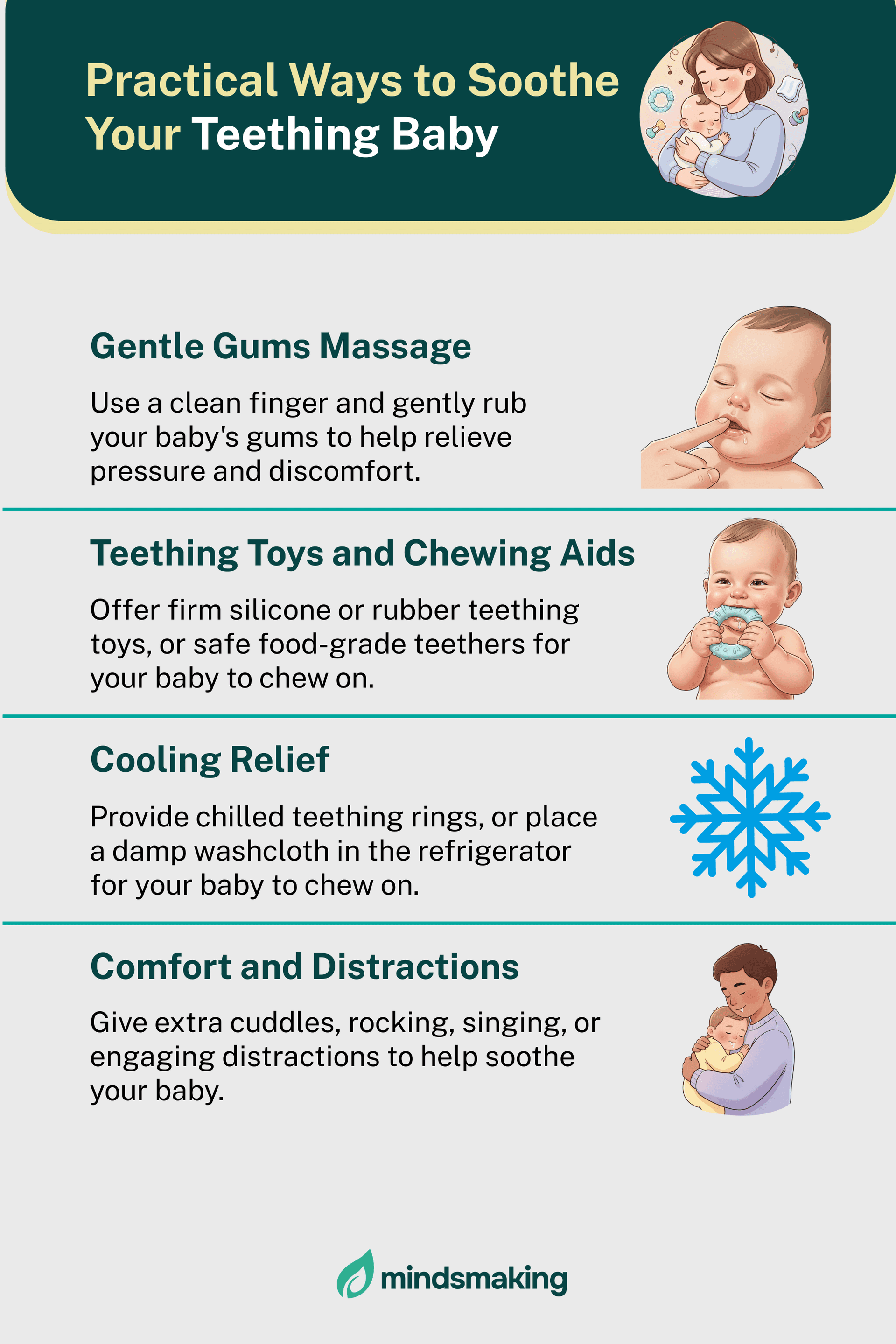
Practical Ways to Soothe Your Teething Baby
There’s no single cure, but there are gentle, effective ways to ease their discomfort. Here are a few you can try:
Gentle Gums Massage: This looks simple, but sometimes, the simplest solution is the most effective. A clean finger and a slow, gentle rub across your baby’s gums can work wonders for teething discomfort. Your little one might clamp down, sometimes surprisingly hard, but that pressure helps soothe those sore spots and reduces the ache caused by early tooth eruption. Many parents swear by this method because it offers immediate, natural relief from teething pain.
Teething Toys and Chewing Aids: Babies are practically programmed to chew on everything they can get their hands on during this stage. So it’s best for you to step in by offering safer, more sanitary options like firm silicone or rubber teething toys, or food teethers to sink their gums into. These can apply counter-pressure on swollen gums to ease the teething symptoms and distract your little one at the same time.
Cooling Relief: Cool temperatures can help reduce inflammation in their gums, so you can chill your baby’s teething rings or refrigerate a damp washcloth for them to grip, twist, and gnaw on for a comforting, sensory experience while helping lower gum swelling.
Comfort and Distractions: Sometimes the best relief doesn’t come from any tool but from you. Giving extra cuddles, rocking, singing, and holding your baby can calmly ease their discomfort. Also, distractions from activities like walks, water play, or gentle music can give their minds something else to focus on than the ache.
Read This Next
No posts available
What to Avoid When Your Baby Is Teething
When you’re trying to soothe a teething baby, it’s easy to reach for anything that seems helpful. But some methods can do more harm than good. To keep your little one safe and comfortable, here are a few things to avoid:
Avoid Choking Hazards: Babies explore the world by putting things into their mouths, especially during this teething phase, where the urge to chew is strong. But you should ensure that objects that are too small, round, can break apart easily, or aren’t designed for chewing, are not given to babies or left lying around, as they can quickly cause choking. Even popular household “hacks” like frozen food pieces or tiny toys can pose serious choking risks, so stick with safe, durable teething toys specifically designed for babies.
Avoid Over-the-Counter Teething Gels with Benzocaine: Many store-bought numbing teething gels have long been marketed to parents for teething pain relief, but those containing the substance benzocaine can be risky for babies. The U.S. Food and Drug Administration (FDA) warns against using these products because they can cause a rare but serious condition that affects oxygen levels in the blood. As tempting as these gels may seem during very intense teething discomfort, they’re simply not worth the risk.
Avoid Teething Tablets with Belladonna: Another product that might seem “effective” but isn’t safe is homeopathic teething tablets with belladonna. The FDA has also raised concerns as they pose a serious health risk to infants and children due to inconsistent and potentially high levels of belladonna, which can lead to seizures, difficulty breathing, extreme lethargy, muscle weakness, and, in some cases, death.
Avoid Frozen Items: Cold is great, but frozen solid? Not so much. Completely frozen teething rings, foods, or washcloths can be too hard on delicate gums, leading to increased gum inflammation, minor injuries, and frostbite. Instead, opt for chilled options because they’re gentler and still incredibly effective for soothing swollen gums.

How to Care for Your Baby Teeth During Teething
From the moment those first teeth appear, early habits help protect and support your child's healthy development.
First Dental Visit: Dentists recommend scheduling a baby’s first appointment by age 1 or within six months of the first tooth eruption. This early visit isn’t just about checking your baby’s teeth but also about making sure everything, like the health of their gums and their jaw development, is on track. Plus, it’s a great opportunity for you to ask questions, especially if your baby has unusual teething symptoms or delays.
Early Cleaning: Before those first teeth even pop through, you can also begin gentle infant gum care. Just wipe your baby’s gums with a soft, damp cloth each day, and once the first tooth appears, switch to a toothbrush for babies with soft bristles and coconut oil, or a tiny rice grain smear of baby toothpaste. This helps prevent tooth decay, supports healthy gums, and also gets them used to brushing as a normal part of their routines from the beginning.
Prevent Cavities: Even babies can develop cavities, especially if they’re falling asleep with milk bottles or sipping sugary drinks throughout the day, as milk, formula, and juice can pool around the teeth and cause early decay. So, avoid putting your child to bed with a bottle and stick to water between meals. Good habits now lead to confident smiles later.

When to Contact a Pediatrician
While teething comes with plenty of fussiness and drooling in babies, some symptoms are red flags that shouldn’t be ignored. Some symptoms can have you wondering whether it's teething or something else, and knowing the difference can save you stress and, sometimes, a trip to the emergency room. Signs such as:
- High or persistent fever,
- Diarrhea,
- Vomiting,
- Lack of interest in eating for several days,
- Extreme fussiness or lethargy that doesn't improve with soothing methods,
- No teeth emerging by 12-15 months of age.
When you notice such signs, it is best to consult a pediatrician for an evaluation to determine the possible causes, as timely intervention is necessary for faster treatment and recovery.
A Word From Mindsmaking
Teething in babies is a phase that every child will go through, and while it can feel long and challenging for both baby and parent, it’s entirely normal. With patience, gentle care, and safe teething remedies, you can go through this phase with ease.
Soon, those first teeth will emerge, leading to healthy smiles, easier feeding, and calmer nights for everyone.
Frequently Asked Questions
Can Teething Cause a Fever in Babies?
Mild warmth or a slightly elevated temperature can sometimes accompany teething in babies, but a high fever is not a normal teething symptom. A pediatrician should evaluate persistent high temperatures, as they may indicate an illness rather than typical teething discomfort.
Are Amber Teething Necklaces Safe for Babies?
Amber teething necklaces are not considered safe for babies, as they pose a choking and strangulation risk and do not provide medically proven teething pain relief. Safe teething toys or chilled silicone rings are much better alternatives.
Are Pacifiers Helpful for Teething Babies?
Pacifiers can offer some comfort and mild pressure to soothe swollen gums. However, they should be clean, in good condition, and used alongside other teething remedies.
Can Teething Cause Rashes in Babies?
Minor drool rashes on the chin or neck can occur due to excessive baby drooling during teething. Still, widespread rashes, severe skin irritation, or persistent rashes are not related to teething and should be checked out by a pediatrician.
Can teething affect my baby's appetite?
Yes. Teething can make babies reluctant to eat, especially if sucking or chewing causes gum pain. Offering soft or cool foods can help them maintain nutrition during the teething timeline.
How can I prevent gum infections while my baby is teething?
Wipe your baby’s gums daily with a soft, damp cloth, clean emerging teeth gently with a soft-bristled brush and a rice-smear of toothpaste or olive oil, and avoid putting your baby to bed with milk or sugary drinks.
Was this article helpful?
How many stars are you giving this article?
Leave a comment
Your email address will not be published.