Signs of Choking in Children and How to Prevent It
Getty images

Written by Mindsmaking Medical Writer

Fact Checked by Mindsmaking Professionals
2nd, February, 2026
Research says that choking is one of the leading causes of injury-related deaths among children under the age of four. Learn from our guide about the signs of choking and how to prevent it in children.
It only takes a few seconds for a joyful mealtime to turn into sheer panic due to choking. One moment, a child is happily munching on grapes, and the next, it's silence and not a peaceful but terrifying kind that sends every parent’s heart racing. According to research, choking is one of the leading causes of injury-related deaths among children under the age of four, as every 5 days, a child dies from a choking-related incident.
But here’s the thing: knowing what signs to look out for and how to prevent them is just as important as knowing how to respond to such incidents. While quick action can save a life, awareness of preventive measures can stop the emergency from happening in the first place.
Key Takeaways
Choking is a medical emergency in which an obstruction of the airway by a foreign object cuts off the flow of oxygen to the lungs and brain.
Young children under 5 years of age are more vulnerable to choking due to their small airways, their still-developing chewing abilities, and eating too fast or being distracted.
Choking hazards — foods and non-food items to watch out for: whole grapes, hot dogs, popcorn, cherry tomatoes, whole nuts and seeds, hard candies or lollipops, chunks of meat or cheese, coins, marbles, beads, pen caps, bottle caps, and batteries.
Signs of mild or partial choking include weak coughing or gagging, noisy breathing, and wheezing sounds. In severe or complete choking, it is silent, with no ability to cough, cry, speak, or breathe, and the skin turns blue.
If a child is choking, call emergency services immediately. For children over 1 year, perform the Heimlich maneuver to dislodge the object. For infants under 1 year, use back slaps and chest thrusts. If the child loses consciousness, begin pediatric CPR.
To prevent choking in children, serve food in age-appropriate textures. Teach your child good mealtime manners, such as eating slowly. Never serve meals while playing or in a car seat, and always supervise them at mealtime.
Call emergency services and request help if a child suddenly goes silent, can’t breathe, has a panicked expression, is clutching their throat, and has their lips and skin start turning blue.
What is Choking and Why is it Common in Children?
Choking is a medical emergency where an object blocks the airway, preventing breathing and cutting off oxygen to the brain. It happens when a foreign object, such as food, or objects like coins or a small toy, gets stuck in the throat or windpipe. When it happens, it can be a complete blockage or a partial blockage of the airway.
A partial choking episode means some air is still getting through, but the child is still choking. You might see that the child is coughing, gagging, or struggling, but they can usually still make some noise. On the other hand, complete choking is silent and far more dangerous as the child won’t be able to breathe, cry, or talk.
This is especially common in children under 5, as their smaller airways and developing chewing skills make them more vulnerable to choking. They’re still learning how to chew and swallow safely, which increases the risk of food or small objects getting lodged.
Why Young Children Are More Likely to Choke
Small Windpipes: A child’s windpipe is so small that it’s roughly the width of a regular drinking straw, and this means that even tiny bits of food or toy parts can block it entirely. That’s why choking hazards like whole grapes, whole nuts, or items like marbles pose such a serious risk for little ones.
Incomplete Chewing Ability: Before age four, children are still learning to chew efficiently. Before molars fully develop at this age, children often bite and swallow quickly, sending large chunks of food down without chewing properly. Even soft foods like bananas or cheese can become a choking risk if the pieces are too big. Without strong molars or proper chewing habits, even soft foods can slip down the wrong way.
Eating too Fast or While Distracted: Toddlers are professional multitaskers; they’ll laugh, talk, dance, and eat all at once, but unfortunately, Toddlers are professional multitaskers; they’ll laugh, talk, dance, and eat all at once, but unfortunately, Toddlers are professional multitaskers; they’ll laugh, talk, dance, and eat all at once, but unfortunately, that combination can easily increase the risk of choking. Such distractions during meals mean they’re less likely to chew thoroughly or notice when food goes down the wrong way. So, a calm and screen-free meal time will make a big difference.
Exploring Objects with Their Mouths: From toy blocks and Legos to pebbles, children’s curiosity knows no limits with what goes into their mouths. They constantly want to taste or put everything in their mouth, and this natural exploration phase puts them at constant risk of swallowing non-food choking hazards. This natural exploration is important for sensory development, but it requires vigilance about non-food choking hazards.
Older Siblings Leaving Small Objects Around: You’d be amazed at how many choking emergencies happen because of something a big brother or sister left on the floor, it could be LEGO pieces, tiny doll shoes, marbles, you name it. Older kids don’t always realize their toys are dangerous for little ones, so it's up to parents and caregivers to encourage them to play at a “big kid table” or in a separate room to help reduce risk.
Eating in the Car Seat: It’s tempting to hand a snack to a restless toddler on a long drive, but eating in the car seat is one of the most overlooked causes of choking. Sudden bumps, braking, or lack of supervision can turn such a harmless mealtime into a choking emergency. Instead, parents should plan snack breaks where the child can sit upright, calm, and fully supervised.
Common Choking Hazards for Children
Choking hazards can come in different shapes and sizes, and not just from food. Both food and non-food items can lead to dangerous airway blockages. Here are some common choking hazards for children:
Top Food Choking Hazards
Foods that are small, round, hard, sticky, or difficult to chew pose the highest risk of choking for babies and young children. According to experts and health bodies, the most common food-related choking hazards for young children include:
- Whole grapes
- Hot dogs
- Popcorn
- Cherry tomatoes
- Whole Nuts and Seeds
- Hard candies or lollipops
- Chunks of meat
- Chunks of cheese
- Raw carrots and apples
- Marshmallows
- Spoonfuls of Peanut butter
Parental tip: Cut grapes into quarters and slice hot dogs lengthwise before serving. Avoid whole nuts, popcorn, and hard candies for children under the age of four. For a complete list of high-risk foods by age, check our guide: Choking Hazard Checklist for Babies and Toddlers.
Top Non-Food Choking Hazards
Choking hazards are not just foods; some of the biggest culprits are toys and other items that hide in the playroom. Non-food choking hazards include:
Coins
- Marbles
- Beads
- Pen caps
- Bottle caps
- Button batteries
- Small toy parts
- Hair accessories or buttons
- Balloons (especially latex)
Parental tip: Regularly inspect toys for removable parts, follow age labels on packaging to avoid getting toys made for older kids, and sweep play areas often, as you’ll be surprised what tiny choking hazards you could find! You can also read our guide on How to Childproof Your Home for Safety for practical steps to keep your space hazard-free.
How to Recognize the Signs of Choking in Children
Knowing the signs of choking can help you act quickly before the situation becomes critical. Choking comes in two kinds: mild or partial choking and severe or complete choking. Here's how to tell the difference:
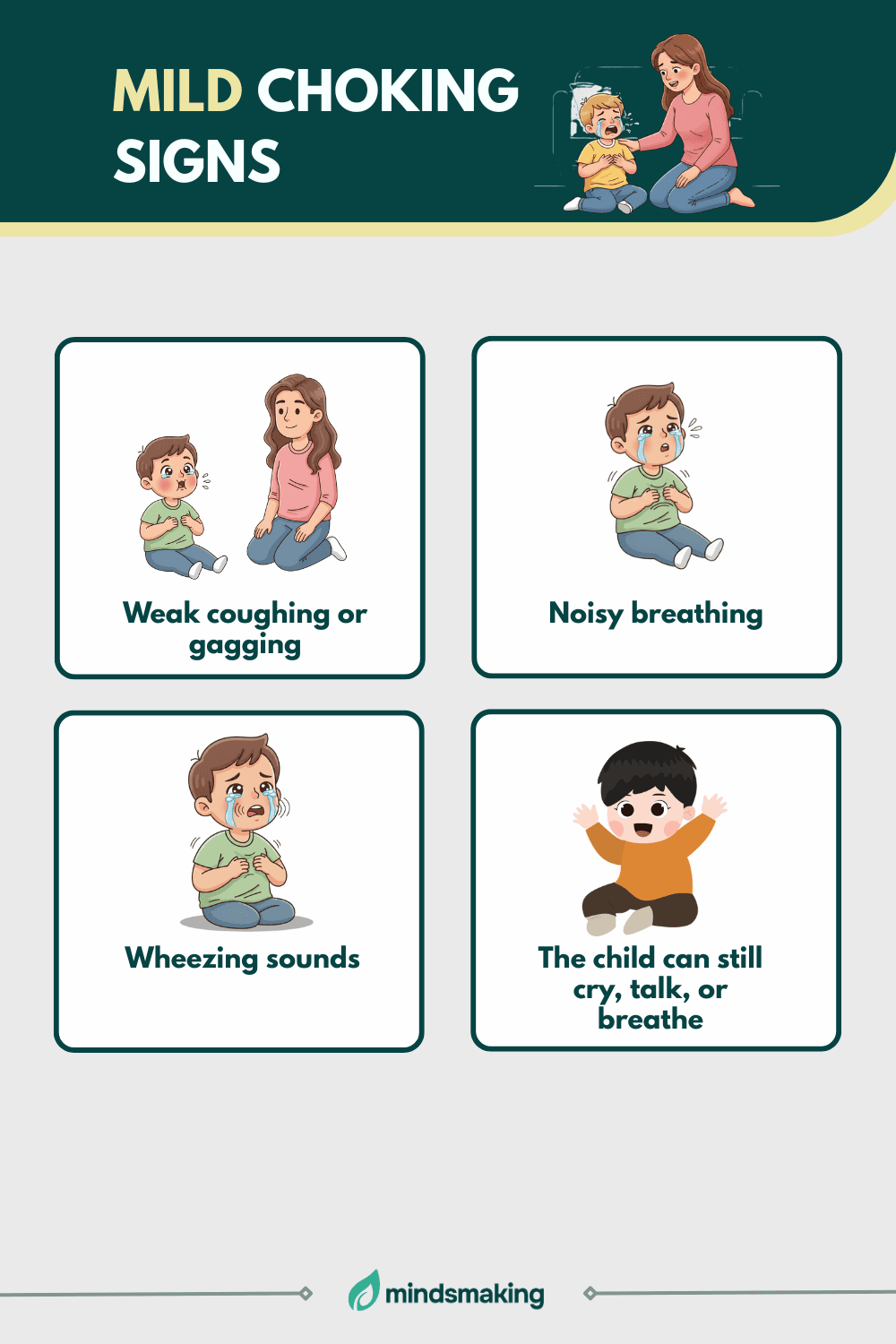
Mild Choking Signs
- Weak Coughing or gagging
- Noisy breathing
- Wheezing sounds
- The child can still cry, talk, or breathe
If the child can cough or speak, encourage them to keep coughing, as it’s their body’s natural way of expelling the object.
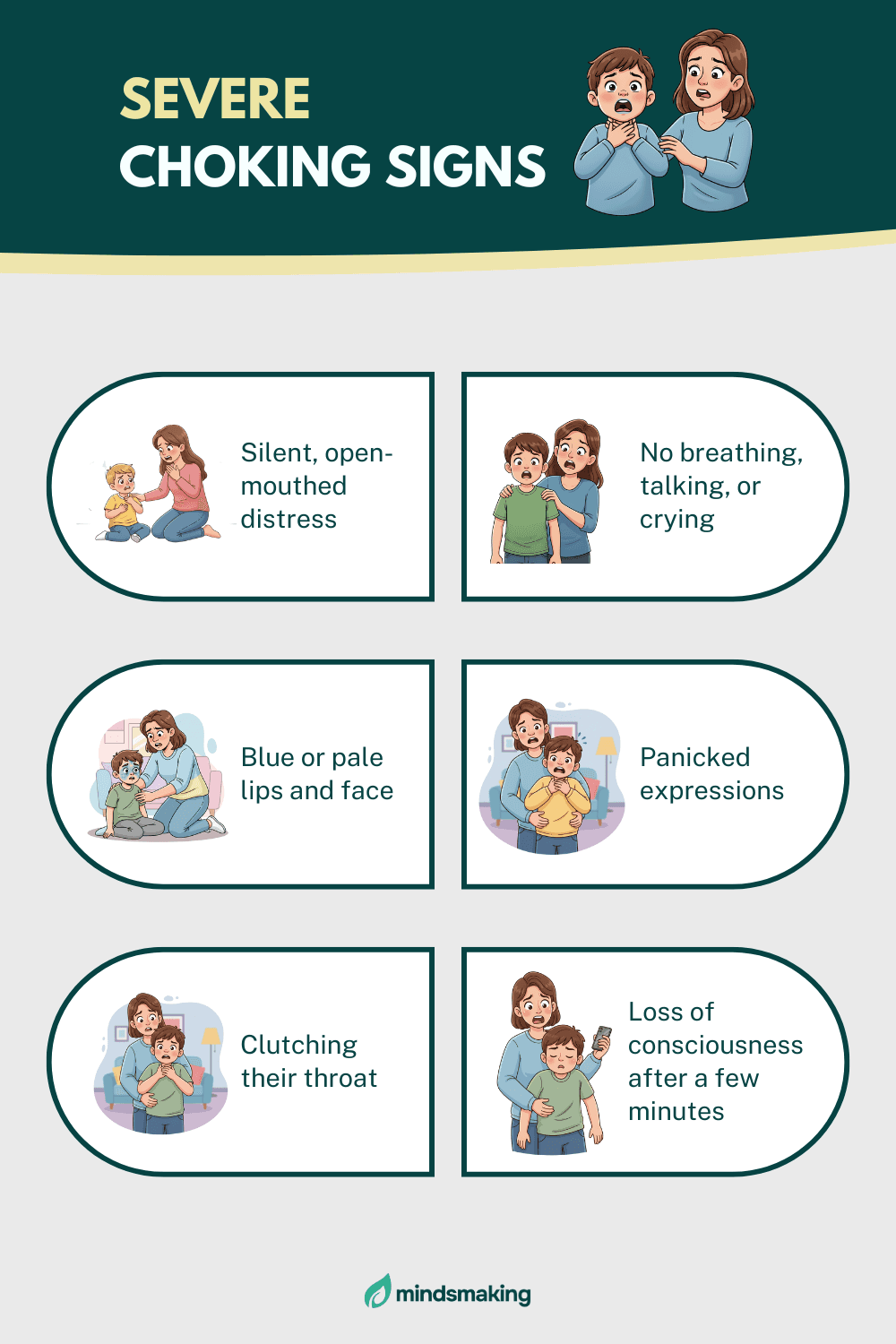
Severe Choking Signs
- Silent, open-mouthed distress
- No breathing, talking, or crying
- Blue or pale lips and face
- Panicked expressions
- Clutching their throat
- Loss of consciousness after a few minutes
These child choking symptoms require immediate action, and if the child shows any of these, one must act immediately. Read our comprehensive guide on What to Do When a Child Is Choking' for clear, step-by-step instructions.
Read This Next
No posts available
What to Do If a Child Starts to Choke
- Stay calm and call for help.
- Call or ask someone to call emergency services immediately
- Perform back blows and chest thrusts for infants or abdominal thrusts for older children as appropriate for their age.
- Continue and wait for emergency services if the blockage doesn’t clear.
- If the blockage is cleared and breathing resumes, seek medical attention even if your child seems fine.
For detailed steps and first aid guidance, read our full article: How to Help a Choking Child Safely.
How to Prevent Choking in Children
Prevention isn’t about wrapping your child in bubble wrap or entirely avoiding foods that are choking hazards; it’s about teaching safe food preparation and eating habits, creating safe spaces, and being ready for emergencies. Here are ways to prevent choking:
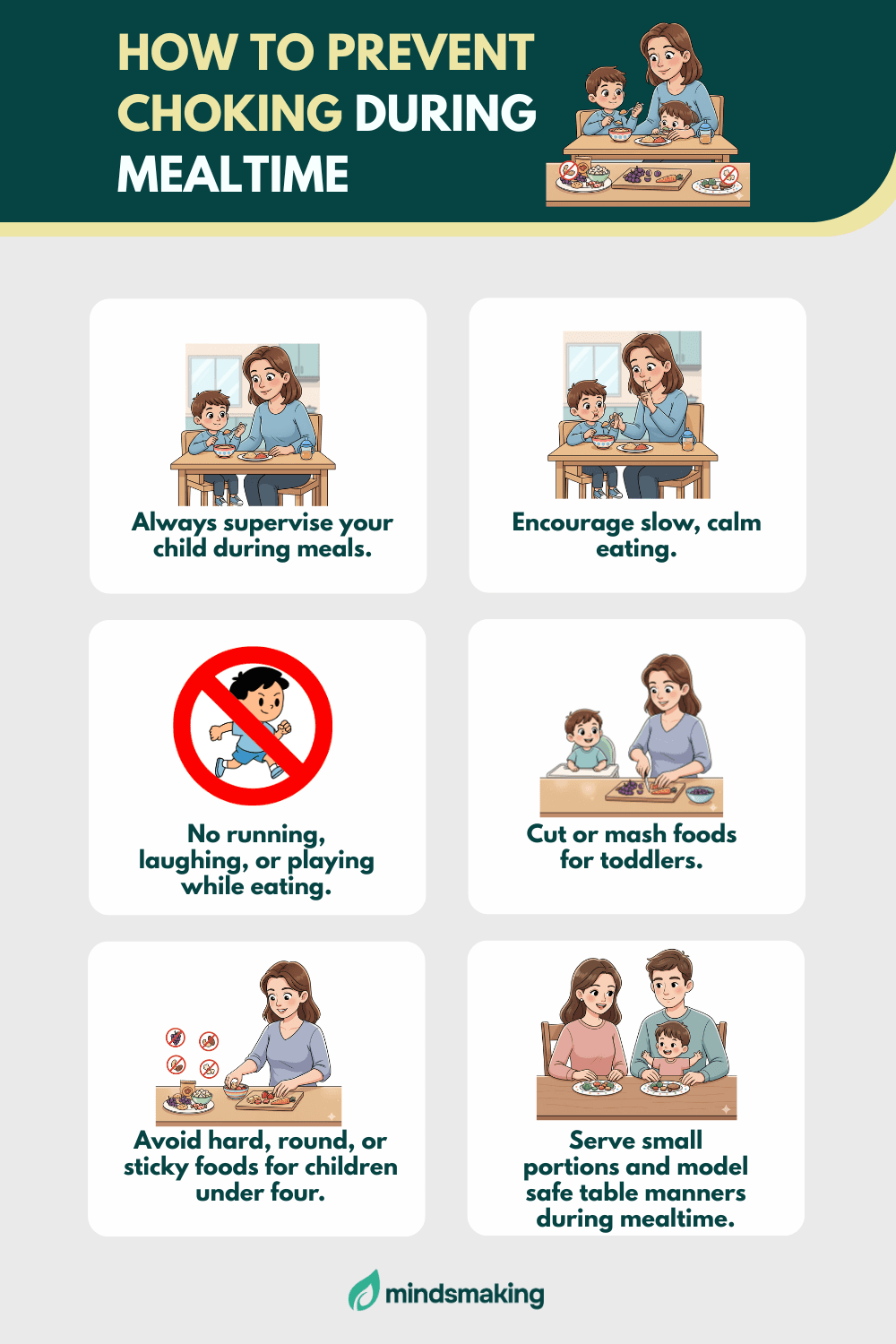
During Mealtime
- Always supervise your child during meals.
- Encourage slow, calm eating
- No running, laughing, or playing while eating.
- Cut or mash foods for toddlers.
- Avoid hard, round, or sticky foods for children under four.
- Serve small portions and model safe table manners during mealtime.
Learn more in our guide on Age-Appropriate Foods for Babies and Toddlers.
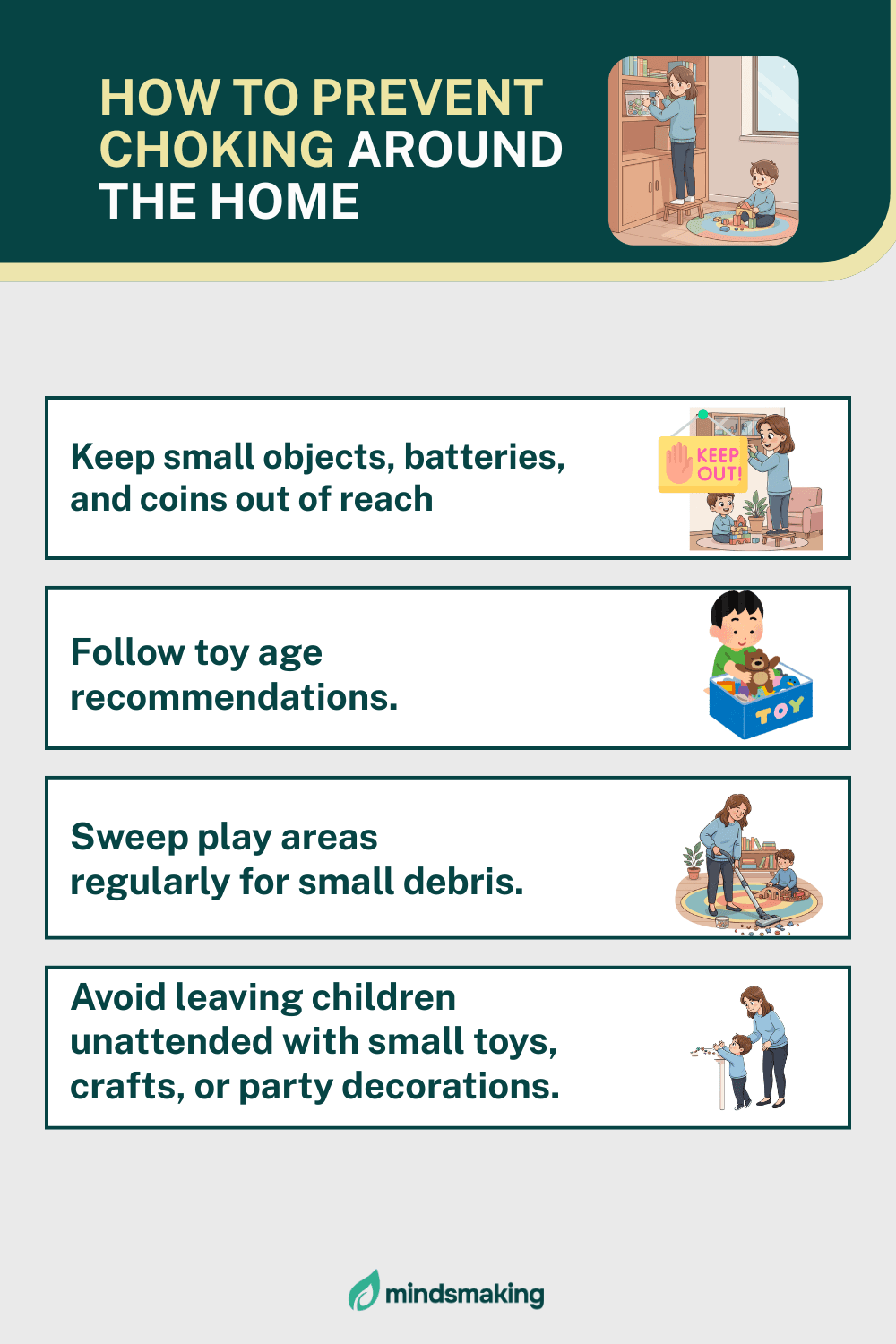
Around the Home
- Keep small objects, batteries, and coins out of reach.
- Follow toy age recommendations.
- Sweep play areas regularly for small debris.
- Avoid leaving children unattended with small toys, crafts, or party decorations.
Stay Prepared and Confident
- Even with the best prevention measures, accidents can still occur. To stay prepared and reduce the risk of choking, you can:
- Take a first aid course on pediatric CPR and the Heimlich maneuver.
- Save local emergency numbers on your phone.
- Keep calm, as your composure helps your child feel safe even in the most frightening moments.
Practicing these steps ensures you’re ready for choking emergencies, not panicked by them.
When to Seek Emergency Help
While some mild choking episodes resolve with a few strong coughs, a severe choking episode can escalate into a life-threatening choking emergency within seconds. If a child suddenly goes silent, can’t breathe, has a panicked expression, is clutching their throat, and their lips and skin start turning blue, it’s critical to act fast, so call emergency services immediately. Never hesitate or assume the child will clear it on their own once breathing stops.
Even if the object eventually comes out and the child seems fine, it’s important to have them checked by a healthcare professional to be cleared. Tiny scratches, swelling, or residual fragments can cause irritation or infection in the airway later on. Doctors may recommend a follow-up X-ray or throat exam to ensure that there is no lingering damage.
Frequently Asked Questions
What are the first signs of choking in a baby?
The first signs of choking in a baby include silence, struggling to breathe, or having a look of panic with wide eyes. They may open their mouth without sound, turn red or blue, or start flailing their arms in distress. Sometimes, a weak or high-pitched cough can also show that the airway is partially blocked.
What foods are most likely to cause choking in children?
Foods that are small, round, hard, sticky, or difficult to chew pose the highest choking risk for babies and young children. Top foods include whole grapes, cherry tomatoes, popcorn, hot dogs, sausages, hard candy, marshmallows, chunks of meat or cheese, whole nuts, and raw vegetables like carrots or apples.
How can I prevent my child from choking during meals?
Preventing choking starts with preparing and serving age-appropriate meals to children. Always ensure your child sits upright in a stable chair while eating, offer small portions of meals, encourage the child to eat slowly, and supervise your child closely during mealtime.
At what age is choking most common?
Choking is most common in children under four years old, especially between 6 months and 3 years, as they’re still learning to eat solid foods and explore objects by mouth.
Can teething increase the risk of choking in young children?
Teething does not directly cause choking, but can slightly increase choking risks because babies tend to put anything within reach into their mouths to soothe sore gums.
Are certain children more prone to choking?
Babies born prematurely, with developmental delays, or children with swallowing or muscle coordination difficulties are particularly vulnerable to choking on food and non-food items.
Can a pacifier help prevent choking?
A pacifier doesn’t prevent choking, but it can reduce mouthing behaviors that sometimes lead to choking, especially when babies are restless or teething. They are not a substitute for supervision, safe food practices, and keeping small objects out of reach. Pacifiers can also become hazards if they’re damaged or the wrong size.
Is it safe to give toddlers nuts or seeds?
Whole nuts and seeds are not safe for children under four years old, as they can easily block the airway if inhaled or swallowed whole. Instead, offer smooth and thinly spread nut butters on bread and fruits, or finely ground nuts mixed into oatmeal, yogurt, or purees.
Was this article helpful?
How many stars are you giving this article?
Leave a comment
Your email address will not be published.