Chocolate and Pregnancy: What Experts Want You to Know
Pexels


Written by Mindsmaking Medical Writer

Fact Checked by Mindsmaking Professionals
23rd, December, 2025
Chocolate is a comforting treat for many moms-to-be. Understanding how much is safe, its health benefits, possible risks, and smart ways to enjoy it can help you satisfy your cravings while keeping both you and your baby healthy.
Chocolate is one of the most common cravings during pregnancy. This craving can be linked to hormonal changes, the need for quick energy, or simply the comfort and mood lift that chocolate provides. Plus, chocolate contains feel-good compounds like serotonin and theobromine that can give you that tiny burst of happiness we all crave.
Eating chocolate during pregnancy is generally considered safe, but moderation is important. Too much can mean excess sugar and caffeine, which aren’t exactly your body’s best friends right now.
Key Takeaways
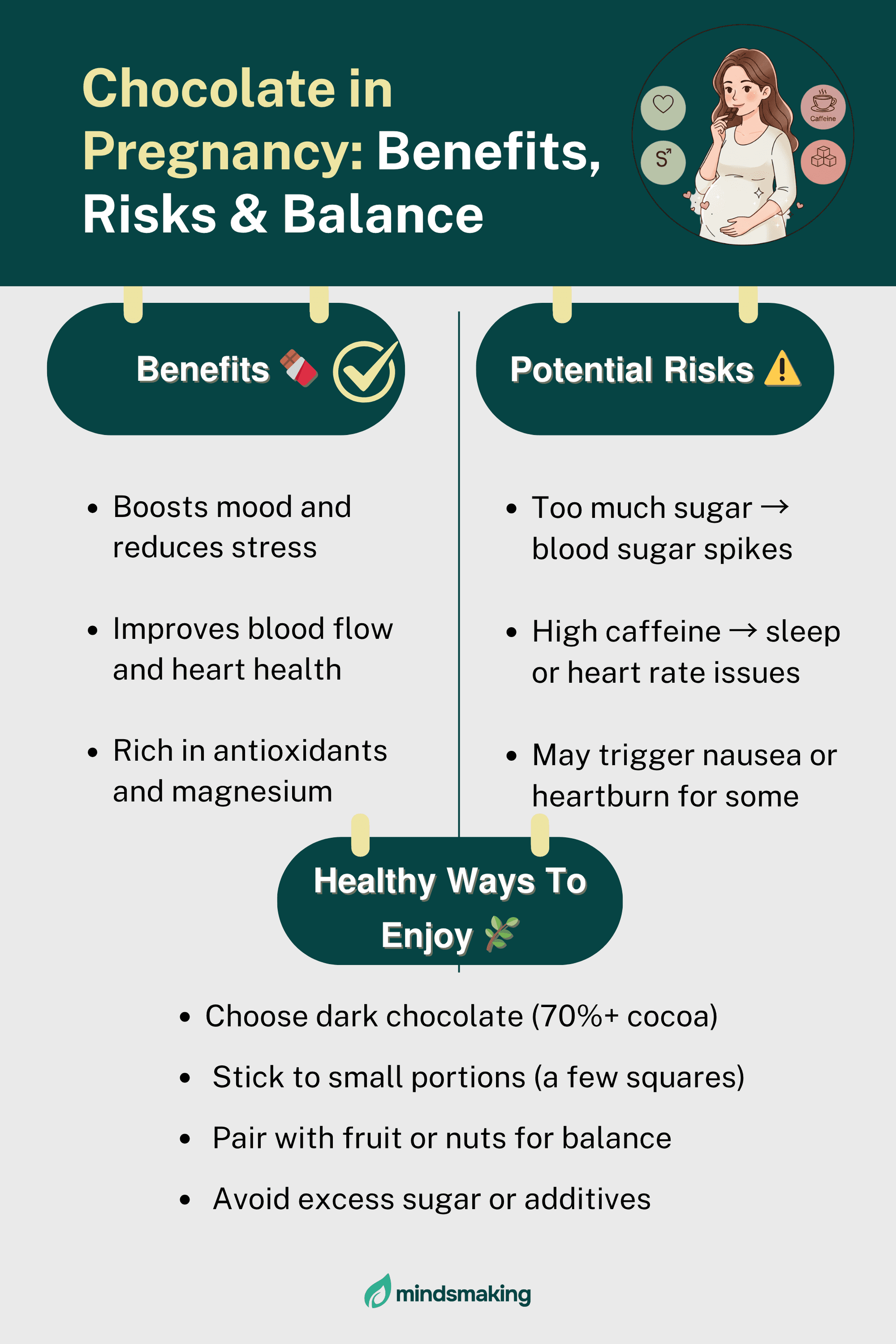
You can safely enjoy chocolate in moderation when pregnant, keeping total caffeine intake under 200 mg per day, which includes caffeine from other sources like coffee and tea.
Moderate dark chocolate consumption may offer health benefits such as reduced risk of preeclampsia, improved blood flow, better mood, and antioxidant protection.
Overindulging in chocolate can lead to excess sugar, caffeine, and calorie intake, which may increase risks of gestational diabetes, heartburn, or nutrient imbalance during pregnancy.
The healthiest approach is to eat small portions of dark chocolate (70% cocoa or higher) a few times a week, monitor caffeine and sugar intake, and enjoy it earlier in the day to prevent heartburn or sleep issues.
Consult your doctor if you have gestational diabetes, high blood pressure, caffeine sensitivity, or experience symptoms like palpitations or insomnia, to ensure your chocolate habits remain safe for pregnancy.
How Much Chocolate Is Safe During Pregnancy?
Chocolate can be a comforting part of pregnancy, but like most treats, it’s best enjoyed in moderation. The main concern with chocolate is its caffeine content, as excessive caffeine intake has been linked to potential effects on fetal growth, sleep, and development. It is generally recommended that pregnant women limit total caffeine intake to under 200 mg per day to reduce these risks.
The amount of caffeine in chocolate depends on the type. Dark chocolate contains roughly 20 to 30 mg of caffeine per ounce (28 g), milk chocolate provides about 5 to 10 mg, and white chocolate is almost caffeine-free. These numbers might seem small, but caffeine can add up quickly, especially if you also consume coffee, tea, or soft drinks throughout the day.
To help you stay within safe limits, keep track of your daily caffeine sources and balance your choices. A small portion of chocolate can fit perfectly into a healthy pregnancy diet when paired with nutrient-rich foods and plenty of water.
The Benefits of Chocolate During Pregnancy
While chocolate can be a sweet craving, it may also offer notable health benefits during pregnancy. Certain compounds in chocolate, especially dark varieties, can support heart health and mood balance for moms-to-be. Here are some of the key benefits linked to moderate chocolate consumption:
Reduced Risk of Preeclampsia: Studies suggest that moderate chocolate intake, especially in the first and third trimesters, may help lower the risk of preeclampsia and gestational hypertension. Compounds like theobromine in chocolate support blood vessel relaxation and healthy blood pressure regulation.
Improved Blood Flow: Dark chocolate is rich in flavonoids, natural plant compounds that help improve circulation and vascular health. During pregnancy, blood flow is essential for delivering oxygen and nutrients to both the placenta and the growing fetus. Flavonoids help relax the blood vessels, allowing blood to move more efficiently throughout the body. This enhanced circulation supports healthy fetal development and may also help reduce swelling and leg cramps, which are common concerns during pregnancy.
Mood Enhancement: Pregnancy can bring hormonal shifts that affect mood and energy levels. Chocolate can help by stimulating the release of serotonin and endorphins, the body’s natural “feel-good” chemicals. These hormones promote calmness and relaxation, offering a small but meaningful lift on difficult days.
Antioxidant Protection: Flavonoids in dark chocolate also act as powerful antioxidants, helping to protect your cells from oxidative stress and free radical damage. This protection is especially valuable during pregnancy, a time when your body experiences increased metabolic activity and oxidative demand. Antioxidants contribute to better cardiovascular function, support the immune system, and may play a role in maintaining healthy skin and tissues for both you and your baby.
Essential Nutrient Support: Dark chocolate provides several important minerals, including magnesium, iron, and copper, which are important in pregnancy health. Magnesium supports muscle relaxation and nerve function, iron aids in red blood cell production and oxygen transport, and copper helps maintain a healthy immune system. Choosing chocolate with a higher cocoa content (70% or more) helps maximize these nutritional benefits while keeping added sugars to a minimum.
Potential Risks and Concerns
While chocolate offers several benefits during pregnancy, it’s important to remember that too much of a good thing can have downsides. Overindulging in chocolate may lead to issues related to caffeine, sugar, and calorie intake, as well as digestive discomfort.
Caffeine Content: Chocolate contains caffeine, and while modest amounts are usually safe, excessive caffeine intake during pregnancy may be linked to lower birth weight and other complications. Dark chocolate generally has more caffeine than milk chocolate, so portion size and type matter.
High Sugar and Calories: Chocolate can be high in sugar and calories, and frequent large servings can contribute to unhealthy weight gain and gestational diabetes. Excess sugar intake may also reduce your appetite for more nutritious foods. To stay on track, enjoy small portions occasionally and pair them with nutrient-dense meals.
Heartburn and Digestive Discomfort: Chocolate can relax the lower esophageal sphincter, the muscle that prevents stomach acid from flowing back into the esophagus. This relaxation can make heartburn and acid reflux more likely, particularly during the later stages of pregnancy when the growing uterus presses against the stomach. For moms who already experience heartburn during pregnancy, chocolate may intensify the sensation, making it one of the more common dietary triggers to watch.
Nutrient Displacement: When chocolate or other sweets take up too much space in your diet, they can crowd out nutrient-rich foods that are essential during pregnancy. This can reduce your intake of important vitamins and minerals that support you and your baby. Over time, frequent indulgence in sweets may lead to mild nutrient deficiencies or an imbalance in your overall diet.
Added Ingredients and Over-Processing: Some chocolates contain caramel, nougat, and other high-sugar additives, increasing calorie load and reducing nutritional value. Highly processed products may also contain excess fat or additives. Opting for dark chocolate with minimal ingredients is a better choice for steady energy and fewer empty calories.
Allergenic and Food-Safety Concerns: Some chocolates may contain common allergens such as nuts, milk, or soy, which can pose risks for moms with sensitivities or allergies. There is also the concern of unpasteurized ingredients or poor storage conditions, which may increase the chance of bacterial contamination. During pregnancy, when the immune system is more vulnerable, maintaining food safety becomes especially important.
Read This Next
No posts available
Healthy Ways to Enjoy Chocolate
Chocolate can absolutely be part of a balanced pregnancy diet when eaten thoughtfully. The goal is to enjoy its benefits without going overboard on sugar or caffeine. Being mindful about the type, portion, and timing helps you get the best of both taste and nutrition for you and your baby.
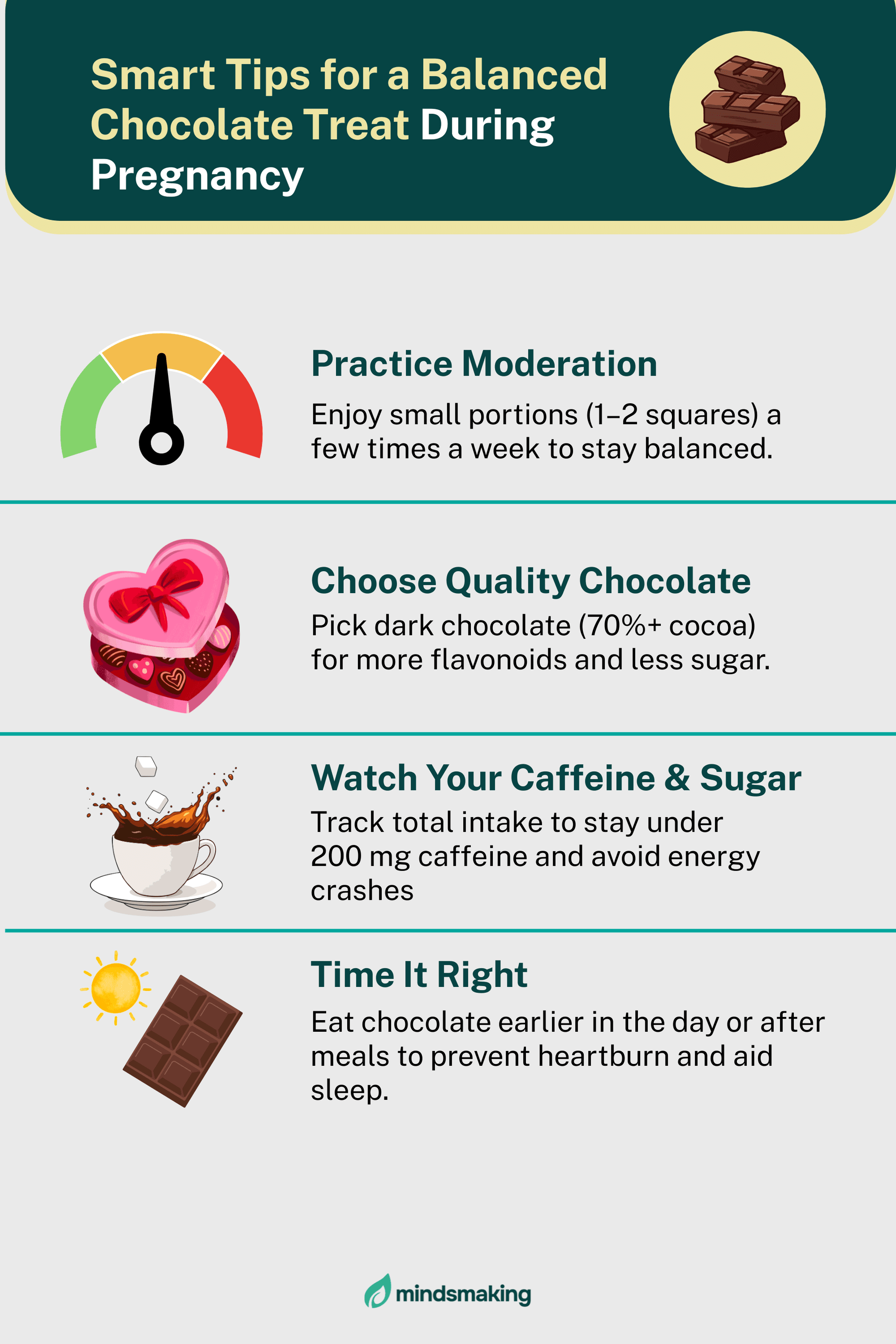
Moderation Is Key: Chocolate should be an occasional treat rather than a daily habit. Eating small and measured portions, like one to two squares a few times a week, allows you to enjoy it without adding excess calories, sugar, or caffeine to your diet. Overconsumption can contribute to issues like gestational diabetes, poor sleep, or unnecessary weight gain, especially when combined with other sweet foods.
Choose Wisely: Selecting high-quality dark chocolate with 70% cocoa or higher is the best way to enjoy the nutritional benefits of chocolate. Dark chocolate contains more flavonoids, which support circulation and heart health, while offering less sugar than milk chocolate. Choosing products with minimal additives and shorter ingredient lists also helps you avoid unnecessary fats and artificial flavorings that add little nutritional value.
Monitor Total Intake: Even though the caffeine content in chocolate is moderate, it adds up when combined with other sources like coffee, tea, and cola. Keep your total caffeine intake below 200 mg per day to reduce the risks of low birth weight or sleep issues. Likewise, tracking overall sugar intake supports stable energy levels and prevents blood sugar spikes that can lead to gestational complications.
Mindful Timing: Eating chocolate earlier in the day can reduce the likelihood of heartburn and disrupted sleep, which are common pregnancy discomforts. Consuming it after a balanced meal can help slow the absorption of sugar, preventing sudden spikes in blood glucose. Avoiding chocolate late at night also helps your body digest it better and ensures a more restful night’s sleep.
When to Talk to Your Doctor
While chocolate can be part of a healthy pregnancy diet, it is important to be aware of how your body reacts to it. Some people are more sensitive to caffeine, sugar, or certain ingredients in chocolate, which can lead to unwanted side effects. If you have caffeine sensitivity, gestational diabetes, or high blood pressure, you should discuss your chocolate intake with your healthcare provider. The caffeine and sugar in chocolate may elevate blood pressure, affect glucose control, or contribute to discomfort, so personalized guidance from your provider can help you find a safe balance.
Pay attention to signs that you may be overindulging, such as heart palpitations, insomnia, restlessness, or rising blood sugar levels. These symptoms can indicate that your total caffeine or sugar intake is exceeding safe limits, especially if you also consume other caffeinated drinks.
If you notice persistent discomfort or uncertainty about your diet, don’t hesitate to ask your doctor or dietitian for advice. Open communication ensures you can enjoy your favorite treats responsibly while protecting your well-being and supporting a healthy pregnancy.
A Word From Mindsmaking
Chocolate can be one of pregnancy’s sweetest comforts, and yes, you can enjoy it safely. Opt for dark chocolate with at least 70% cocoa to get the most benefits while keeping sugar low. Just remember to stay within the 200 mg daily caffeine limit, especially if you also have coffee or tea.
A little chocolate in moderation can lift your mood, support circulation, and add a touch of joy to your day. For most moms-to-be, it’s perfectly safe, and a small, satisfying way to care for both body and spirit.
Pregnancy by Week
Welcome to the enchanting journey of motherhood, where every week unfolds a new chapter of anticipation, growth, and wonder.




Frequently Asked Questions
Can too much chocolate affect my baby?
In moderation, chocolate is generally safe and will not harm your baby. However, excessive caffeine from chocolate (and other sources) may affect fetal growth or sleep patterns. Keeping total caffeine intake below 200 mg per day helps minimize any risk.
Can too much chocolate cause miscarriage?
Normal chocolate consumption does not cause miscarriage. There is no scientific evidence linking moderate chocolate intake to miscarriage. The concern arises only with very high caffeine intake, which is why moderation is advised.
Is it safe to eat chocolate in the first trimester?
You can eat chocolate in the first trimester. Just keep portions small and avoid overdoing caffeine.
Is dark chocolate better than milk chocolate during pregnancy?
Dark chocolate (70% cocoa or higher) is the better choice because it contains more flavonoids, plant compounds that support blood flow and heart health, and less sugar than milk chocolate.
Can chocolate help with pregnancy mood swings?
Chocolate stimulates the release of serotonin and endorphins, the body’s “feel-good” hormones. These can help ease stress, improve mood, and provide a gentle emotional lift when hormones are fluctuating, helping with pregnancy mood swings.
Is white chocolate safe during pregnancy?
White chocolate is safe, but it’s mostly made of cocoa butter and sugar, with little to no beneficial flavonoids or nutrients. It’s fine as an occasional treat, but dark or milk chocolate offers more nutritional value.
Can chocolate cause allergies during pregnancy?
Chocolate itself rarely causes allergies, but products that contain nuts, milk, or soy can trigger allergic reactions. Always check labels carefully and avoid chocolates with ingredients you’re sensitive to.
Can chocolate trigger nausea during pregnancy?
For some women, chocolate can trigger nausea. The sweetness, fat, or caffeine content can sometimes worsen morning sickness, especially in the first trimester. Try small portions or opt for darker, less sweet varieties if you are sensitive.
Was this article helpful?
How many stars are you giving this article?
Leave a comment
Your email address will not be published.