Foods to Avoid During Pregnancy

Written by Mindsmaking Medical Writer

Fact Checked by Mindsmaking Professionals
26th, October, 2025
Not all foods are safe for moms-to-be. Here’s a guide to 20 foods you should avoid during pregnancy — plus tips for making smarter, healthier swaps.
What you eat during pregnancy plays a powerful role in shaping both your health and your baby’s development. From the earliest weeks, the nutrients in your meals help form your baby’s organs, brain, and bones, while also keeping you strong and energized.
But not every food is safe, some may carry harmful bacteria, toxins, or other substances that could put you or your baby at risk. Knowing which foods to avoid simply means you are protecting your health and giving your little one the best possible start. These intentional choices lay the foundation for a smoother, healthier pregnancy.
Key Takeaways
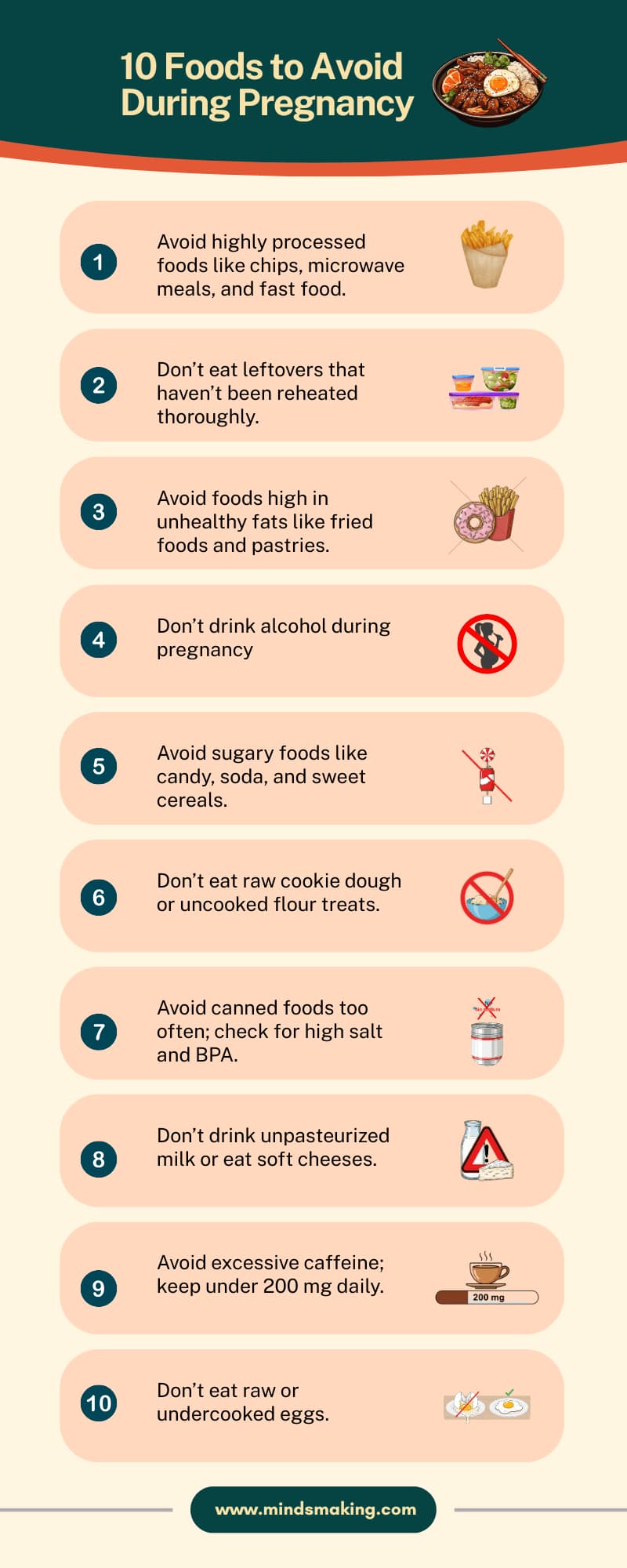
Avoid highly processed foods that contain unhealthy fats, sugar, sodium, and additives.
Reheat all leftovers thoroughly to avoid contamination.
Limit foods high in trans and saturated fats to protect heart and baby’s health.
Avoid alcohol entirely during pregnancy.
Limit sugary foods to reduce the risk of gestational diabetes and excess weight gain.
Avoid raw cookie dough containing raw eggs or flour.
Limit canned foods high in sodium or containing bisphenol A (BPA).
Avoid unpasteurized milk and cheeses to prevent Listeria.
Limit caffeine to under 200 mg/day for a healthier pregnancy.
Avoid raw or undercooked eggs to prevent Salmonella.
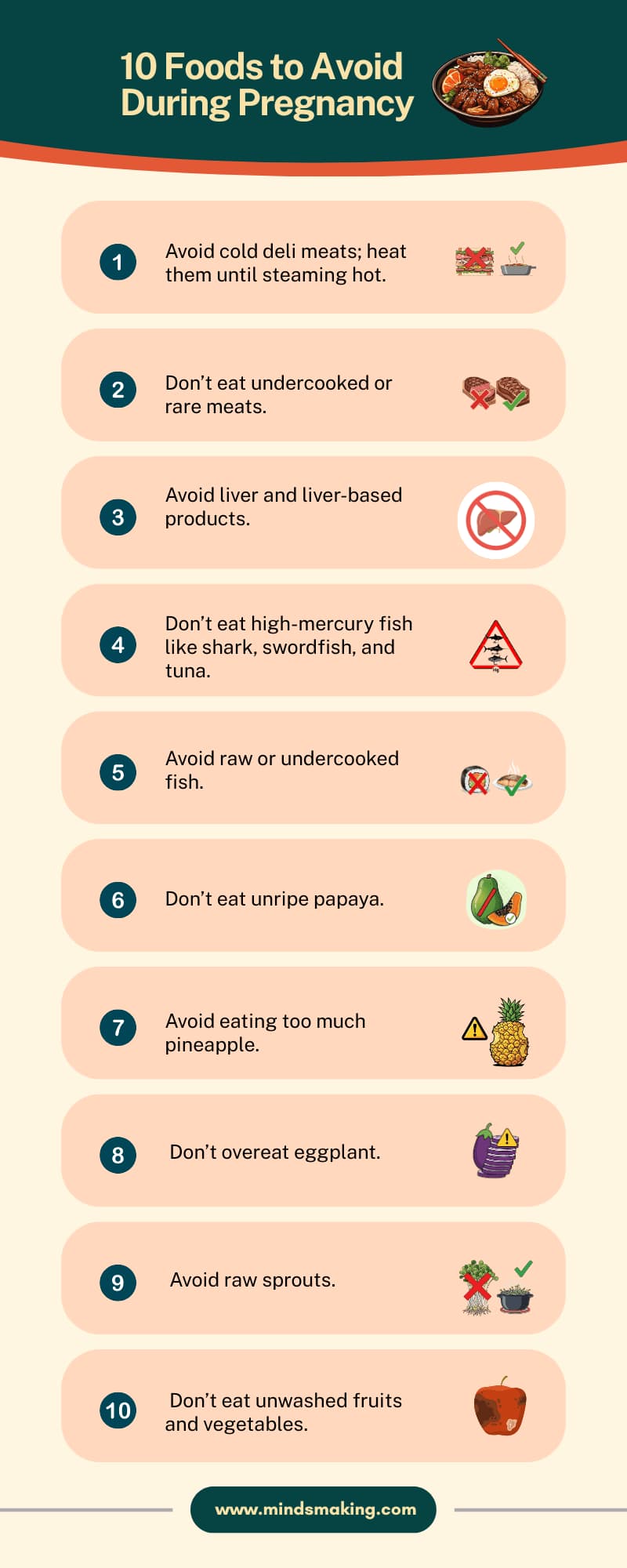
Heat deli meats before eating to kill Listeria.
Avoid raw or undercooked meat to prevent harmful bacteria and parasites.
Avoid liver and liver products to prevent excess vitamin A intake.
Avoid high-mercury fish like shark, swordfish, and king mackerel.
Avoid undercooked fish to prevent bacteria and parasites.
Avoid unripe papaya due to risk of triggering contractions.
Limit pineapple to small amounts to reduce risk of contractions and heartburn.
Limit eggplant intake to avoid uterine stimulation.
Avoid raw sprouts to prevent E. coli and Salmonella infection.
Wash all fruits and vegetables thoroughly before eating.
Highly Processed Foods
That bag of neon-colored chips or microwave-ready burger might be quick and tasty, but highly processed foods are often loaded with unhealthy fats, excess sugar, sodium, and additives that do not do your baby any favors. Some also contain preservatives and artificial ingredients that your body has to work harder to process, using energy you could be using to grow a healthy little human. Plus, these foods tend to crowd out the nutrient-rich meals your body and baby need most.
What to do instead: Choose fresh, whole foods whenever possible, think fruits, vegetables, lean proteins, and whole grains. When you do reach for convenience, go for minimally processed options with short, readable ingredient lists.
Leftovers that haven’t been reheated thoroughly
Last night’s dinner can make a quick lunch, but if it’s not reheated thoroughly, it can harbor bacteria like Listeria that are particularly risky during pregnancy. These germs can survive in cold spots, even if the food feels warm on the outside, and eating it may cause serious illness. The safest approach is to heat leftovers until they are steaming hot all the way through. Yes, even that second slice of pizza.
What to do instead: Reheat leftovers until piping hot (at least 74°C / 165°F) and avoid foods that have been sitting out for more than two hours.
Foods High in Unhealthy Fats
Crispy fried chicken, buttery pastries, and creamy fast-food burgers might be comforting treats, but during pregnancy, they are best kept as rare indulgences. Foods high in trans fats and excess saturated fats can raise cholesterol, increase unhealthy weight gain, and crowd out the nutrient-rich meals your body and baby need most. These fats do not offer the essential nutrients that support your baby’s brain, heart, and organ development, and too much can also affect your own heart health. While healthy fats are important, the key is choosing the right sources.
What to do instead: Swap deep-fried or heavily processed fats for nutrient-dense options like avocados, nuts, seeds, fatty fish, and olive oil.
Alcohol
That celebratory toast can wait a few months, as alcohol isn’t safe at any stage of pregnancy. Whatever you drink passes quickly through the placenta, and your baby’s tiny liver isn’t ready to handle it. Even small amounts may increase the risk of miscarriage, early birth, low birth weight, or developmental problems later on. Since there’s no known “safe” level, going alcohol-free is the kindest choice for your growing little one. Think of it as pressing pause, not forever. Your favorite glass of wine or bubbly will still be there when the time is right.
What to do instead: Enjoy pregnancy-friendly sips like sparkling water with fresh fruit, homemade mocktails, or chilled herbal teas. You will stay refreshed and still get to clink glasses without worry.
Read This Next
No posts available
Sugary Foods
A sweet treat now and then is perfectly fine, but too much sugar can leave you feeling sluggish and can crowd out the nutrients your body and baby need. Regularly overindulging in sweets like cakes, candies, soda, and sugary cereals may raise the risk of excessive weight gain, gestational diabetes, and dental problems. It can also cause quick spikes and crashes in your energy, something no pregnant mama needs more of! Your baby gets all their nourishment from you, so choosing more nutrient-rich options helps them grow strong and healthy.
What to do instead: Satisfy your sweet tooth with natural sources like fresh fruit, dates, or a drizzle of honey over yogurt. This way, you enjoy sweetness while still giving your body and your baby the good stuff.
Raw Cookie Dough
It’s tempting to sneak a spoonful while baking, but raw cookie dough is off-limits during pregnancy. The uncooked eggs inside can carry Salmonella, a bacterium that can cause food poisoning, leading to dehydration, fever, and other complications that aren’t safe for you or your baby. Even dough made without eggs can be risky if it contains raw flour, which can sometimes harbor harmful bacteria like E. coli. The good news is that once baked, those delicious cookies are perfectly safe to enjoy warm from the oven. Think of it as letting your sweet treat reach its full, toasty potential before digging in.
What to do instead: If you love the taste of dough, try pregnancy-safe edible versions made with heat-treated flour and no raw eggs, so you can lick the spoon without worry.
Canned foods
Canned soups, vegetables, and fish can be handy, but during pregnancy, it’s best to enjoy them in moderation. Some canned foods are high in sodium, which can contribute to swelling and raise blood pressure. Others may contain bisphenol A (BPA), a chemical found in some can linings, that mimics the action of estrogen in the body. It can seep into food and may affect the baby's development. While an occasional can is fine, relying on them too often can mean missing out on the fresher, more nutrient-rich benefits of whole foods.
What to do instead: Choose fresh or frozen produce when possible, or look for BPA-free cans and low-sodium options. If using canned beans or vegetables, rinse them well under water to cut down on extra salt.
Unpasteurized Milk and Cheese
Creamy brie or a cool glass of farm-fresh milk might sound tempting, but if they are unpasteurized, they can hide bacteria like Listeria that are not safe during pregnancy. Your immune system is naturally a bit lower right now, so it’s easier for these germs to cause illness. The simple fix is to stick with pasteurized dairy, which has been gently heated to make it safe without taking away the flavor. Soft cheeses like brie, camembert, feta, and queso fresco are fine as long as the label says “made with pasteurized milk.”
What to do instead: Enjoy pasteurized milk and cheeses, or go for hard varieties like cheddar or parmesan. You’ll still get all the creamy goodness, just with peace of mind.
Excessive Caffeine
A morning coffee or afternoon tea can be a comforting ritual, but too much caffeine during pregnancy can be risky. High amounts may increase the chance of miscarriage, affect the baby’s growth, or lead to low birth weight. Caffeine also passes through the placenta, and your baby’s tiny system takes much longer to break it down. Most experts recommend keeping it under 200 mg a day, which is about one regular cup of coffee. Remember, caffeine also hides in tea, chocolate, energy drinks, and some sodas.
What to do instead: If you love the taste, consider switching to decaf or enjoying caffeine-free herbal teas that are safe during pregnancy. You can also try warm milk or fruit-infused water.
Raw or Undercooked Eggs
From runny poached eggs to creamy homemade mayonnaise, some dishes made with raw or lightly cooked eggs can carry Salmonella, a bacterium that can cause food poisoning. During pregnancy, your immune system is more sensitive, so even mild illness can be harder on you and your baby. And oh, you don’t have to give up eggs completely. Cooking them until both the yolk and white are firm kills any harmful bacteria, making them perfectly safe and still delicious. Store-bought mayonnaise, dressings, and sauces are generally safe because they are made with pasteurized eggs; however, always check the label.
What to do instead: Enjoy well-cooked eggs in scrambles, omelets, and baked goods, or look for recipes that use pasteurized eggs so you can still enjoy your favorites without worry.
Deli Meat
A quick turkey sandwich might seem like the perfect grab-and-go lunch, but deli meats can sometimes carry Listeria, which can cause illness during pregnancy and potentially harm the baby. The risk is small but serious enough that most health experts recommend extra caution. Listeria can survive in cold temperatures, so keeping the meat in the fridge isn’t always enough. The safest way to enjoy deli meat is to heat it until it’s steaming hot, which kills the bacteria.
What to do instead: If you’re craving a sandwich, use freshly cooked meat, rotisserie chicken, or heated deli slices. Add plenty of fresh veggies and pasteurized cheese for a safe and satisfying meal.
Raw or Undercooked Meat
Picture this: you’re at a barbecue, the smoky scent of a just-grilled burger wafting over, and someone hands you a juicy patty with a perfectly pink center. It looks mouthwatering, but during pregnancy, that pink is a red flag. Raw or undercooked meat can harbor bacteria like Salmonella or E. coli, and parasites such as Toxoplasma, which can be especially risky right now. Your immune system is a little more vulnerable, and even a mild infection can be harder on you and your baby.
What to do instead: Ask for your meat cooked all the way through, no pink, juices running clear. A well-done steak or burger can still be tender and delicious, especially paired with fresh, colorful sides.
Liver and liver products
Liver might be a nutrient powerhouse, but during pregnancy, it can be a little too much of a good thing. It’s packed with vitamin A in a form that, when eaten in large amounts, can be harmful to your baby’s developing organs. Foods like pâté, liver sausage, or liver-based spreads fall into the same category. While they’re fine for most people, pregnancy calls for a gentler touch. Think of it as hitting pause, not saying goodbye forever.
What to do instead: Choose other iron-rich foods like lean meats, beans, lentils, or leafy greens. You’ll still get the nutrients you need without the vitamin A overload.
High Mercury Fish
You’re at a seaside restaurant, eyeing the menu, grilled swordfish, tuna steak, maybe even shark if you are feeling adventurous. Tempting? Sure. But during pregnancy, these large ocean hunters can carry higher levels of mercury, which can affect the baby’s developing brain and nervous system. The tricky part is that mercury builds up over time, so it’s not just about one meal; it’s about keeping levels low overall.
What to do instead: Go for seafood stars like salmon, sardines, tilapia, or shrimp. They’re low in mercury, high in omega-3s, and still feel like a treat. Think of it as swapping the “big fish” for the smart catch.
Undercooked fish
A perfectly seared tuna steak with that rosy center, normally, it’s a seafood lover’s dream. But during pregnancy, it comes with a catch. Raw or undercooked fish can carry harmful bacteria and parasites, including Listeria and tapeworms, which are harder for your body to fight off right now. Even mild foodborne illness can cause more trouble than it’s worth, and the risk isn’t always obvious. Fish can look fresh but still be unsafe. That doesn’t mean you should give up seafood altogether, though.
What to do instead: Choose cooked fish dishes like baked salmon, grilled tilapia, or seafood pasta. For sushi nights, opt for cooked options like shrimp tempura or veggie rolls. You’ll still enjoy the flavors of the sea, minus the risks.
Unripe Papaya
That firm, green papaya might look perfect for a salad or smoothie, but during pregnancy, it’s best avoided. Its crisp texture and mild flavor might be tempting, but during pregnancy, unripe papaya is best avoided. The skin and flesh contain latex, a natural substance that can act like prostaglandins and oxytocin, both of which may trigger uterine contractions. This risk is higher in early pregnancy, but health experts generally recommend skipping it altogether just to be safe. Ripe papaya, on the other hand, is a completely different story; its soft, sweet, orange flesh is not only safe but also packed with vitamins A and C to support your baby’s growth.
What to do instead: If you love papaya, stick with the fully ripe fruit, soft, sweet, and bright orange inside. It gives you the vitamins without the worry.
Pineapple
A few juicy slices of pineapple can feel like sunshine in fruit form, but too much of it during pregnancy isn’t the best idea. Pineapple contains bromelain, an enzyme found mostly in the core, which in very large amounts may disrupt the protein balance in the body and also trigger uterine contractions. You’d have to eat a lot for it to be a real risk, but moderation is still the safer choice. Plus, its high acidity can cause heartburn, something pregnancy doesn’t need any help with.
What to do instead: Enjoy pineapple in small servings, or pair it with yogurt to tone down the acidity. You’ll still get the tropical sweetness without overdoing it.
Egg Plant
Eggplant might be a dinner-time favorite, grilled, roasted, or tucked into a rich stew. However, in pregnancy, too much of it may not be your best bet. This purple veggie contains certain compounds that, in very large amounts, are thought to stimulate the uterus. While a normal serving is unlikely to cause trouble, eating it in excess every day isn’t worth the gamble. Plus, its slightly bitter taste can sometimes stir up that all-too-familiar pregnancy heartburn.
What to do instead: Enjoy eggplant in moderation, mixed with other vegetables for variety. Think roasted veggie trays, pasta sauces, or stir-fries, you’ll get flavor and color without going overboard.
Raw sprouts
They look so fresh and harmless, those tiny green shoots perched on a sandwich or sprinkled over a salad. But raw sprouts, like alfalfa, bean, or clover, can hide bacteria such as E. coli and Salmonella deep inside their crunchy stems. Because they grow in warm, damp conditions (the same kind bacteria adore), even a good rinse won’t always make them safe. These hidden germs can cause foodborne illness that’s especially risky during pregnancy.
What to do instead: If you love that crunch, cook sprouts by lightly steaming or stir-frying them. Or swap them for other crisp toppings like shredded carrots, cucumber, or bell pepper, fresh and flavorful, without the uninvited extras.
Unwashed Foods and Vegetables
You grab a handful of grapes from the fridge while making dinner, quick, fresh, and healthy. But without a rinse, those grapes might be carrying more than sweetness. Soil, bacteria, and even tiny parasite eggs can cling to the surface of fruits and veggies, even if they look spotless. During pregnancy, your body is more susceptible to these germs, which can lead to illness for you and potential risks for your baby.
What to do instead: Take a moment to wash produce thoroughly under running water, even if it’s “pre-washed” or you plan to peel it. That extra rinse keeps the goodness in and the unwanted hitchhikers out.
Pregnancy by Week
Welcome to the enchanting journey of motherhood, where every week unfolds a new chapter of anticipation, growth, and wonder.




Frequently Asked Questions
Is chocolate safe during pregnancy?
Chocolate is safe to enjoy in moderation during pregnancy, but keep your total caffeine under 200 mg a day. Too much sugar can lead to excess weight gain or gestational diabetes, so savor it as an occasional treat.
Can I eat liver during pregnancy?
It’s best to avoid liver during pregnancy because it’s very high in vitamin A, which in large amounts can harm your baby’s developing organs. Choose other iron-rich foods like lean meat, beans, or leafy greens for a safer alternative.
Is it okay to eat spicy food during pregnancy?
Spicy food is generally safe during pregnancy. However, if it causes discomfort, try milder seasonings and smaller portions to keep meals enjoyable.
Can I eat smoked fish during pregnancy?
Smoked fish can be risky during pregnancy because it may carry Listeria, a bacteria that can harm the baby. If you do eat it, choose hot-smoked fish that has been cooked through or heat cold-smoked fish until steaming hot before serving.
Can I eat shellfish during pregnancy?
Shellfish is safe during pregnancy if it’s thoroughly cooked, as cooking kills harmful bacteria and parasites. Avoid raw or undercooked shellfish like oysters or clams to prevent foodborne illness.
Is goat cheese safe during pregnancy?
Goat cheese is safe during pregnancy if it is made from pasteurized milk, which kills harmful bacteria like Listeria. Avoid soft, unpasteurized goat cheese, as it can increase the risk of infection. Always check the label before eating.
Is it safe to eat frozen meals during pregnancy?
Frozen meals can be safe during pregnancy if cooked thoroughly to at least 74°C (165°F) to kill harmful bacteria. Choose options low in sodium and additives, and avoid any that contain unsafe ingredients like unpasteurized cheese or undercooked meat.
Are protein powders safe during pregnancy?
Protein powders can be safe during pregnancy, but not all are created equal. Some contain added caffeine, herbs, artificial sweeteners, or high levels of vitamins that may be unsafe. Opt for pregnancy-safe protein powders, check the ingredients and talk to your healthcare provider before using them.
Can I eat raw honey during pregnancy?
Raw honey is safe during pregnancy because adult immune systems can handle the bacteria that cause botulism, which is only a risk for infants. However, choose high-quality honey from a trusted source to avoid contamination.
Was this article helpful?
How many stars are you giving this article?
Leave a comment
Your email address will not be published.