Food Cravings During Pregnancy
pexels

Written by Mindsmaking Medical Writer

Fact Checked by Mindsmaking Professionals
30th, January, 2026
Pregnancy food cravings can be sweet, salty, or downright unusual. Understanding what causes them, when they start, how long they last, common myths, and safe ways to manage them helps moms-to-be stay nourished and reassured.
Pregnancy food cravings are the legendary, sometimes hilarious, urges that send moms-to-be running for pickles, ice cream, or both, at the same time. As much as they make funny stories for family gatherings, cravings are a real and common part of pregnancy, driven by hormones, changes in taste, and the body’s shifting needs.
But while that sudden desire for fries dipped in milkshake can feel harmless (and let’s be honest, oddly satisfying), cravings can also feel overwhelming. They may affect nutrition or signal underlying needs, such as low iron levels or other deficiencies.
Understanding why these cravings happen and how to respond to them with balance is key to keeping you and your baby healthy while still leaving room for the occasional midnight cookie run.
Key Takeaways
Food cravings are triggered by a mix of hormonal changes, nutrient needs, blood sugar shifts, heightened senses, and emotional comfort-seeking.
Most cravings begin in the first trimester, peak in the second, and level off in the third, though timing varies for every woman.
Cravings are temporary and usually disappear after childbirth, once hormones stabilize and appetite returns to normal.
Not having cravings is completely normal, since every pregnancy responds differently to hormonal and nutritional changes.
Most are harmless, but cravings for non-food items (pica) or persistent unhealthy choices may signal an issue and should be discussed with a doctor.
Your cravings cannot predict gender, as they are mainly influenced by biology not whether you are craving sugar or salty snacks.
The most common cravings are for sweets, salty snacks, carbs, spicy dishes, and refreshing foods like citrus or ice.
Practice portion control, find healthy swaps, and pair treats with nutrients instead of cutting cravings out entirely.
Is It Normal Not to Have Food Cravings While Pregnant?
It is absolutely normal not to have food cravings during pregnancy. While cravings are often talked about as a “classic” symptom, not every expectant mother experiences them. Every pregnancy is unique, and just as some women feel constant hunger while others struggle with food aversions, cravings also vary widely. Some women experience intense and oddly specific desires, while others go through nine months without a single late-night ice cream run.
There are a few reasons why some women don’t experience cravings. Hormones, which often drive changes in taste and smell, may affect each body differently. Some women may already have a well-balanced diet that naturally provides the nutrients their bodies need, making cravings less likely. In other cases, food aversions, nausea, or even digestive changes may overshadow cravings altogether.
Lacking cravings does not mean anything is wrong with you or your pregnancy. It simply reflects your body’s unique response to the physical and hormonal changes of this season. Whether you are battling a pickle obsession or calmly sticking to your usual meals, both experiences fall within the wide spectrum of normal pregnancy. And if you are not waking your partner at midnight to fetch cookies? Consider it one small mercy of pregnancy’s unpredictable ride.
What Causes Food Cravings during Pregnancy?
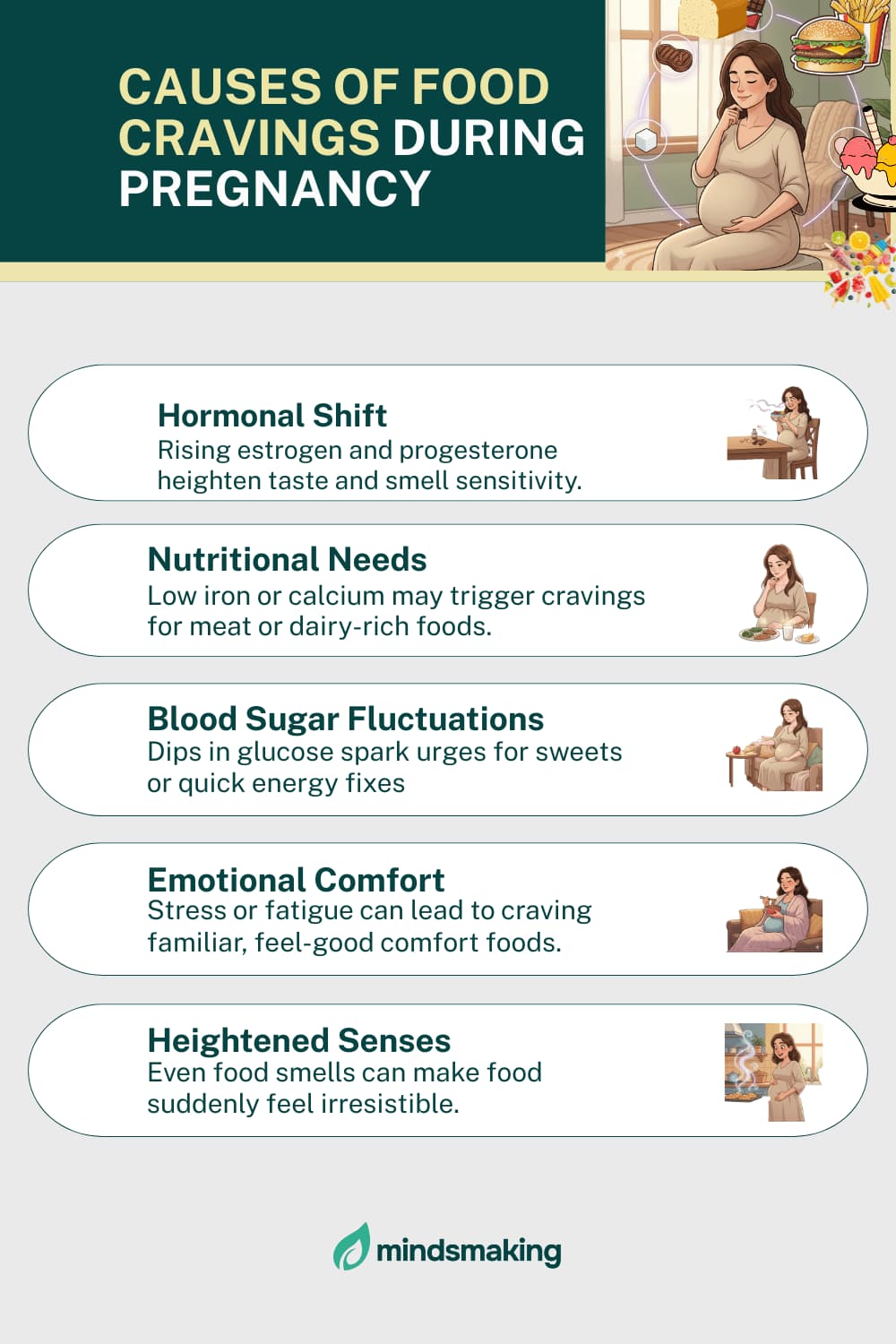
The short answer is that your body and brain are undergoing remarkable changes, and your taste buds feel every bit of it. Food cravings during pregnancy are not random, they are influenced by a combination of physical, hormonal, and emotional factors that can make even the oddest food pairings seem irresistible. Here are five of the most common causes of food cravings:
- Rising estrogen and progesterone can heighten your sense of taste and smell, making certain foods suddenly appealing while others lose their charm.
- Cravings may reflect underlying deficiencies and nutritional needs. Low iron, for example, may spark a strong desire for red meat, while low calcium can fuel a sudden appetite for dairy.
- Fluctuations in blood sugar can trigger urgent cravings for quick sources of energy, such as sweets or refined carbs.
- Stress, fatigue, or mood swings may lead to seeking familiar, comforting foods that provide emotional comfort, a sense of relief, or nostalgia.
- With heightened senses of taste and smell, even subtle food cues like the aroma of fresh fries can feel impossible to ignore.
When Do Pregnancy Cravings Start?
Pregnancy cravings often make their entrance in the first trimester, just as your body is adjusting to new hormonal shifts. For some women, these early cravings are somewhat prevented by nausea or food aversions, but as morning sickness begins to ease, cravings can become more noticeable.
By the second trimester, they often intensify, fueled by increased energy demands and a steadily growing appetite. This is the stage when many expectant mothers report the strongest and sometimes most unusual food desires, ranging from a daily need for citrus to a sudden obsession with salty snacks. In the third trimester, cravings may continue, though they often level off as the body prepares for delivery.
Still, the timing isn’t the same for everyone. Some women notice cravings surprisingly early, before they even realize they are pregnant, while others don’t experience them until much later, if at all. A smaller number of women never feel strong cravings during pregnancy, and that is perfectly normal, too.
The key point is that there is no single “right” timeline. Cravings are simply one of the many unique ways the body adapts to pregnancy, so whether they arrive for you early, late, or not at all, they are a normal part of the journey.
Read This Next
No posts available
How Long Do Pregnancy Cravings Last?
Most pregnancy cravings tend to stick around for much of the journey, though their intensity often changes as your body moves through each stage. For many women, cravings make their debut in the first trimester, grow stronger in the second trimester when energy demands soar, and then begin to ease in the third trimester as appetite patterns stabilize and the body shifts focus toward preparing for labour.
In general, cravings are a temporary symptom tied closely to hormonal changes, increased energy demands, and heightened senses of taste and smell. This means they usually disappear soon after childbirth, when hormone levels begin to settle and nutritional needs shift back toward recovery and breastfeeding. Many new mothers are surprised to discover that the foods they thought they couldn’t live without, whether it was citrus fruit or ice cream, suddenly lose their magic once the baby is born.
That said, the exact duration varies. Some women find their cravings short-lived, appearing for a few weeks and then disappearing, while others notice them lasting until delivery. A small number may not experience cravings at all, and that is completely normal as well. So take heart: whether your cravings come, go, or stick around, your taste buds will eventually calm down (no matter how loudly they demand fries at midnight).
Are Pregnancy Cravings Dangerous?
For the most part, pregnancy cravings are not dangerous. They are a normal response to hormonal changes, heightened senses, increased nutritional needs, and even stress or fatigue. Wanting more fruit, dairy, or even the occasional salty snack is generally harmless as long as it’s balanced with a nutritious diet.
Cravings only become a concern in certain situations. If they consistently push you toward unhealthy foods, like too much sugar, fried foods, or processed snacks, they can affect overall nutrition and lead to excess weight gain, which may increase pregnancy risks. Another concern is pica, a condition in which women crave non-food items such as clay, ice, chalk, or even dirt. This can be dangerous for both mother and baby and requires medical attention.
It is also important to watch for cravings that mask nutrient deficiencies. For example, persistent cravings for ice or red meat may point to low iron levels. In these cases, your healthcare provider can check your levels and recommend safe treatments or supplements.
In short, most cravings are just quirky, temporary side effects of pregnancy. But if they are extreme, focused on non-food items, or affecting your health, it’s worth bringing them up with your doctor.
Are Pregnancy Cravings Linked to the Baby’s Gender?
Pregnancy cravings cannot predict your baby’s gender. While it’s a fun story often shared among family and friends, there is no medical or scientific evidence to suggest that craving sweet foods means you are having a girl or that salty or savory cravings point to a boy, as the common myth claims.
This myth has been around for generations because people naturally love to find patterns and meaning in pregnancy experiences. Cravings are memorable and sometimes unusual, so it feels exciting to tie them to the mystery of whether a baby is a boy or a girl. Add in cultural traditions and old wives’ tales, and the idea continues to stick around.
In reality, cravings are linked to hormonal shifts, heightened senses, and nutritional needs, not the baby’s chromosomes. So whether you are reaching for chocolate at midnight or pickles at dawn, it does not reveal who is on the way.
If you are eager to know your baby’s gender, reliable methods include ultrasound (usually around 18–20 weeks) or genetic testing when recommended. Cravings, while fascinating, are not a sneak peek into the nursery theme.
What are Common Food Cravings?
Pregnancy cravings can be both fascinating and unpredictable. While some women find themselves reaching for everyday favorites, others discover surprising new “must-haves.” Most cravings lean toward common and accessible foods, but the intensity and timing can differ widely from one pregnancy to another. Some of the most common cravings include:
- Sweet treats like chocolate, ice cream, candy, and baked goods.
- Salty snacks like chips, fries, and pickles.
- Carbohydrate-rich foods like bread, pasta, rice, or crackers.
- Spicy dishes like curries, chili, or hot sauce.
- Cold or refreshing items like citrus fruit, popsicles, or even plain ice.
Occasionally, cravings take an unexpected turn, think pickles dipped in peanut butter or ice cream topped with hot sauce. While these unusual pairings might make others raise an eyebrow, they are generally harmless as long as the ingredients themselves are safe during pregnancy. It is also important to remember that cravings are highly individual. One mom-to-be may swear she cannot live without fries, while another may suddenly lose interest in foods she once loved.

How Can I Manage Unhealthy Pregnancy Cravings?
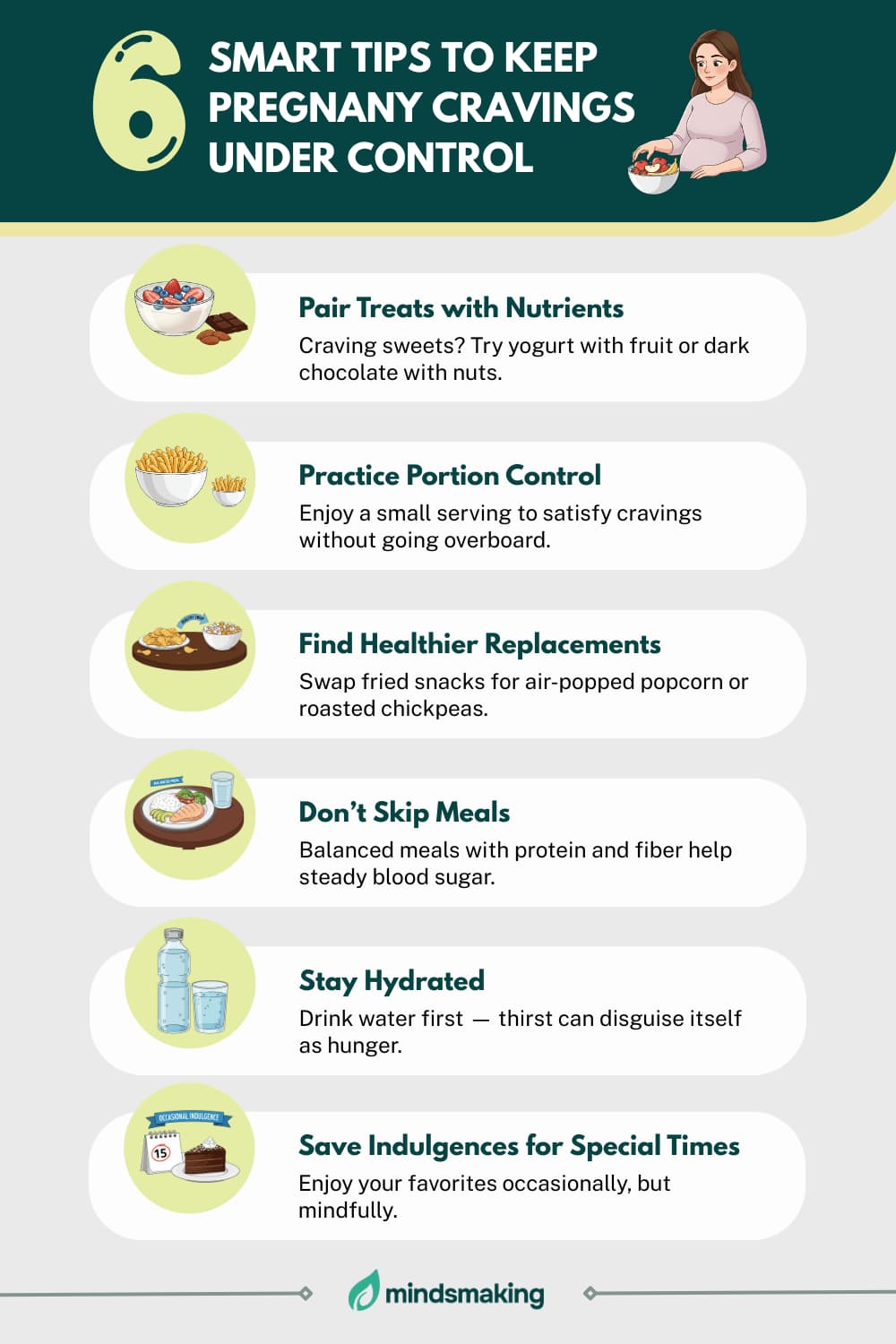
You don’t need to “banish” cravings altogether. The goal is balance, not perfection. Cravings are a normal part of pregnancy, and giving in once in a while won’t derail your health or your baby’s. The key is finding smart ways to manage them so they do not overwhelm your nutrition or leave you feeling sluggish. Here are some practical tips to help you stay in control:
- Pair treats with nutrients. If you are craving sweets, try yogurt with fruit or dark chocolate with nuts.
- Practice portion control. A small serving of chips or ice cream can satisfy the craving without going overboard.
- Find healthier replacements. Craving something crunchy? Try air-popped popcorn or roasted chickpeas instead of fried snacks.
- Don’t skip meals. Eating balanced meals with protein, healthy fats, and fiber keeps blood sugar steady and cravings in check.
- Stay hydrated. Sometimes thirst disguises itself as hunger or cravings, so drink water first.
- Save indulgences for special times. Allow yourself to enjoy, but mindfully.
Ultimately, cravings are just one piece of the pregnancy puzzle. By listening to your body and making small adjustments, you can satisfy your taste buds while still nourishing yourself and your baby.
Pregnancy by Week
Welcome to the enchanting journey of motherhood, where every week unfolds a new chapter of anticipation, growth, and wonder.




Frequently Asked Questions
Can stress play a role in food cravings during pregnancy?
Stress, fatigue, and emotional changes can trigger cravings for “comfort foods” like sweets or carbs. These foods temporarily boost feel-good chemicals in the brain, making them more appealing during stressful times.
Can cravings indicate nutritional deficiencies?
Sometimes, cravings can indicate nutritional deficiencies. Cravings for red meat may hint at low iron, while cravings for dairy can suggest a need for calcium. However, not all cravings are linked to deficiencies, sometimes they are simply hormonal or sensory-driven.
Do food cravings continue after pregnancy?
Most cravings fade once hormone levels stabilize postpartum. Some women even lose interest in foods they desperately wanted during pregnancy, though a few may carry new preferences into motherhood.
Do pregnancy cravings vary by trimester?
Cravings often begin in the first trimester, peak during the second when energy demands rise, and may ease in the third as the body prepares for labor. But the pattern is not the same for everyone.
Can cravings be an early sign of pregnancy?
They can be, but not always. Some women notice food cravings or aversions before realizing they are pregnant, while others don’t experience cravings until later, or not at all.
Why do I crave spicy foods during pregnancy?
Spicy food cravings may be linked to changes in taste perception and heightened senses. Some experts also believe it’s the body’s way of seeking stimulation when hormones make flavors feel duller.
Can cravings affect weight gain during pregnancy?
Cravings can affect weight gain during pregnancy if they lead to frequent overeating of high-calorie foods. Occasional indulgence is fine, but consistent reliance on sugary or fried snacks can contribute to excess weight gain during pregnancy.
Should I avoid certain cravings completely?
Not usually. Most cravings can be satisfied in moderation. However, unsafe foods like unpasteurized cheese, raw fish, or cravings for non-food items (pica) should be avoided and discussed with your doctor.
How do I know if my cravings are a sign of a health issue?
Cravings for non-food items (like clay, dirt, or chalk) may signal pica and possible nutrient deficiencies. If your cravings are extreme, persistent, or interfere with balanced eating, consult your healthcare provider.
Why do I crave salty foods during pregnancy?
Salt cravings may be tied to increased blood volume and fluid changes during pregnancy. In most cases, they are harmless, but excessive salt intake should be monitored to avoid swelling or high blood pressure.
Was this article helpful?
How many stars are you giving this article?
Leave a comment
Your email address will not be published.