Why Toddlers Struggle to Share: The Science Behind Their Behavior

Written by Mindsmaking Medical Writer

Fact Checked by Mindsmaking Professionals
2nd, February, 2026
If you’ve ever watched your toddler guard a toy and refuse to share, this is a common occurrence, and there is a reason for this behavior. Learn what science says about why toddlers don’t like sharing.
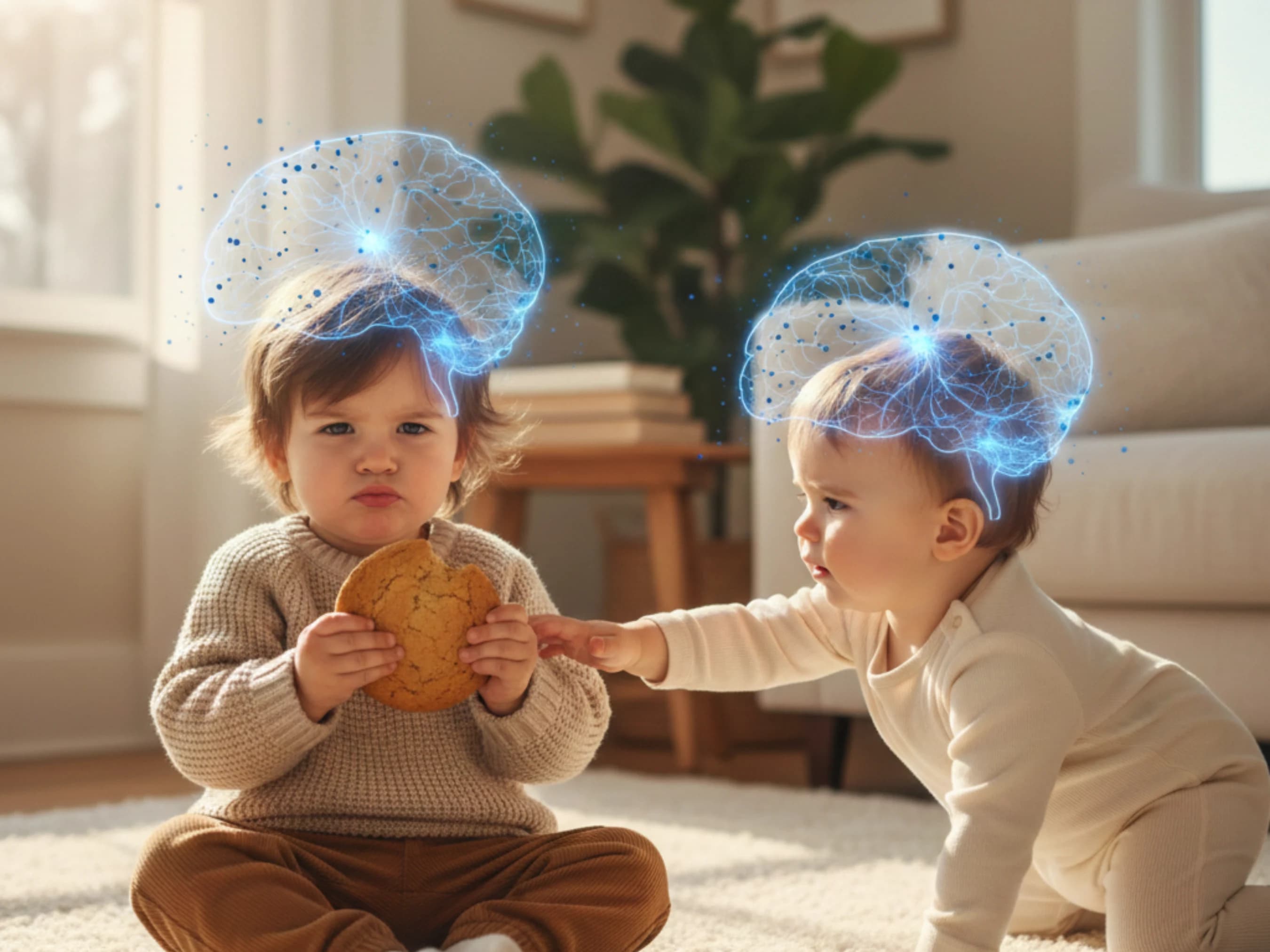
Toddlers refusing to share is completely normal, and you’re not alone if you’ve faced it. It’s not because your little one is “mean” or “selfish.” In early childhood, sharing doesn’t come naturally. Their brains, emotions, and budding sense of self are still developing, which means holding on to toys or snacks is just part of learning about the world and themselves.
According to research, the brains of toddlers are still developing and learning the cognitive and emotional skills needed to understand fairness, empathy, and the perspective of others. In other words, before they can share, they first have to develop the ability to care, and this is something they have to learn.
Key Takeaways
Toddlers don’t like sharing because key regions of the brain needed for empathy, impulse control, and perspective-taking are still developing, and these are essential for the behavior of sharing.
Studies show that toddlers don’t like sharing because they cannot feel empathy just yet, which is the ability to understand how someone else feels, until around the age of four to five.
The home environment in which a child is raised shapes the behaviour of sharing. If a child is raised in a communal home that encourages sharing, they would naturally know how to share compared to children raised in individualistic homes.
How the Toddler Brain Affects Sharing Behavior
Neuroscience research shows that the brains of toddlers are still developing key regions needed for empathy, impulse control, and perspective-taking, and these are essential for the behavior of sharing [1]. The prefrontal cortex, which helps children manage emotions and think about the needs of others, is still under construction during the toddler years. This means that at such an age, they can’t understand why they have to give what's theirs to someone else, to them, “it’s mine”.
Researchers found that while toddlers can recognize what sharing means, they often fail to act on it because their emotional impulses are stronger than their logical understanding [2]. In other words, your toddler might know they’re supposed to share their snack, but the instant craving to keep it for themselves always wins out. It’s not selfishness, it’s biology.
It’s tempting to insist your child shares, especially when others are watching. But research shows that forcing toddlers to share can actually slow the natural development of generosity. When they give up a toy before they’re ready, they often feel resentment rather than empathy. Toddlers who are allowed to decide when to share tend to develop a stronger, more genuine motivation to be generous over time.
This means toddlers are more likely to share when it feels like their choice, not an adult’s command and forcing the behavior of sharing teaches compliance, not kindness.
So, if your toddler clutches their toy every time another child reaches for it, don’t worry, their brain is doing exactly what it’s supposed to. Instead of forcing them to share, you can say, “You can play for two more minutes, then your friend will have a turn,” which keeps things fair without triggering defensiveness.
The best thing you can do as well is to try modeling sharing. For example, say, “I’m going to share my apple with you because I love sharing!” This approach gently shows your toddler how sharing feels rewarding and kind, and over time, as their brain matures, they will want to share too.
Why Empathy Develops Later Than We Think
You might assume that your toddler would immediately “feel sorry” when they don’t share, but it turns out that empathy, which is the ability for them to understand how someone else feels, hasn’t formed yet in toddlers. According to studies on the Developing Child, true empathy doesn’t start to consistently appear until around age four or five [3].
Before then, toddlers operate mostly from their own emotional bubble as they’re still learning that other people have feelings separate from their own. That’s why when a toddler sees another child crying after losing a toy, they might stare blankly or even laugh, or they share their toy one minute and snatch the same toy the next. This happens not because they’re unkind, but because they can’t yet process empathy.
Around age two, toddlers begin to realise that they are separate individuals from their parents and showing possession becomes an early way to define that independence. Research found that toddlers show stronger emotional attachment to objects they call their “own” compared to shared or neutral ones.
So, when your toddler shouts “Mine!” when a friend tries to grab their toy, it’s not stubbornness; to them, they’re protecting what’s theirs. This makes forced sharing feel like a personal threat rather than showing empathy, and when you understand this, it helps you see why that happens.
How Peer Play and Family Habits Shape a Toddler’s Sharing Behavior
The home environment plays a massive role in how children view sharing. In some societies, communal living naturally encourages the behavior of sharing, while in others, individual ownership is more common. A study revealed that children raised in communal homes begin to show generous behaviors much earlier than children from more individualistic homes [4].
Family habits make a huge difference because when parents model this behavior, like in sharing meals, chores, and affection, toddlers will see generosity as a normal behavior. Same way that if a household often emphasizes “yours vs. mine,” toddlers will mirror that mindset as well.
If you want to encourage sharing in your toddler, expose them to such moments at home. You can start by modeling it: you can say, “I’m lending Daddy my blanket because he’s cold,” or “We all share this fruit bowl.” This constant exposure builds an emotional association between sharing and comfort.
Toddlers don’t need long lectures to learn sharing; they need practice, and social play, especially in small groups, is a natural teacher for generosity. Studies show that toddlers who frequently played in peer groups developed stronger fairness and turn-taking behaviors than those with mostly adult-directed interactions [2]. During play with others, toddlers begin to observe cause and effect in real time, where they’ll see that if they never share, friends walk away and play ends, but if they take turns, playing continues. This teaches them quicker than your intervention.
You can encourage this by setting up small playdates for your child with games that require teamwork, like building a tower together or rolling a ball back and forth. This would help them see that sharing can make play more fun.
A Word from Mindsmaking
When your toddler refuses to share, remember that it’s not selfishness but a milestone that is expected for their age because their brains are still developing and dont understand empathy, fairness, and self-control yet.
You can gently guide this process by modeling generosity to your child, practicing turn-taking in peer play, and creating emotionally safe environments for them. Over time, as they mature, they would see sharing as a natural behavior that shows empathy and kindness.
Was this article helpful?
How many stars are you giving this article?
Leave a comment
Your email address will not be published.