How to Prevent and Treat Salmonella Infections in Children
Aflo Images


Written by Mindsmaking Medical Writer

Fact Checked by Mindsmaking Professionals
25th, February, 2026
Salmonella infection in children is transmitted from eating contaminated foods, with symptoms like diarrhea and vomiting. Find out the common causes, symptoms, prevention strategies, and treatment options.
Salmonella is a bacterium that causes gastrointestinal illness in humans when consumed, leading to an infection known as salmonelliosis. It is usually transmitted through contaminated food and may cause symptoms such as diarrhea, stomach pain, fever, and vomiting. Research shows that approximately 400,000 Salmonella infections are reported in the United States each year; that's how common this infection is.
Young children are at particularly high risk of Salmonella infection because their immune systems are still developing, which makes it harder for their bodies to fight off the bacteria. Children under 5 years of age, especially children under 12 months, are at risk.
Key Takeaways
Common causes of Salmonella infection in children include contaminated food, poor hand hygiene, animal contact, and immature or weakened immune defenses.
Salmonella symptoms in children usually begin 6–48 hours after exposure and most often include diarrhea, fever, stomach cramps, and vomiting, with symptoms lasting 4–7 days in otherwise healthy children.
Preventing Salmonella infection in children relies on safe food preparation, consistent handwashing, and avoiding high-risk animal exposure, practices shown to reduce the risk of foodborne illnesses.
Medical attention is necessary when a child shows signs of dehydration, persistent fever, bloody diarrhea, or is under 12 months, as young children can worsen quickly without timely care.
Treatment for Salmonella in children focuses on hydration and supportive care, since most cases resolve without antibiotics, which are reserved only for severe infections or high-risk children under medical supervision.
Symptoms of Salmonella Infection in Children
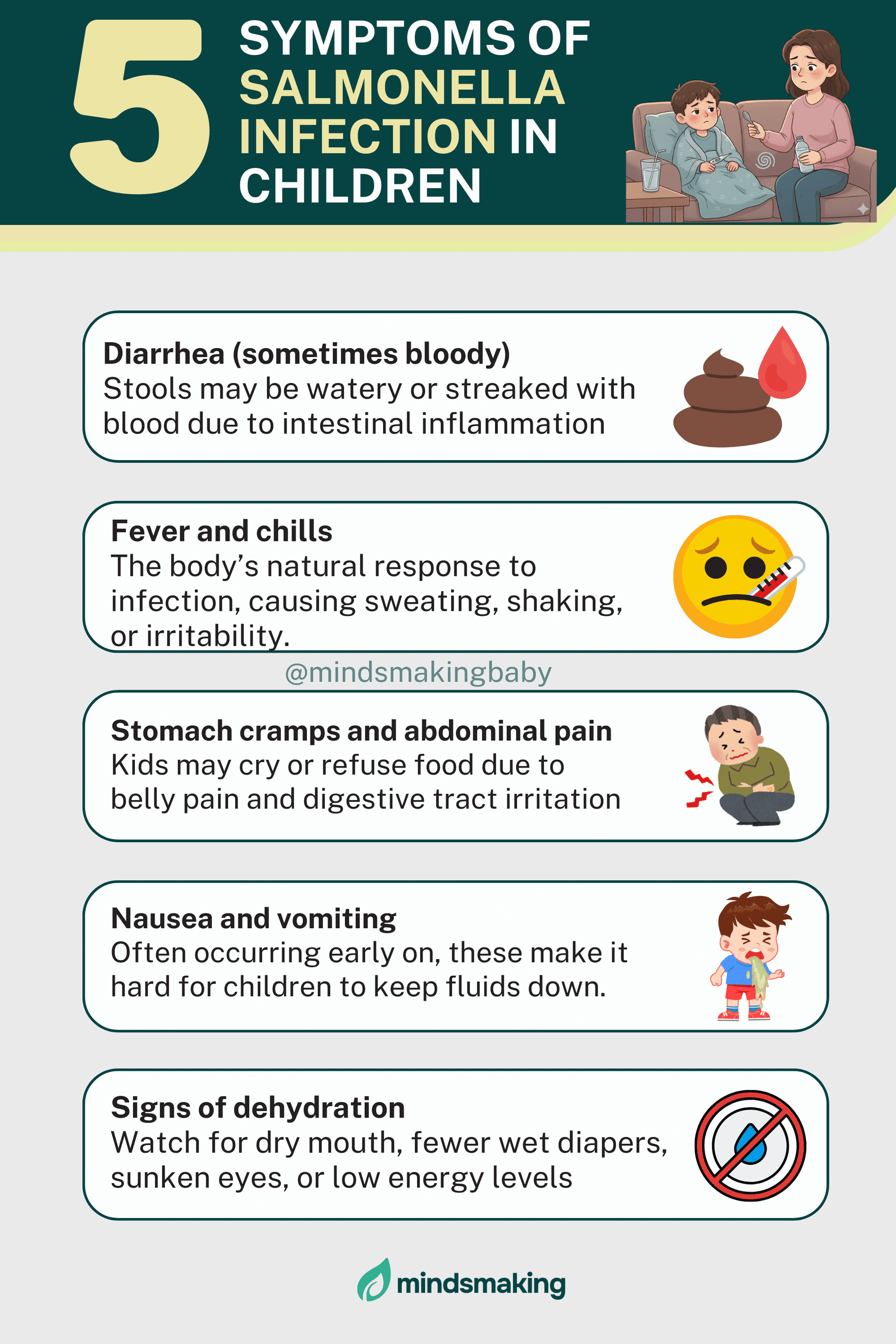
When Salmonella bacteria enter a child’s body, symptoms usually appear within 6 hours to 6 days of ingestion. Because this foodborne illness affects the gut, most symptoms appear quickly and prominently. Here are some signs to look out for:
Diarrhea (sometimes bloody): One of the earliest and most noticeable Salmonella symptoms in children is diarrhea. It may be watery, frequent, and in some cases, streaked with blood or mucus. This occurs because the bacteria inflame the intestinal lining, disrupting normal digestion. Frequent diarrhea increases the risk of dehydration, especially in babies and toddlers.
Fever and chills: A fever is the body’s natural response to infections like Salmonella. Young children may experience warmth, sweating, shakiness, or unusual irritability when infected with Salmonella. Chills can occur as the body works hard to fight off the illness, even when the fever isn’t extremely high.
Stomach cramps and abdominal pain: As the digestive tract becomes irritated from being contaminated with Salmonella, some children may complain of belly pain, cramping, or abdominal discomfort. Younger kids who can't talk may not explain it clearly, but will definitely cry, curl up, or even refuse food due to the pain.
Nausea and vomiting: Many young children may experience these symptoms, especially in the early hours of the infection. This can make it difficult for them to maintain adequate fluid intake, increasing the risk of dehydration and delaying recovery.
Signs of dehydration: Diarrhea and vomiting, which can cause fluid loss, are serious concerns. Warning signs include dry mouth or lips, fewer wet diapers or reduced urination, lethargy or low energy, and sunken eyes.
Most symptoms of Salmonella infection in children may last up to 4 to 7 days, and many kids can even recover fully with proper care. However, severe cases or persistent symptoms may require medical attention, especially in younger children.
4 Common Causes of Salmonella Infection in Children
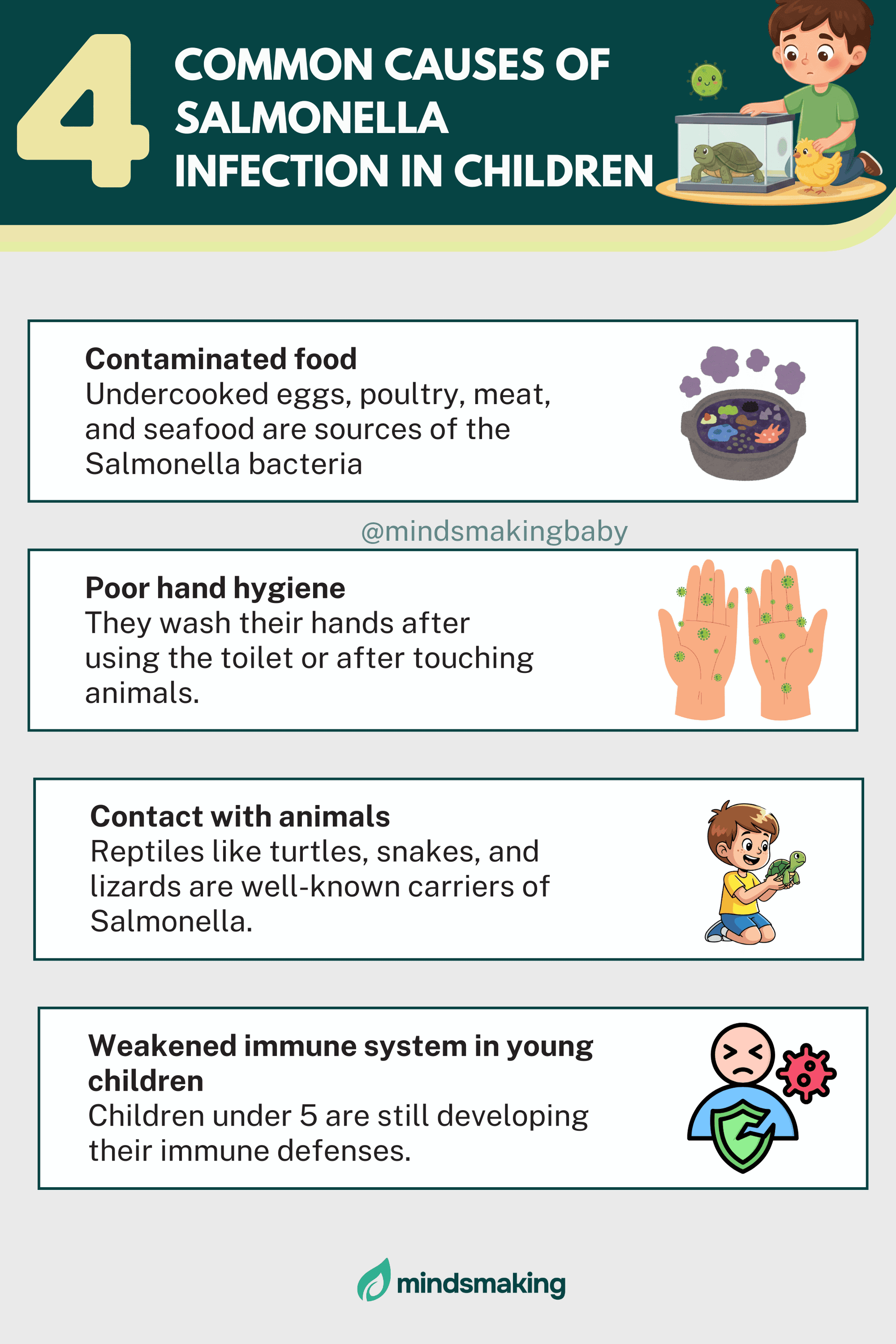
Salmonella infection doesn’t just happen in children; it sneaks in quietly, through everyday things that might look harmless. Here are some common causes of Salmonella infection in kids:
1. Contaminated food: Undercooked eggs, poultry, meat, and seafood are classic sources of the Salmonella bacteria. Foods such as raw or lightly cooked eggs with runny yolks, homemade mayonnaise, or raw cookie dough are especially risky for children because raw eggs can be contaminated with Salmonella. Unpasteurized milk or juice can also carry Salmonella, which is why health organizations strongly recommend pasteurized products for kids.
2. Poor hand hygiene: Children frequently touch surfaces, toys, and pets, and occasionally the floor, before putting those unwashed hands directly into their mouths. Salmonella can live on dirty hands after using the toilet, touching animals, or handling contaminated food. Without proper handwashing, these bacteria get a free pass into their little bodies.
3. Contact with animals: Reptiles like turtles, snakes, and lizards are well-known carriers of Salmonella, even when they look very clean and healthy. Chicks, ducklings, and some farm animals can also spread the bacteria. This doesn’t mean that your child can’t have fun or play with animals, but it does mean that washing their hands afterwards is non-negotiable.
4. Weakened immune system in young children: Young children don’t yet have a fully mature immune system, which makes it harder for their bodies to fight off infections from bacteria like Salmonella once exposure happens. Little children under 5 still have their immune defenses “under construction” and are not fully equipped to handle Salmonella. This is why the same contamination that might cause mild stomach upset in an adult can turn into a more serious foodborne illness in a baby or toddler.
Read This Next
No posts available
How to Prevent Salmonella Infection in Children
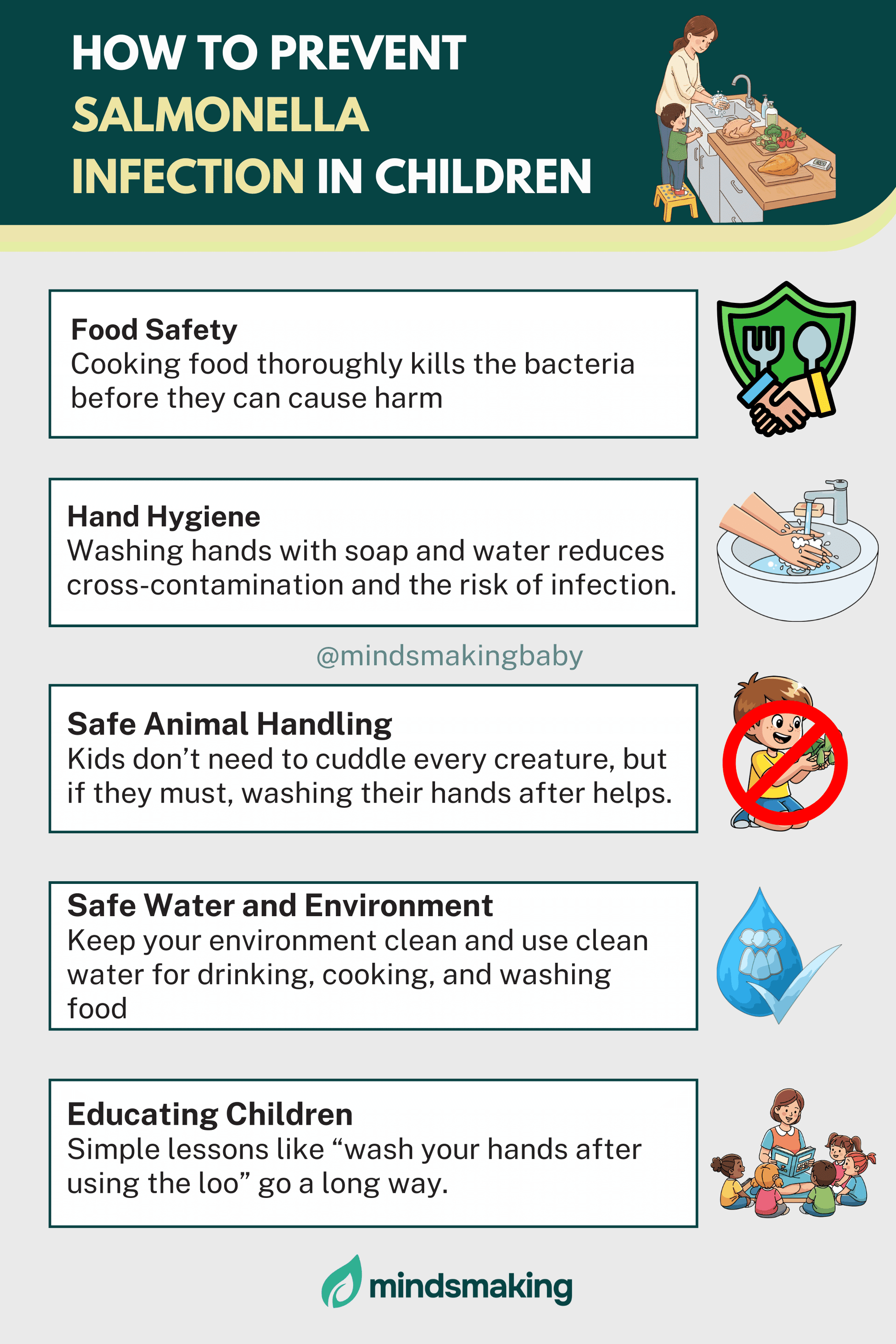
To prevent Salmonella infections in children, much of it comes down to small, everyday habits that can quietly do a lot of heavy lifting. You don’t need to place your child in a germ-proof bubble; just smart, consistent prevention strategies will lower your child’s risk of contamination.
Food Safety: One of the most effective ways to prevent Salmonella infections in children is to follow food safety practices. Salmonella bacteria thrive on raw or undercooked foods, especially eggs, poultry, and meat. Cooking food thoroughly kills the bacteria before they can cause harm. So, avoid raw eggs, unpasteurized milk, and half-cooked meats, even if they “look fine.”
Hand Hygiene: Handwashing before and after meals may seem excessive until you realize how powerful it is. One common cause of infections happens when little hands move germs from surfaces to their mouths. Washing hands with soap and water before eating, after using the toilet, and after playing outside reduces cross-contamination and lowers the risk of Salmonella infection.
Safe Animal Handling: Reptiles, chicks, and some pets are common carriers of Salmonella without having to look sick. Children don’t need to cuddle every creature they meet. However, if they must, washing their hands after touching such animals can significantly reduce their risk of contamination. Complete avoidance, however, reduces exposure to bacteria and prevents unnecessary infection.
Safe Water and Environment: Clean drinking water and surroundings matter more than ever, as unsafe water and a polluted environment can lead to contamination and increase the risk of foodborne illness. Keeping your environment clean and using clean water for drinking, cooking, and washing food will help you prevent Salmonella infections in your child.
Educating Children: Teaching young kids why certain hygiene habits matter is a more long-term protection plan. Simple lessons like “don’t eat food off the floor,” “wash hands before snacks,” and “wash your hands after using the loo” go a long way in preventing Salmonella infections in children. These habits reduce exposure, limit cross-contamination, and protect against Salmonella well beyond childhood.
When to Seek Medical Attention
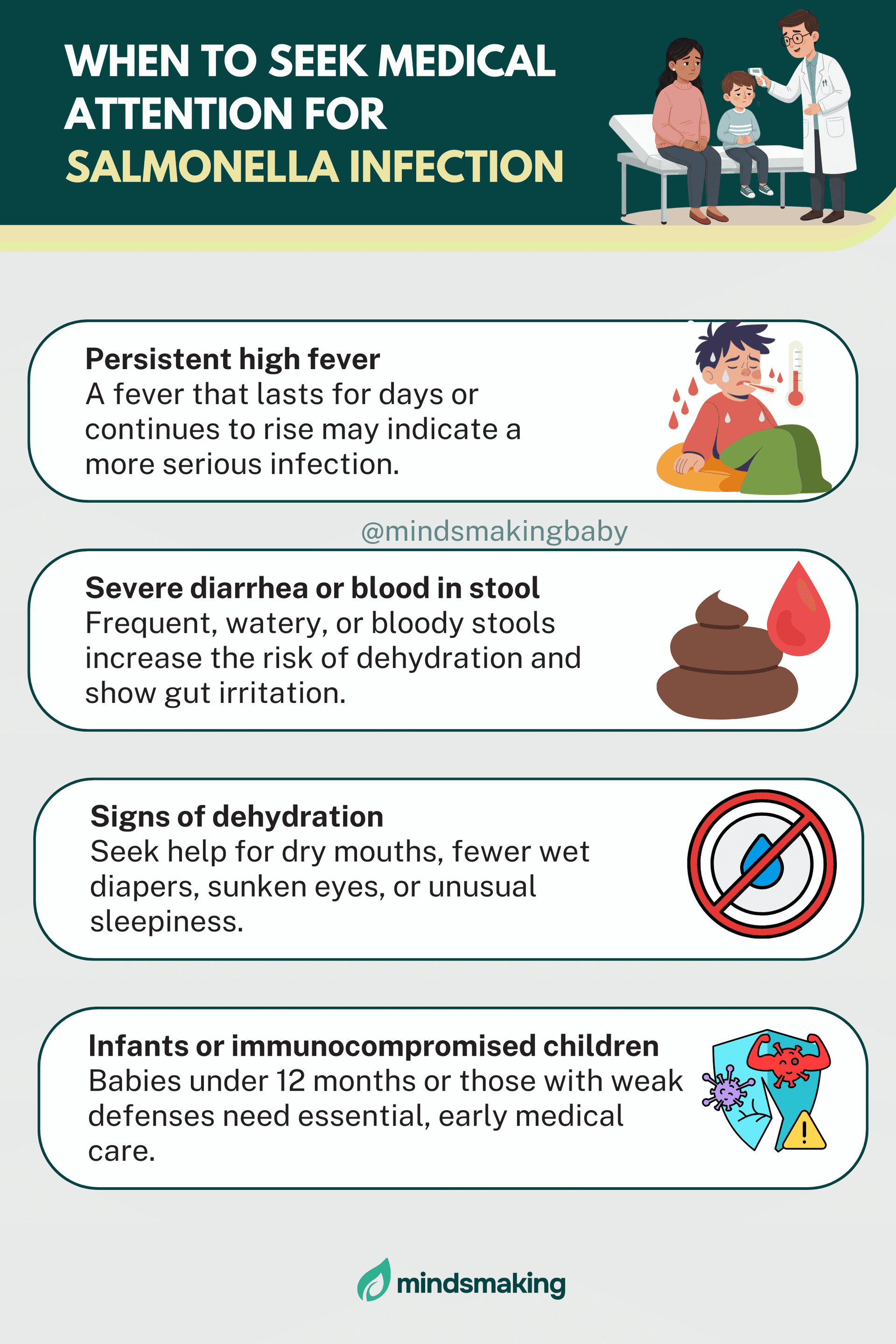
While many cases of Salmonella infections in children resolve at home with proper care, knowing when to seek medical care is crucial to preventing complications. Seek medical assistance when you notice signs such as:
Persistent High Fever: A mild fever can happen with many childhood illnesses, but a persistent or very high fever may indicate that the Salmonella bacteria are causing a more serious infection. If the child’s fever doesn’t improve after a few days or continues to rise, a medical evaluation is important.
Severe Diarrhea or Blood in Stool: Diarrhea is one of the most common symptoms of Salmonella infection, but severe diarrhea, especially when it’s multiple times a day, watery, or bloody, should never be ignored. Blood in the stool may indicate intestinal irritation caused by bacteria, and it increases the risk of dehydration.
Signs of Dehydration: Children can lose fluids faster than adults, making dehydration a major concern with Salmonella infection. Warning signs can include dry mouth, fewer wet diapers or bathroom trips, sunken eyes, lethargy, and unusual sleepiness. If you notice these signs, the child should be seen by a doctor to help prevent serious complications and support recovery.
Infants Under 12 Months or Children With Weakened Immune Systems: Infants who are under a year old and children with weakened immune systems are more vulnerable to Salmonella infections. Their bodies may struggle to fight off the infection, increasing the risk of complications. For these children, early medical attention isn’t optional; it’s essential to help avoid complications.
Treatment Options for Salmonella in Children
Most Salmonella infections in children are self-limiting and typically resolve with supportive care. However, knowing how to manage symptoms safely is essential to preventing and treating Salmonella infections in children without complications such as dehydration or prolonged illness.
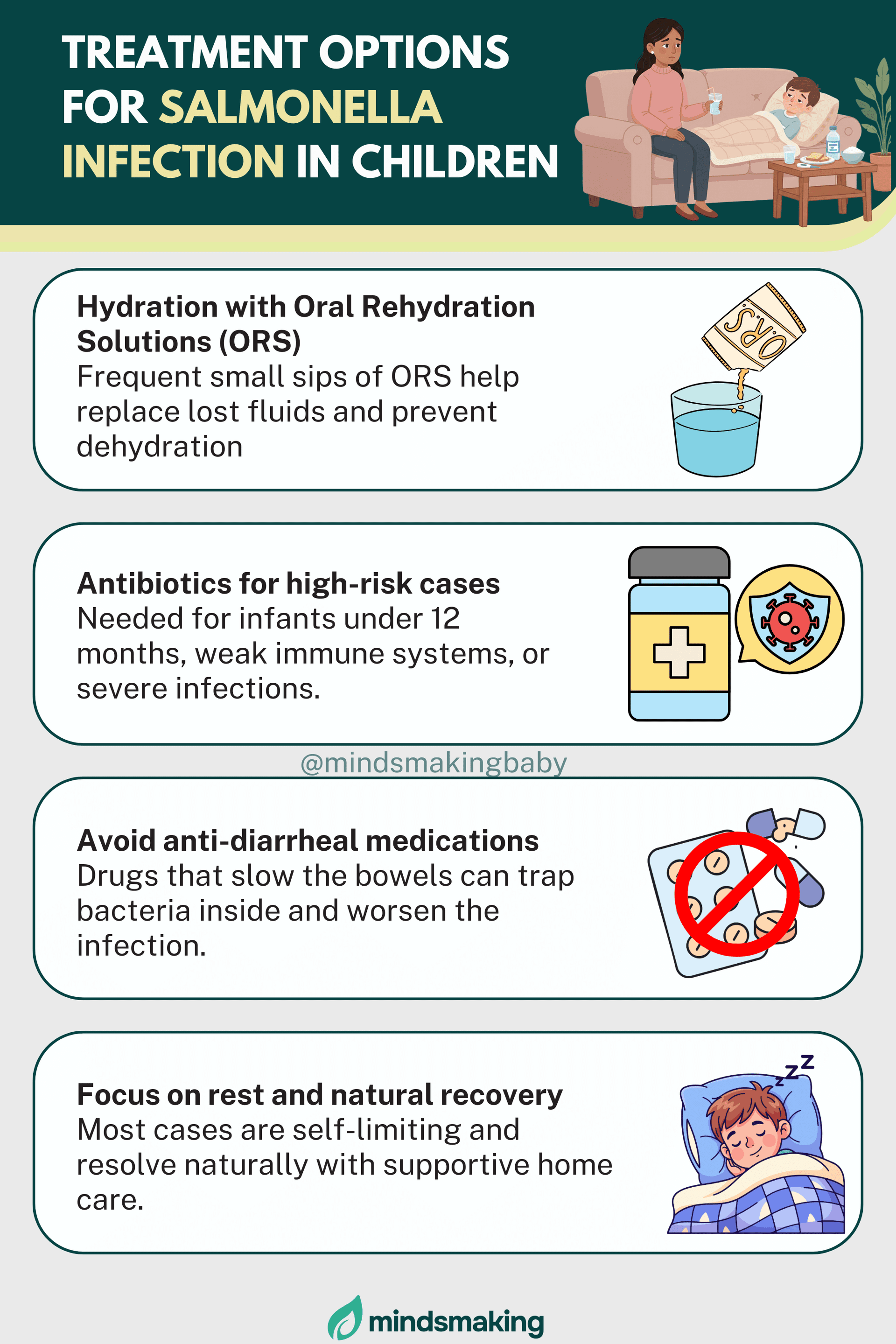
Hydration with Oral Rehydration Solutions (ORS): The number one treatment for a Salmonella infection is keeping your child hydrated at all times. Diarrhea and vomiting can quickly lead to dehydration, so offering oral rehydration solutions (ORS) or plenty of fluids is key to keeping them hydrated. Even if your child refuses water, small sips frequently can maintain hydration and help their body fight the bacteria.
When Antibiotics May Be Needed: Most children do not need antibiotics, but they may be necessary for severe Salmonella infections, for children under 12 months, or for kids with a weakened immune system. In these cases, a healthcare provider will prescribe an appropriate medication to target Salmonella directly. Using antibiotics unnecessarily can disrupt gut health, so always consult a pediatrician before starting any drug for Salmonella treatment.
Avoid Certain Medications That Slow Bowel Movement: Anti-diarrheal medications, such as loperamide, are generally not recommended for children with Salmonella infection, as slowing bowel movement can trap bacteria in the intestines and worsen the infection. Instead, you should focus on hydration and plenty of rest, while allowing their body to flush out the bacteria naturally.
A Word From Mindsmaking
You can keep your little ones safe from Salmonella infections by being vigilant, consistent, and incorporating these practical habits. Prioritize food safety by cooking meats thoroughly, avoiding raw eggs, and washing fruits and vegetables. Make hand hygiene a daily routine and ensure pets are handled safely, especially reptiles and birds.
Clean water, a tidy environment, and teaching children safe eating habits go a long way in prevention. Remember to keep an eye out for diarrhea, fever, stomach cramps, or dehydration, and don’t hesitate to contact your pediatrician if symptoms are severe or persistent.
Frequently Asked Questions
Which antibiotics are used to treat Salmonella?
Doctors may prescribe azithromycin or ceftriaxone for a severe Salmonella infection. These help clear infections in children with high-risk conditions or weakened immune systems.
Can probiotics help in fighting Salmonella infection?
Some studies suggest that probiotics can support gut health and may reduce the duration of diarrhea. However, they are not a replacement for medical care but can be a gentle way to help restore your child’s digestive system.
Is salmonellosis more common in children than in adults?
Children, especially those under 5 years old, are more vulnerable to Salmonella infections because their immune systems are still developing and they tend to explore foods and surfaces more actively.
How contagious is Salmonellosis in children?
Salmonella is highly contagious and can spread through contaminated food, surfaces, or contact with infected people. Good hygiene, such as handwashing and cleaning toys and surfaces, can significantly reduce transmission.
Can Salmonella cause vomiting in kids?
Nausea and vomiting are common symptoms of Salmonella infection in childrenandt oftenaccompanye other symptoms such as diarrhea, stomach cramps, or mild fever.
Can Salmonella cause fever without diarrhea?
Some children may develop a fever as the first symptom, especially in mild infections, even before diarrhea or other gastrointestinal symptoms appear.
Can children get Salmonella more than once?
It’s possible if the child has been re-exposed through contaminated food, water, or surfaces. Continued attention to prevention and hygiene is important to prevent reinfection.
How long does Salmonella last in kids?
Most children recover in 4 to 7 days with proper hydration and rest. However, with severe cases, it may take longer, particularly if dehydration or complications occur.
Can my child get salmonella from pets?
Reptiles, birds, and even some mammals can carry Salmonella bacteria. Always ensure your child washes their hands after touching pets, and avoid letting them handle reptiles.
Can Salmonella affect my child’s appetite?
During a Salmonella infection in children, the child may lose interest in food due to stomach cramps, nausea, or general discomfort. Prioritize hydration and easy-to-digest foods until recovery.
Was this article helpful?
How many stars are you giving this article?
Leave a comment
Your email address will not be published.