16-Month-Old Toddler Development and What to Expect

Written by Mindsmaking Medical Writer

Fact Checked by Mindsmaking Professionals
15th, December, 2025
Your 16-month-old is growing fast, learning new words, and keeping you awake every single day. At this stage, every moment feels like a new discovery for both you and your little explorer.
Every moment with your 16-month-old now gives you a reason to smile. You have watched the transformation from that tiny newborn who depended on you for everything to a curious little explorer with a mind of their own. This stage is all about growing curiosity, confidence, and communication.
Your toddler is now getting better at walking, running, and climbing, so you may often find them moving from one corner of your home to another, testing boundaries and keeping you on your toes. Do not be tired, it is all part of their natural growth and a sign they are learning through imitation and play.
If you have come this far with your toddler, it is worth celebrating because you both are doing amazingly well. With the right understanding of your 16-month-old baby’s development, you will be well prepared to support them through this exciting new phase of discovery and growth.
Key Takeaways
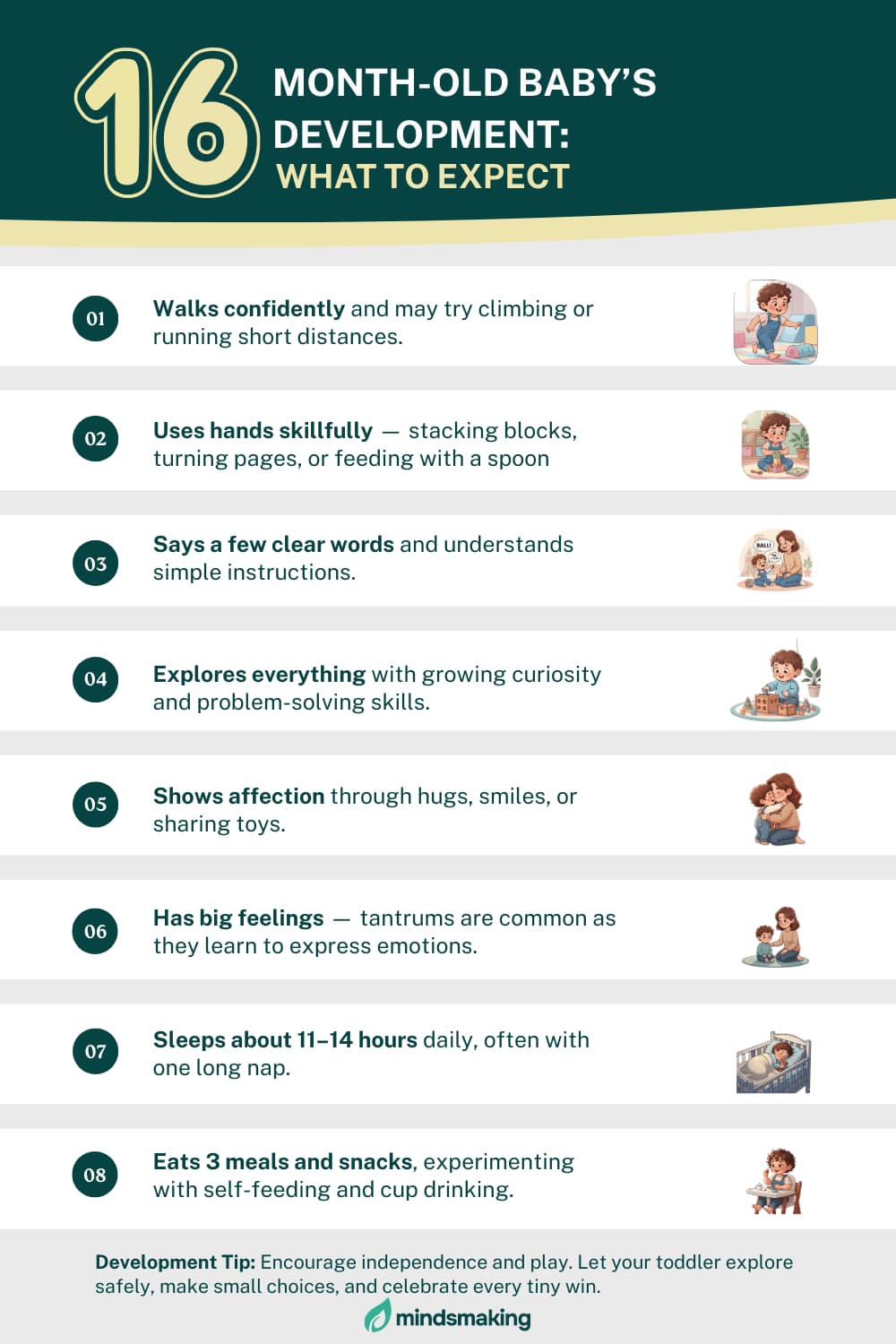
Your 16-month-old is rapidly mastering both gross and fine motor skills, from walking, climbing, and kicking to using a pincer grasp, feeding themselves, and exploring with hands, building strength, coordination, and independence.
At 16 months, your toddler is expanding their language skills, saying 5–10 words, following simple instructions, imitating sounds, and using gestures and tone to communicate meaning, building both speech and social connections.
Your 16-month-old is exploring cause and effect, solving simple problems, remembering routines, engaging in pretend play, and beginning to recognize themselves, marking important strides in cognitive development.
By 16 months, your toddler is forming strong attachments, showing independence, expressing affection, experiencing big emotions, and beginning to show empathy, marking key milestones in social and emotional development.
Your 16-month-old typically sleeps 11 to 14 hours with one daytime nap and is exploring self-feeding with meals, snacks, and milk, building independence and developing healthy eating habits.
At 16 months, your toddler thrives on simple, playful activities that boost movement, fine motor skills, language, independence, and social-emotional growth while having fun.
Talk to your pediatrician if your 16-month-old shows limited movement, minimal speech, low curiosity, or ongoing sleep and feeding difficulties.
Physical and Motor Development
It is amazing how much can change in just 16 months. Your toddler is building strength, balance, and confidence through constant movement. They are not just growing in height and weight, they are also mastering movements that show both fine and gross motor skills. Here is what to expect at this stage:
Physical and Motor Development

Walking Steadily
Your toddler is now walking with more balance and confidence. You might even catch them breaking into a wobbly run that looks like a mix between a sprint and a dance move. Do not worry, this run is completely normal and part of their growth and muscle coordination. Just keep an eye out for corners and coffee tables.

Attempting to Climb Furniture or Stairs
This is when your little explorer suddenly decides that the couch is a mountain and the dining chair is a personal challenge. Climbing helps build leg strength and balance, but it also keeps you alert. If you have not baby-proofed before, now is a good time to do so.

Squatting to Pick Up Objects and Standing Without Support
If you ever noticed your toddler squatting to pick up a toy, then standing right back up like a mini athlete, that is excellent progress in leg strength and balance. You might even feel tempted to sign them up for toddler gymnastics.

Trying to Kick or Throw a Ball
At this age, kicking may look more like stepping on the ball or falling over it, but the effort counts. Throwing, on the other hand, might include toys, spoons, or even their socks. It is all part of their hand-eye coordination and motor development.

Using Push-and-Pull Toys to Build Strength and Coordination
Those adorable push cars and pull-along animals are more than just toys, they are tools for building balance and body control. It is a fun way for your child to strengthen their legs while also practicing direction.

Using Pincer Grasp to Pick Up Small Items
That neat little pinch between the thumb and forefinger shows how much their fine motor skills have grown. Whether they are picking up cereal pieces, buttons, or the tiniest crumbs you missed while cleaning, this grasp is a big step toward independence.

Stacking a Few Blocks or Similar Objects
Your toddler might now enjoy stacking two or three blocks before gleefully knocking them over. It is not destruction, it is learning in progress. These activities help them understand balance, coordination, and cause-and-effect.

Turning Pages in a Book
Your toddler can now help turn the pages, even if they sometimes skip three at once. It is a good time to introduce simple board books with bright pictures and short sentences to keep them engaged.

Scribbling with Crayons or Markers
Expect colorful “artwork” on papers, tables, and maybe the walls too. Scribbling helps your toddler develop hand control, creativity, and focus. Keep washable crayons handy to avoid wall stains.

Feeding Themselves with a Spoon or Fingers
This is where mealtime turns into a mini adventure. Your toddler might manage a few spoonfuls of food, then proudly wear the rest on their face or shirt. Do not stress if this happens, it is an important step in independence and coordination. Continue offering a balanced diet with healthy snacks to support steady growth, weight, and height.

Pointing to Objects or People to Show Recognition or Interest
Pointing is a way they communicate and a huge step in speech development. When your toddler points at something, name it for them. It helps build vocabulary and makes them feel understood.
Helping with Dressing
Your toddler might start pushing their arms through sleeves or lifting their legs for pants. It is both adorable and practical. These moments teach them body awareness and coordination, even if it means dressing takes twice as long as usual.
Language Development
Your 16-month-old is starting to sound like the sweetest little chatterbox in the making. You might not always understand what they are saying, but they sure do, and they mean every word. This stage is all about understanding language and finding their voice. They are soaking up every sound you make, every word you say, and sometimes repeating them in ways that make you laugh out loud. At this point in your baby’s development, speech is more about trying than perfection. Here is what your little language learner might be doing right now:
Saying Around 5–10 Clear Words: Your toddler may now be saying anywhere from 5 to 10 clear words. This could be “mama,” “dada,” “ball,” or even “no.” These words often include familiar names, favorite snacks, and simple requests. They understand a lot more than they can say, so do not be surprised if they react instantly when you mention “biscuit” or “outside.” It is a big milestone in speech development and one that fills every parent’s heart with pride.
Following Simple Instructions Without Gestures: Your little one now understands these simple commands like “come here!” or “sit down!” This shows that their brain is processing language more efficiently. Of course, whether they actually obey is another story. Sometimes they will respond with a smile that says, “I heard you, but I have better plans.” Either way, it is progress.
Using Tone and Expression to Communicate Meaning: Even when the words are not clear, you can tell exactly what your toddler means from their tone and expression. A loud squeal may mean “I love it!” while a whiny mumble clearly says “Not that!” This emotional expressiveness is their way of using tone and rhythm to add meaning. It is part of their natural growth in both speech and emotional development.
Imitating Words or Sounds They Hear Frequently: Toddlers at this age are like tiny recorders, picking up sounds, words, and even the way you say them. Imitation is how they practice speech. So, if you hear a little voice trying to copy your “thank you” or “uh-oh,” celebrate, because your toddler is on their way to becoming a confident communicator.
Using Gestures and Eye Contact Along with Speech: Communication now is more about connection than words. You will notice your toddler pointing, waving, or nodding along as they babble. That sparkle in their eyes when they talk to you is their way of saying, “Do you get me?” These gestures show emotional growth, understanding, and the early building blocks of social interaction.
Cognitive Development
Life with your 16-month-old baby is becoming full of surprises and laughter. You are no longer looking at a clueless little one; your toddler is now showing real signs of thought, curiosity, and understanding. At this stage, their cognitive development shines through problem-solving, memory, and imagination. In short, your child is thinking more, remembering more, and imitating everything around.
Understanding Cause and Effect More Deeply: Your toddler has officially entered the “what happens if I do this?” phase. They will drop toys, press buttons, and splash in water just to see what happens next, or maybe just to watch your reaction! Every giggle, splash, or crash teaches them that actions lead to outcomes.
Trying to Solve Problems Independently: If you catch your little one trying to open a jar lid or fit a shape into the right hole, then grinning triumphantly afterward, that is problem-solving in motion. They are experimenting, strategizing, and learning to be persistent. Try not to jump in too quickly; those few seconds of figuring it out are priceless moments of growth.
Showing a Clear Memory of Familiar Routines and People: Your toddler’s memory is getting sharper every day. They remember that snack time follows playtime and that Daddy usually takes them for a walk after lunch. Mention “grandma,” and watch their faces light up. These familiar people and routines make your child feel safe and loved.
Engaging in Pretend Play: When your toddler chats on a pretend phone or offers you tea from an empty cup, they are practicing creativity and symbolic thinking. It is not nonsense; it is early storytelling, and that is utterly adorable.
Recognizing Themselves in Photos or Mirrors: Around 16 months of age, your toddler begins to recognize themselves in mirrors and photos, which is a big milestone in self-awareness. They are learning that the baby in the mirror is them.
Read This Next
No posts available
Social and Emotional Development
If there is one thing you have probably noticed by now, it is that your 16-month-old has big feelings in a tiny body. One minute, they are hugging you like you are their favorite person in the world, and the next, they are crying because you peeled their banana wrong. This month is really a period of emotional growth, attachment, and awareness for your toddler. Here is what to expect:
Showing Stronger Attachments to Parents or Caregivers: Your toddler’s love for you has leveled up as this is usually the stage where they show strong attachments to parents or caregivers. They may follow you everywhere, even to the bathroom because being near you makes them feel safe and loved. This attachment is a healthy sign of emotional development. You are their comfort zone, their home base, and their favorite person to share every giggle and tear with.
Displaying Independence: Get ready for your toddler’s declaration of independence. Whether it is feeding themselves, picking clothes, or refusing help, your little one wants to do things their way. It can be adorable and slightly time-consuming. Try to embrace this growing independence because this is how confidence and self-esteem begin to show.
Expressing Affection: Few things melt a parent’s heart like a surprise hug or a slobbery kiss from their toddler. Around this age, children begin to express affection more intentionally, not just when prompted. They may cuddle you when you are sad or beam when they see your smile. These moments are pure gold and a wonderful reminder that love is their first language.
Experiencing Tantrums or Frustration: Your 16-month-old is still learning how to manage big emotions, and when words fail, tears and flailing arms take over. They may also throw tantrums or show frustration. They are not being bad; they are overwhelmed. Offer comfort, stay calm, and remember that even tiny humans have bad days.
Beginning to Show Empathy: You might notice your child offering a toy to a crying friend or patting you on the back when you look upset. This is empathy in its earliest and sweetest form. They are beginning to sense when others are sad and want to help, even if that means handing you a half-eaten biscuit. Celebrate these small acts as they are the roots of kindness.
Feeling Shy or Fearful Around New People or Situations: New faces and unfamiliar places can make your toddler clingy or cautious, and that is okay. It is a sign that they are aware of their surroundings and are learning to distinguish between what is safe and what is new. Offer gentle reassurance, a familiar toy, and a little time. Before you know it, they will be exploring with confidence again.
Sleep and Feeding Patterns
At this stage, most toddlers sleep around 11 to 14 hours in total, including one long nap during the day. Of course, long can be relative. Sometimes it is a peaceful two hours, other times it is twenty minutes. Sleep disruptions can also pop up due to developmental leaps or separation anxiety, meaning those midnight cuddles might not be going away just yet. Do not be disturbed because these moments are signs that your baby’s brain and emotions are growing.
When it comes to feeding, your toddler is now eating three meals and a few snacks a day, plus their usual milk. This may be breast milk, formula, or a transition to whole milk, although many parents wean their toddler before they are 16 months. Your baby is also becoming more curious about food textures and flavors, though this curiosity does not always mean cooperation. One day they will devour rice and veggies; the next, they will act like a picky eater. That is completely normal; appetite can fluctuate depending on activity levels, teething, or just toddler moods. Keep offering a variety of healthy options, even if they throw half of it on the floor first.
Encouraging self-feeding is important for a 16-month-old baby now. Your little one might be mastering the art of using a spoon and learning to drink from an open or straw cup. These messy moments are milestones, not mealtime disasters. Let them explore their independence, even if it means wiping oatmeal off the highchair, floor, and maybe hair.
Activities to Support Development
Your 16-month-old is learning through play, exploration, and everyday routines. Supporting their growth doesn't require anything fancy, just simple daily activities that nurture their physical, emotional, and cognitive development while keeping things fun for both of you.
- Encourage movement through walking, pushing, and pulling toys to build strength and coordination.
- Build fine motor skills with stacking, sorting, and finger painting activities.
- Support language by reading picture books and talking through daily routines.
- Promote independence by letting your toddler choose between two outfits or snacks.
- Foster social growth with peekaboo games, pretend play, and group activities.
- Model calm behavior by staying gentle and patient during tantrums.
When to Talk to a Pediatrician
Every child develops at their own pace, but sometimes a little extra attention can make a big difference. Trust your instincts because no one knows your baby better than you. If something feels off or you are unsure about your toddler’s progress, it is always best to check in with a pediatrician. Some signs are worth checking no matter your baby's developmental pace.
- Your baby is not walking independently or showing limited interest in movement.
- Your baby is using few or no words and not responding to simple instructions.
- Your baby is showing little curiosity or interaction with others.
- Your baby is having persistent difficulty with eating, sleeping, or calming down.
A Word from Mindsmaking
Sixteen months may not sound like much, but just look at your toddler now as they are full of personality, curiosity, and unstoppable energy. From babbling words to taking confident steps, every milestone is proof of how much they have learned and grown in such a short time.
Sure, some days feel like a juggling act between laughter, spills, and mini tantrums, but that is all part of the adventure. This stage is meant to be lively, messy, and full of little victories that make your heart melt.
So, celebrate the small wins, the cuddles, and even the chaos. Remember that every baby develops at their own pace. With your love, patience, and encouragement, your 16-month-old is not just growing; they are thriving in the most beautiful way.
Was this article helpful?
How many stars are you giving this article?
Leave a comment
Your email address will not be published.