10 Ways to Calm a Tantrum Without Saying a Word
Aflo


Written by Mindsmaking Medical Writer

Fact Checked by Mindsmaking Professionals
16th, December, 2025
Toddler tantrums are normal emotional outlets they turn to because they don’t yet have the verbal skills to communicate what they feel. Find out 10 ways to calm a tantrum without saying a word.
Sometimes, no matter how calm your voice is or how perfect your reasoning sounds, your toddler could still throw a tantrum because you peeled their banana wrong or it broke. This happens because, during tantrums, your child’s emotions take charge and completely drown out their ability to think, and in that state, even the kindest words you say won't even matter to them.
The truth is, tantrums aren’t a bad behavior. They’re an emotional outlet that toddlers turn to because they don’t yet have the verbal skills to communicate what they feel. The constant wailing, kicking, and rolling on the floor is due to a lack of emotional regulation.
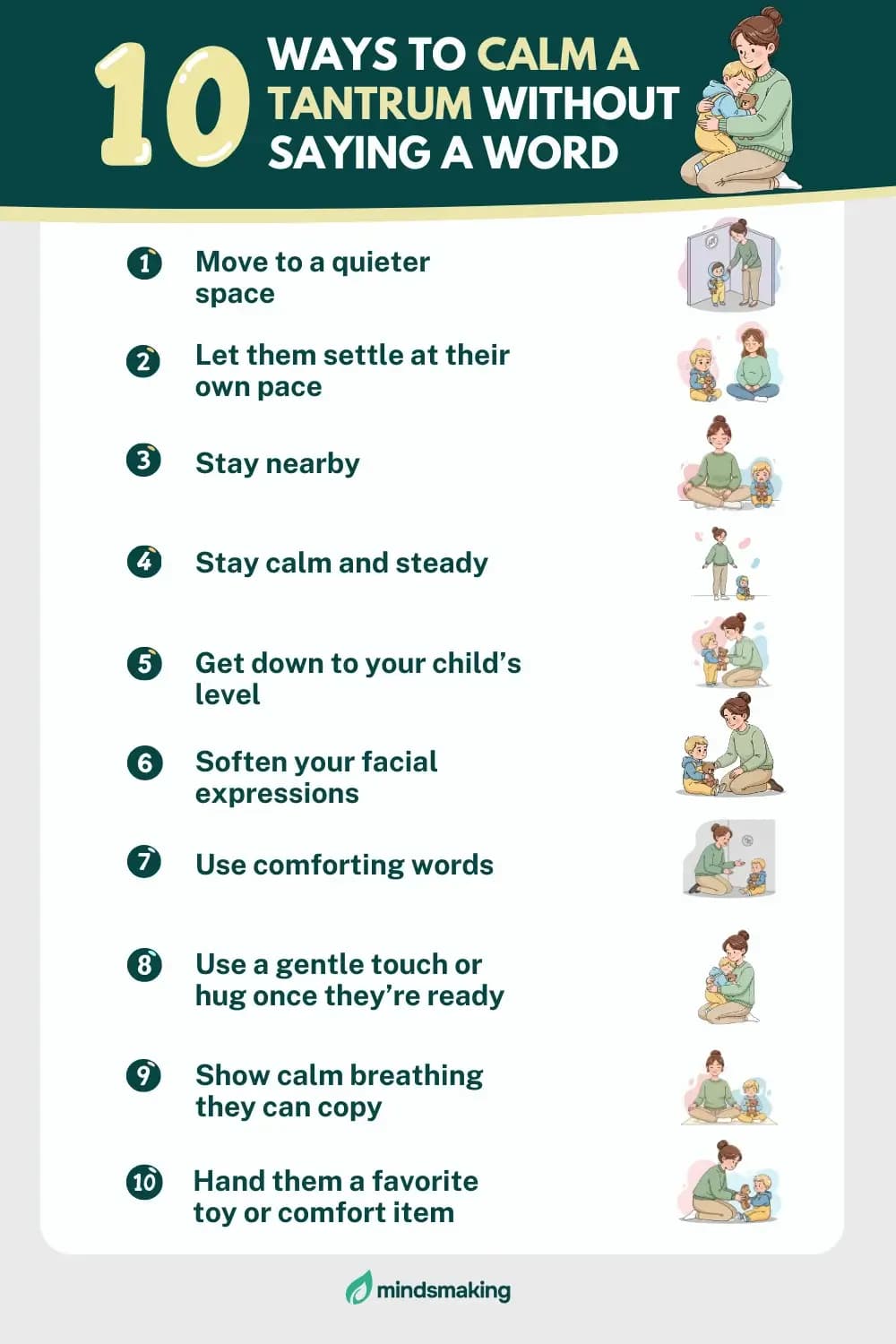
In this guide, we’ll offer insights on 10 ways to calm a tantrum without saying a word using gentle parenting strategies and simple nonverbal parenting techniques that strengthen parent-child connection while still keeping your sanity intact.
Move to a Quieter Space
When emotions run wild with toddlers, noise can sometimes amplify their distress and tantrums. A crowded supermarket or loud living room can make your child’s meltdown even bigger. One of the most effective ways to calm a tantrum without saying a word is to gently remove your toddler from that noisy environment. You can find a calm corner, a hallway, or even a safely parked car because reducing loud stimulation from their environment helps your child settle.
Parent tip: You don’t have to drag or scold the child, you can offer your hand, or simply walk slowly toward the quieter space, and the child will follow. That’s powerful silent communication with toddlers in action.
Let Them Settle at Their Own Pace
Sometimes, when a toddler is mid-tantrum, no amount of “It’s okay” will convince them because they just need time to cool down. Trying to rush them into calming down is like yelling at a storm to stop raining. Instead, allow them to settle at their own pace. Learning emotional control and regulation takes time and practice with toddlers, and letting them process these big feelings teaches them self-regulation better than any lecture you could give.
Parent tip: You can take a step back and breathe, as this helps you show emotional regulation through actions and not words. The more you model this behavior with patience, the quicker your toddler learns how to find calm within themselves.
Stay Nearby
It’s tempting to walk away when your toddler is screaming, but your presence, even if it's silent, can be calming to them. When you stay close, you give them a sense of safety and love through body language alone. So think of yourself as their emotional anchor and remain steady, calm, and unmoved by their display. They might not want to be touched or spoken to during such meltdowns, but they do want to know you’re still there.
Parent tip: You can sit or stand at a comfortable distance where they can still see you waiting patiently. This shows that positive discipline methods can be both firm and compassionate.
Stay Calm and Steady
Your calmness can be contagious to a toddler because they mirror what you do; if you lose your cool during a tantrum, they will amplify their cries. One of the most vital tips for toddler tantrums is to manage your emotions first, so always remain calm. This is part of the gentle parenting strategies to use with toddlers, as you’re not just teaching your child to calm down, you’re teaching them how to calm down.
Parent tip: To help yourself be calm at all times, always focus on your breathing, unclench your jaw, and relax your shoulders during toddler tantrums. It keeps you relaxed all through.
Get Down to Your Child's Level
Towering over a crying toddler can look scary and feel intimidating, especially when you already look annoyed. Kneeling or sitting brings you to eye-level, which helps to show empathy and a sense of safety instead of threat. It’s one of the simplest, yet most effective ways to calm a tantrum without saying a word. This kind of parent-child connection helps rebuild trust even in such emotional outbursts.
Parent tip: Lower yourself slowly, keep your tone soft, and your movements gentle. Sometimes all a toddler needs is to see that you’re with them and not against them.
Read This Next
No posts available
Soften Your Facial Expressions
Wearing a furrowed brow or a stern look can unintentionally escalate tantrums by bringing in emotions of fear and anxiety. Toddlers are good emotion readers and can pick up on tension and anger really fast. So with a soft gaze, gentle eyes, and a neutral expression, you can help them calm down without even having to say a word. It might sound silly, but your face is a mirror for theirs. The softer you look, the safer they feel and would want to quiet down.
Parent tip: Practice keeping a relaxed face during their tantrums. It's fine if you slip up a few times, just always remember to change your expression when you notice.
Use Comforting Words
Okay, we know we said “without saying a word,” but here’s the thing: a soft voice with minimal phrases can sometimes be soothing once your toddler has settled down.
Simple affirmations like “I’m here”, “You’re okay,” or “I love you” can help calm a meltdown. Your tone and voice could even have an effect than the words said.
Parent tip: After their crying softens or stops, you can speak to the child quietly, almost like a whisper. Speaking to them when they are in the middle of a tantrum will most likely not work, even if your voice is soft and calm, so wait until they start to quiet down.
Use a Gentle Touch or Hug Once They’re Ready
Physical touch and comfort can be soothing for kids, but not in the middle of a tantrum. Forcing a hug mid-tantrum can feel overwhelming to toddlers; however, offering one afterwards could be comforting as it strengthens the parent-child connection. Physical touch is one of the most ancient calming techniques known to humans. A warm hand on the back, a soft stroke of the hair, or a gentle hug can express safety and love when words fail.
Parent tip: Wait for their cue before you reach out; they might move closer, reach out to touch you, or even glance at you. That’s your green light to offer a gentle hug. It’s a silent communication with toddlers that they understand best.
Show Calm Breathing They can Copy
You’ve probably heard the saying that “Children don’t do what we say, they do what we do.” Deep breathing is one perfect example. Just telling a child mid-tantrum to calm down or take deep breaths would most likely be ignored, but demonstrating slow, visible breaths during a tantrum can help your toddler relax and sync to yours. This is a form of co-regulation, a foundational part of the strategies of gentle parenting and emotional regulation for toddlers.
Parent tip: Slowly but audibly take a deep breath in and out so they can see you do it. You can ask them to join you, and if they don't, just continue on and eventually, they’ll imitate you naturally. This tip could turn a toddler's tantrum into a learning opportunity.
Hand Them a Favorite Toy or Item
Sometimes, the quickest way to calm a tantrum and reset the atmosphere is with a favorite stuffed toy. Items like a well-loved stuffed animal, blanket, or fidget toy could give your child control and comfort during a meltdown. This is one of those ways to calm a tantrum without saying a word, especially for sensory-sensitive toddlers. Offering comfort items can help calm them down and refocus their energy.
Parent tip: You should always have that favorite item with you, especially if you're going to be outdoors for a long time. It could be a favorite plushie, teether, or soft cloth.
A Word From Mindsmaking
Tantrums are a normal part of toddlerhood, but you don’t always need words to help your little one calm down. Using the nonverbal strategies discussed can teach them self-regulation while keeping the situation calm for both of you. With patience and consistency, these moments become opportunities for learning, connection, and building emotional skills that last a lifetime.
Was this article helpful?
How many stars are you giving this article?
Leave a comment
Your email address will not be published.