6 Common Reasons Why Babies Fight Sleep and How to Help
Aflo images


Written by Mindsmaking Medical Writer

Fact Checked by Mindsmaking Professionals
30th, January, 2026
Sleep resistance is one of the most common challenges parents face, and almost every baby goes through phases of fighting sleep. Learn 6 common reasons why babies fight sleep and how to help.
Nothing will test your patience more than a baby who flat-out refuses to sleep. You’ve dimmed the lights, turned on the white noise, and are gently rocking your little one, but still, they’re looking at you wide-eyed like they’re ready to stay up all night. You’re not alone, as this is quite a common occurrence with most babies.
Sleep resistance is one of the most common challenges parents face, and almost every baby goes through phases of fighting sleep. When your baby fights sleep, it’s not a sign of bad parenting; it’s simply part of biology, development, and those tiny bursts of independence that come with growing up.
Below are 6 common reasons why babies fight sleep and what to do to help your child settle and sleep better.
Key Takeaways
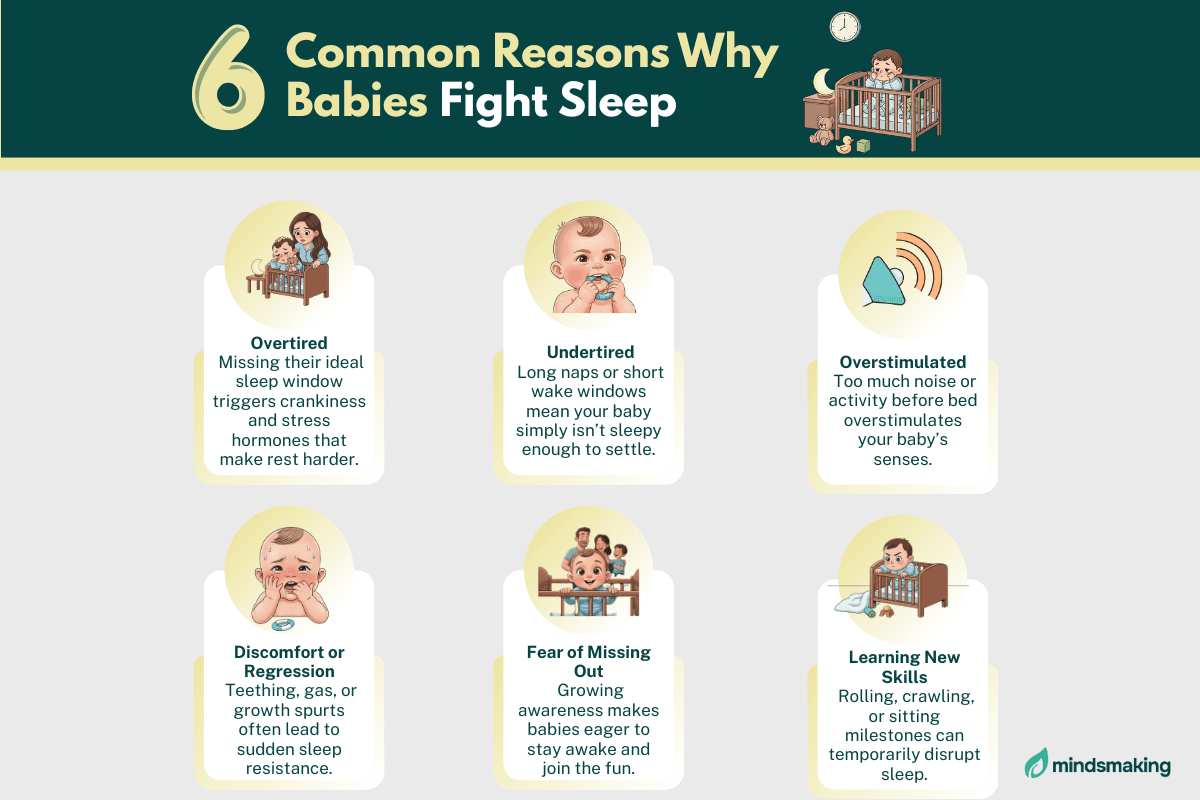
Babies can resist sleep because they are just too tired. When a baby becomes overtired, their tiny bodies release stress hormones like cortisol and adrenaline, which makes it hard for the baby to settle and even be cranky, even though they need the rest.
A baby might just not be tired enough to sleep, so they will fight sleep. If your baby’s daytime naps run too long or their wake windows are too short, they will want to fight sleep.
Too much stimulation from light, sound, and activity, especially before bedtime, can overwhelm a baby’s senses. And when their brain is overstimulated, it becomes hard for them to sleep.
Babies often use nap time to practice new skills, such as rolling, sitting, or crawling. These milestones are exciting, but they can also disrupt sleep, especially when your little one decides bedtime is the perfect time to explore instead of rest.
Sometimes babies fight sleep due to discomfort from teething, gas, reflux, or even a mild cold. Discomfort, especially from health-related issues, can make it difficult for babies to lie still or relax.
By around 6 months, babies will become socially aware that the world keeps going even when they’re asleep, and this curiosity often turns into full-blown baby FOMO, where they may resist going to sleep, straining to stay part of the action.
If your baby continues to struggle with sleep despite a consistent nap schedule, soothing comfort routine, and a healthy sleep environment, it’s worth taking note of or even consulting your pediatrician.
Your Baby Is Overtired
Sometimes, the reason why your baby won’t sleep is because of tiredness. This could sound ironic because one would expect the baby to be out like a light the moment they lie down in their crib, but when your baby is overtired, their bodies release hormones like cortisol and adrenaline, the same ones we produce under stress. These hormones make it harder for a baby to settle and can even cause them to become cranky or fussy when they desperately need rest.
You’ll know your baby is overtired when the yawns turn into eye-rubbing, back-arching, or sudden bursts of crankiness and tears that seem to come out of nowhere. Sometimes, instead of getting drowsy, they become wired and restless; this is a clear sign they’ve sailed past their ideal sleep window.
How to Help
Keep an eye out for early signs of tiredness, such as yawning, fussiness, or eye-rubbing, and guide your baby to sleep before they become overtired. A calming routine, such as dimming the lights, gentle rocking, or reading a short story, helps signal bedtime and lower stress hormones. Try to keep your baby’s awake time short, too; the less time they stay up between naps, the easier it’ll be for them to drift off peacefully.
Your Baby Is Undertired
I know it might sound like we’re contradicting ourselves, but sometimes the problem isn’t that your baby is too tired; it's that they’re not tired enough. If your little one takes extra-long naps during the day or their wake windows are too short, they simply won’t be ready to sleep yet, no matter how cozy that bedtime routine is.
An undertired baby often looks cheerful and chatty. When you expect them to be sleepy, they would be wide awake, smiling, cooing, or rolling around the crib like it’s playtime. It can be easy to get frustrated, especially when you’re tired yourself.
How to Help
Gradually extend your baby’s awake time by 10–15 minutes and encourage active play before naps. A little outdoor time, such as a short walk, a game of chase, or backyard play, helps them burn energy and wind down more easily. Keep an eye on nap lengths, too; too much daytime sleep can make bedtime a battle.
Your Baby Is Overstimulated
Babies are like tiny sponges, soaking up everything around them, every sound, light, and movement. But when there’s too much happening, especially before bedtime, their senses can go into overdrive. An overstimulated brain has difficulty slowing down and drifting into sleep mode.
You’ll know your baby is overtired from too much stimulation when they turn their head away from light, cry even when cuddled, or refuse eye contact. They may look alert and restless, yet clearly exhausted; that classic “tired but wired” look every parent recognizes.
How to Help
You can help your baby wind down by dimming the lights and keeping things quiet about an hour before nap time. A calm environment helps signal that it’s time to rest. Adding gentle rocking or soft white noise can soothe them further, and before you know it, they’ll be fast asleep.
Your Baby Is Learning New Skills
Just when you think you’ve finally mastered your child’s nap routine, they surprise you by turning nap time into playtime, babbling, rolling, sitting up, jumping, crawling around the crib, or suddenly becoming wide awake when it’s time to rest. These new abilities are exciting milestones, but they can easily disrupt sleep routines, especially when your little explorer decides that 2 a.m. is the perfect time to practice.
It’s not that your baby doesn’t want to sleep; they’re just busy mastering new skills and, unfortunately, picked the wrong time to do it.
How to Help
Give your baby plenty of chances to practice new skills during the day so bedtime doesn’t become their training ground. Stay calm and patient; this phase is temporary and usually passes within a few weeks as your little one adjusts.
Read This Next
No posts available
Discomfort or Sleep Regression
Sometimes, babies fight sleep because something feels off; they may be experiencing discomfort due to teething, gas, reflux, or even a mild cold. Discomfort, especially from health-related issues, can make it difficult for them to lie still or relax.
Around the ages of 4 months, 8 months, and 12 months, your baby could also hit the stage of sleep regression, which is often triggered by growth spurts or separation anxiety from not sleeping together anymore. This can cause so much resistance to sleeping with your baby.
How to Help
Check for physical comfort during nap time, ensure the room isn’t too warm, clothes aren’t restrictive, and your baby isn’t hungry. Also, stick to your baby’s bedtime routine and offer comfort during nap time, but avoid creating new habits, such as rocking to sleep every night, as that can become a very hard habit to break.
Fear of Missing Out (FOMO)
By around 6 months, your baby starts becoming more socially aware, and they realize the world doesn’t stop just because they’re asleep. This new curiosity can quickly turn into a full-blown case of baby FOMO, where your little one resists sleep simply because they don’t want to miss out on the fun.
Babies fighting sleep due to FOMO often seem wide-eyed and alert at bedtime, easily distracted during night feeds, or too curious about what’s happening around them to settle down. You might notice your baby watching your toddler play or keeping an eye on your partner moving around the room, anything but closing those sleepy eyes. It’s adorable, but understandably, it can also be frustrating.
How to Help
To help, create a calm and predictable bedtime routine that signals it’s time to wind down. Dim the lights, lower your voice, and reduce activity or play around your baby’s sleep space. If others are awake, try moving bedtime to a quieter room or using white noise to block distractions.
During the day, give your baby plenty of time for play and social interaction — this helps satisfy their curiosity so they’re more willing to rest later. Most importantly, stay consistent. Over time, your baby will learn that bedtime isn’t missing out — it’s just a pause before more fun tomorrow.
When to Talk to Your Pediatrician
If your baby still struggles to sleep despite having a consistent nap schedule, a soothing bedtime routine, and a calm sleep environment, it may be time to take a closer look or check in with your pediatrician. Ongoing sleep resistance can sometimes signal issues such as reflux, allergies, or other underlying health concerns that affect your baby’s sleep.
Trust your instincts. If your little one seems uncomfortable, cries frequently, or simply can’t seem to settle, no matter what you try, reaching out to a pediatrician can offer clarity, reassurance, and the right support for better sleep.
A Word from MindsMaking
If your baby is always fighting sleep, take a deep breath and remain calm, as this phase doesn’t last forever. Sleep challenges are temporary, and they don’t mean you’re doing anything wrong. With a little patience, a predictable bedtime routine, and attention to your baby’s cues, restful nights are closer than you think.
The key is consistency over perfection as babies learn to sleep better over time through repetition and reassurance, not quick fixes. With the right approach, both you and your baby will soon enjoy more restful nights.
Frequently Asked Questions
My baby keeps practicing new skills at night — what can I do?
It’s completely normal for babies to want to “practice” new milestones like rolling, sitting, or crawling in their sleep space. Their brains are busy processing these new skills, which can make it hard to switch off at night. Give them lots of practice time during the day and keep bedtime calm. This phase usually passes once they’ve mastered the skill.
Can teething or growth spurts cause sleep problems in babies?
Yes, both can. Teething discomfort and gum pressure can make babies restless, while growth spurts often cause increased hunger and frequent waking. Offer extra comfort, a teething toy, or an extra feed when needed, and maintain a consistent routine to help them settle again.
Why does my baby wake up so often at night?
Babies naturally have shorter sleep cycles and often wake between them. This can happen more during growth spurts, teething, or developmental changes. Sometimes they just need reassurance or a quick cuddle to drift back off. Keeping a predictable bedtime routine helps them understand it’s still sleep time.
Why won’t my baby nap during the day?
Daytime naps can be tricky because babies get distracted or overstimulated by their surroundings. Watch for early sleep cues like yawning or rubbing eyes, and try to settle them quickly. A calm, dim environment and consistent nap times make a big difference.
Why does my baby fight sleep even when they’re tired?
When babies get overtired, their bodies release stress hormones that actually make it harder to fall asleep. That’s why they can seem wired or fussy instead of sleepy. Try to catch those early tired signs and start the bedtime routine before they’re exhausted.
Was this article helpful?
How many stars are you giving this article?
Leave a comment
Your email address will not be published.