Skin Tags In Pregnancy

Written by Mindsmaking Medical Writer

Fact Checked by Mindsmaking Professionals
25th, November, 2025
Skin tags are a common and harmless part of pregnancy. Understanding what causes them, how to manage irritation, and when to seek medical advice can help you care for your skin comfortably and confidently throughout pregnancy.
Skin tags are tiny, soft bumps that hang from the skin and often appear in areas where your skin folds or rubs together, such as your neck, under your arms, breasts, or around the groin. Many pregnant women notice them for the first time due to hormonal changes and the body’s natural adjustments during this period.
While they may not be your favorite pregnancy “souvenir,” they are completely normal, painless, and often fade away once your hormones settle after childbirth. And if they don’t, a safe removal by a healthcare professional can easily take care of them. Your body is undergoing amazing changes, and these small growths are just a temporary part of that journey.
Key Takeaways
Skin tags form during pregnancy mainly due to hormonal changes, increased friction, weight gain, and higher blood flow, which are all normal body responses to pregnancy.
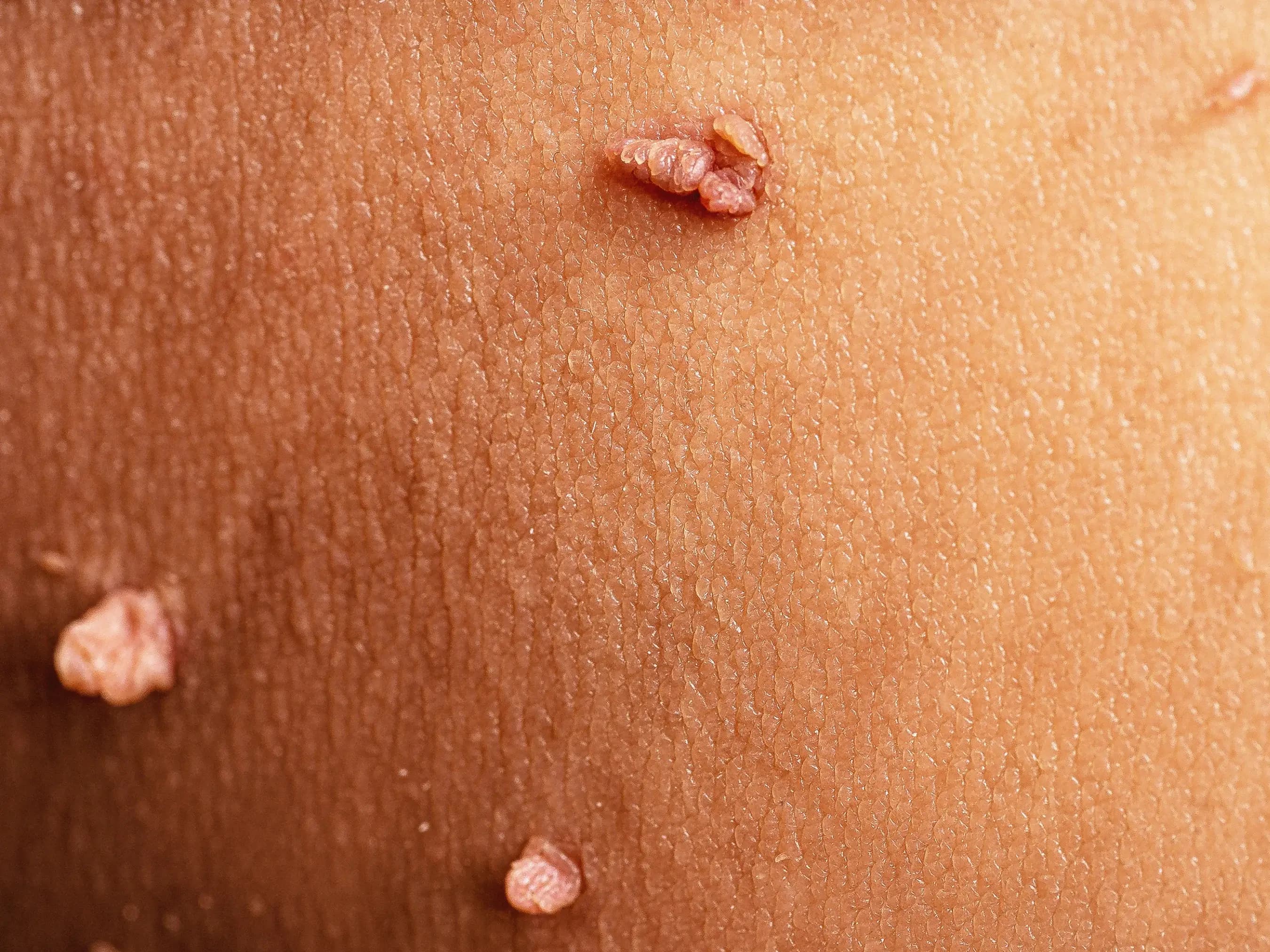
Skin tags are small, soft, flesh-colored bumps that hang slightly from the skin, often appearing in areas like the neck, underarms, breasts, thighs, or groin where skin rubs together.
You can’t completely prevent skin tags during pregnancy, but keeping your skin clean, moisturized, and free from friction can help reduce the risk or irritation.
Most skin tags shrink or fall off naturally after childbirth as hormone levels balance and your skin returns to normal, though some may remain and can be safely removed.
Skin tags rarely need treatment, but you should see a doctor if they change color, bleed, hurt, or if you are unsure of the diagnosis.
What Causes Skin Tags During Pregnancy?
Skin tags during pregnancy are quite common and usually harmless. They tend to appear as your body undergoes major hormonal and physical changes to support your growing baby. The primary reasons are hormonal fluctuations, increased skin friction, and natural changes in blood flow, all of which are part of your body’s adjustment to pregnancy. While they can be a little surprising, there’s no need to worry as they are temporary and often disappear after delivery.
Here are some common causes:
- Rising levels of estrogen and progesterone stimulate skin cell growth, which can lead to tiny overgrowths in certain areas.
- Increased friction as your body changes shape. Areas like the neck, underarms, breasts, and groin experience more rubbing, encouraging tags to form.
- Weight gain during pregnancy. Extra body weight creates new folds and creases, which are perfect spots for tags to develop.
- Genetic factors also play a role. If your family members are prone to skin tags, you may notice them more during pregnancy.
- Enhanced blood flow. Pregnancy enhances blood circulation, which can sometimes stimulate the growth of extra skin tissue.
What Do Skin Tags Look Like?
Skin tags are small, soft, and flesh-colored growths that hang gently from the surface of your skin. They can be as tiny as a grain of rice or as large as a small grape, though most are quite small and barely noticeable. Their texture is smooth or slightly wrinkled, and they are typically attached to the skin by a short, thin stalk known as a peduncle.
During pregnancy, skin tags often appear in places where your skin naturally folds or experiences friction. Common spots include the neck, underarms, under the breasts, between the thighs, and around the groin. Some women may also notice them on the eyelids or chest, and other areas where skin rubs against clothing or jewelry.
While their sudden appearance can be surprising, skin tags are harmless, painless, and non-contagious. They don’t change color or cause discomfort unless irritated by clothing or movement, and they often fade or fall off after pregnancy.
Can I Prevent Skin Tags during Pregnancy?
Unfortunately, you can’t completely prevent skin tags during pregnancy. They are a natural response to hormonal changes, increased friction, and your skin stretching as your body grows. However, while you cannot stop them entirely, you can take steps to lower the chances of getting them, or at least keep them from becoming irritated or larger.
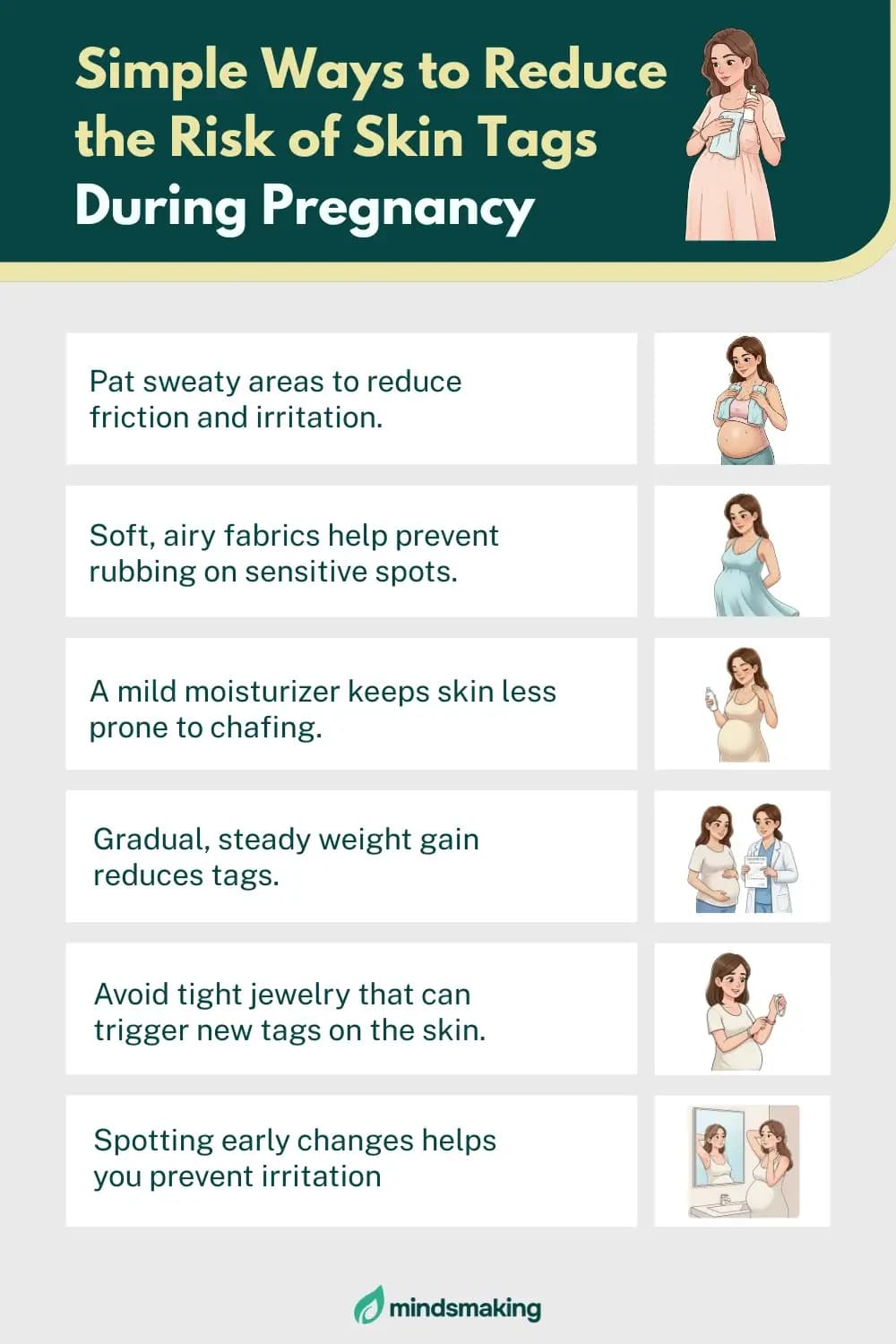
Here are some practical ways to reduce the risk:
- Keep your skin dry and clean. Gently pat sweaty or damp areas to minimize friction.
- Wear loose and breathable clothing. Soft fabrics prevent rubbing around the neck, underarms, and thighs.
- Moisturize regularly. A gentle moisturizer helps reduce skin irritation and chafing.
- Maintain a healthy weight. Gradual and steady weight gain, as recommended by your doctor, can help reduce new skin folds.
- Avoid tight jewelry. Necklaces or straps that rub the skin can increase friction and trigger tags.
- Check your skin often. Noticing early changes helps you care for your skin and prevent irritation.
Read This Next
No posts available
Will Skin Tags That Developed During Pregnancy Go Away?
In many cases, skin tags that appear during pregnancy shrink or disappear on their own after childbirth. As your hormone levels return to normal and your body gradually recovers, these tiny skin growths often fall off naturally or become much less noticeable.
This is because the hormonal surges and physical changes that encouraged their growth, like increased friction, blood flow, and cell turnover, begin to settle down. Your skin slowly returns to its pre-pregnancy state, and many of those small tags simply dry out and drop off over time.
However, some skin tags may remain, especially if they grew larger or formed in areas that still experience friction. The good news is that they are completely harmless and can be easily removed by a healthcare professional through a quick, simple, and safe procedure. Whether they fade naturally or need a little help to fall off, skin tags are nothing to worry about. They are just another temporary part of your pregnancy journey.
When to Talk to Your Doctor About Skin Tags
In most cases, skin tags that develop during pregnancy are completely harmless and don’t need medical treatment. They are simply one of the many temporary changes your body goes through while growing your baby. Most fade or fall off naturally after childbirth, and unless they become uncomfortable or irritated, you can safely leave them alone. However, it’s still important to know when to seek medical advice, both to rule out other skin conditions and to ensure proper care if something doesn’t seem right.
You should contact your doctor if a skin tag changes in color, size, or shape, becomes painful, red, or swollen, or starts to bleed or ooze. You should also seek medical advice if you are uncertain whether it’s truly a skin tag or another type of growth, such as a mole or wart. Sometimes, what looks like a harmless tag could be something that needs closer attention.
Speaking with your doctor is also helpful if you want a skin tag removed for comfort or cosmetic reasons. Removal procedures are quick and safe when done by a healthcare professional. Your doctor can recommend the best method (whether snipping, freezing, or cauterizing) while ensuring your skin heals properly.
Pregnancy by Week
Welcome to the enchanting journey of motherhood, where every week unfolds a new chapter of anticipation, growth, and wonder.





Frequently Asked Questions
Are skin tags common during pregnancy?
Skin tags are very common during pregnancy. Hormonal changes, increased friction, and weight gain can all trigger their appearance, especially in areas like the neck, underarms, breasts, and groin.
Are skin tags contagious?
Skin tags are not contagious. They don’t spread from one person to another or from one area of your body to another through touch.
Can I remove skin tags while pregnant?
It’s best to wait until after childbirth before removing skin tags, unless they’re painful, irritated, or infected. If removal is needed, your doctor can safely do it using gentle methods suitable during pregnancy.
Are skin tags during pregnancy harmful?
Skin tags are harmless and don’t affect your health or your baby’s. They are purely cosmetic and usually disappear or shrink after pregnancy.
Do skin tags get bigger during pregnancy?
Hormonal changes and increased blood flow can cause skin tags to grow slightly larger, but they often shrink once hormone levels return to normal after childbirth.
Do skin tags leave scars when removed?
When removed by a qualified healthcare professional, skin tags typically heal well and leave little to no scarring. Proper aftercare, like keeping the area clean and avoiding irritation, helps the skin heal smoothly.
Was this article helpful?
How many stars are you giving this article?
Leave a comment
Your email address will not be published.