Restless Leg Syndrome In Pregnancy
Getty Images Signature


Written by Mindsmaking Medical Writer

Fact Checked by Mindsmaking Professionals
9th, October, 2025
Restless leg syndrome in pregnancy causes an uncontrollable urge to move the legs, often disturbing sleep. Understanding its causes and simple relief options can help improve comfort and rest. Here’s what every expectant mom should know.
Restless leg syndrome (RLS) is a condition that causes an uncontrollable urge to move the legs, usually triggered by tingling or crawling sensations. During pregnancy, these feelings often appear in the evening or at night, just when you want to rest.
In pregnancy, RLS is fairly common, especially in the third trimester, and is thought to be linked to hormonal changes, low iron levels, or increased pressure on nerves. Although it can be uncomfortable, it usually improves after childbirth.
Although it may seem like a small nuisance, RLS can make it harder to sleep, leave you feeling tired during the day, and even affect your mood. The good news is that it’s a common pregnancy experience and often improves or goes away after childbirth. Knowing this can bring comfort, reminding expectant mothers that RLS is temporary and manageable.
Key Takeaways
Restless legs syndrome in pregnancy is most often linked to hormonal changes, iron or folate deficiency, increased blood volume, and sometimes a family history.
For most women, symptoms improve within days to weeks after childbirth as the body regains balance.
Relief can come from stretching, staying active, boosting iron and folate levels, maintaining a consistent bedtime routine, and avoiding triggers such as caffeine.
Avoiding caffeine, nicotine, long periods of sitting, late heavy meals, and excess screen time can prevent symptoms from worsening.
What Causes Restless Leg Syndrome in Pregnancy?
Restless leg syndrome during pregnancy is not just your body trying to keep you awake at night, but it’s usually the result of all the extra work it’s doing to support your growing baby. While doctors do not point to one single cause, several common factors can explain why your legs seem to have a mind of their own:
- Estrogen and progesterone rise to support pregnancy, but they can also stir up nerve signals and blood flow, which may leave your legs feeling jumpy.
- Low iron levels reduce dopamine in the brain, a chemical that helps muscles relax. Without enough, your legs can act like they’ve had too much coffee.
- Low folate levels. Folate is key for healthy nerve function, and when it’s low, those odd tingling or crawling sensations may set in.
- Pregnancy adds more fluid and pressure to the body, especially in the legs, which can trigger restlessness at night.
- If restless leg syndrome runs in your family, pregnancy can be the moment it shows up uninvited.
When Does Restless Legs Syndrome Go Away?
The good news is that restless leg syndrome in pregnancy is usually temporary. For most women, symptoms typically improve within a few days to weeks postpartum, as hormone levels stabilize, blood volume returns to normal, and iron stores begin to replenish. Many moms even notice that their legs feel calmer almost immediately after the pregnancy ends.
Still, the timing can vary. Some women experience instant relief right after childbirth, while others find that the restlessness gradually fades in the first few weeks postpartum. In cases where iron or folate levels remain low, or where RLS runs in the family, symptoms may persist for a slightly longer period and require additional care.
It’s also worth keeping in mind that RLS isn’t just a “pregnancy thing”, it can show up outside of pregnancy too. So, if your legs are still staging midnight dance rehearsals long after delivery, it’s best to check in with your doctor, since simple treatments like iron supplements or small lifestyle changes can make a difference. Thankfully, for most expectant mothers, restless legs are just a temporary part of the journey. Annoying, yes, but usually gone by the time you are settling into life with your newborn.
What Can I Do to Relieve Restless Legs Syndrome?
The best way to manage restless legs during pregnancy is to focus on simple and practical habits that help calm your body and promote better sleep. While there’s no magic “off switch,” these strategies can bring you relief:
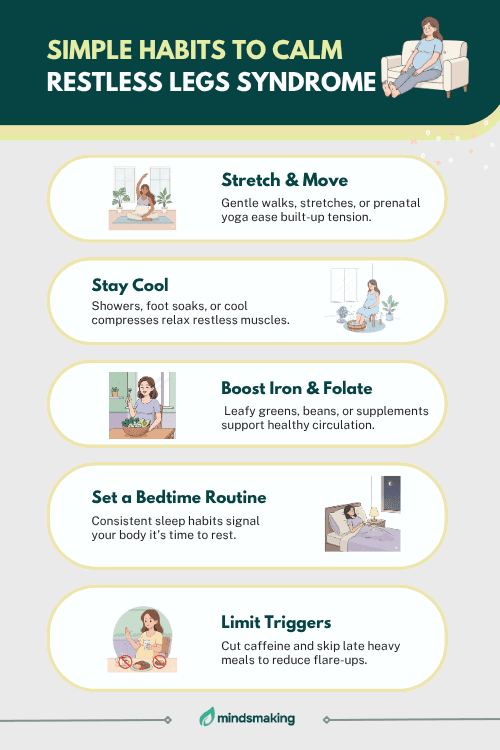
- Stretch and move. Gentle exercises such as leg stretches, short walks, or even a bit of prenatal yoga can help release built-up tension.
- A warm shower, a cool compress, or a cozy foot soak can relax your muscles and ease the urge to move.
- Boost your iron and folate. Eating iron-rich foods like leafy greens, beans, and lean meats, or taking supplements recommended by your doctor, can help reduce symptoms.
- Set a bedtime routine. Going to bed at the same time each night and winding down with relaxation techniques can help signal to your body (and your legs) that it’s time to rest.
- Limit triggers. Cutting back on caffeine and avoiding heavy meals late at night can make a surprising difference.
Read This Next
No posts available
What to Avoid if You Have Restless Legs Syndrome
When your legs just won’t settle, what you don’t do can be just as important as what you try. A few simple changes in your daily routine can prevent restless legs from getting worse and give you a better shot at peaceful sleep. Here are some common triggers worth skipping:
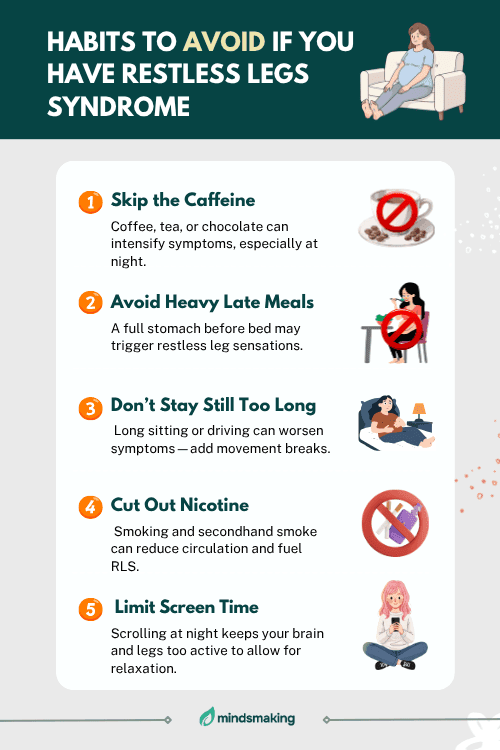
- Avoid caffeine overload. Coffee, tea, and even chocolate can help alleviate restless legs, especially in the evening.
- Avoid eating late-night heavy meals. A full stomach right before bed can cause your body to work harder, which may increase those leg sensations.
- Try not to sit still for too long. Long car rides or hours at a desk can aggravate symptoms, so break it up with gentle movement.
- Avoid smoking, nicotine, and secondhand smoke, as these can worsen circulation and make RLS symptoms more noticeable.
- Cut down your screen time. Scrolling in bed may keep your brain (and your legs) buzzing when you should be winding down.
By keeping an eye on these everyday habits, you give your body the best chance to settle at night. Think of it as your way of creating the right environment for rest, calmer evenings, calmer legs, and hopefully, a lot more sleep.
Pregnancy by Week
Welcome to the enchanting journey of motherhood, where every week unfolds a new chapter of anticipation, growth, and wonder.

















Frequently Asked Questions
Is restless leg syndrome common during pregnancy?
Restless leg syndrome is fairly common in pregnancy, affecting roughly one in five pregnant women.
Can restless leg syndrome harm my baby?
While the sensations can be frustrating for you, RLS itself does not harm your baby. It is considered a harmless condition, though it may leave you feeling tired from disrupted sleep.
Can restless leg syndrome affect my sleep during pregnancy?
Many women notice that their legs feel most restless at night, making it harder to fall or stay asleep. Over time, this can leave you feeling drained and low on energy during the day.
Does restless leg syndrome get worse in the third trimester?
Symptoms often become more noticeable as pregnancy progresses, with many women experiencing stronger restlessness in the third trimester. This may be due to increased physical demands, hormonal shifts, and changes in circulation.
Does diet affect restless leg syndrome during pregnancy?
Nutrient levels can play a big role in how restless legs feel. Eating foods rich in iron, folate, and magnesium, or following your doctor’s supplement advice can sometimes make symptoms easier to manage.
Can iron deficiency cause restless leg syndrome in pregnancy?
Low iron is one of the most common triggers of RLS during pregnancy. Iron supports dopamine production in the brain, which helps muscles stay calm, so when levels drop, leg restlessness often shows up.
Does Ibuprofen Help Restless Legs?
Ibuprofen isn’t considered a treatment for restless legs, and it’s generally not recommended during pregnancy. Safer strategies, like movement, stretching, and nutritional support, are more effective options.
Does lack of sleep make restless leg syndrome worse?
Poor sleep can heighten the sensations in your legs, creating a cycle where restlessness makes sleep harder, and lack of sleep makes the restlessness stronger. Breaking that cycle with relaxation and healthy routines can bring relief.
Can exercise help restless leg syndrome in pregnancy?
Gentle exercise often helps ease the discomfort by improving circulation and relaxing muscles. Light stretching, short walks, or prenatal yoga can make bedtime more comfortable.
Is restless leg syndrome linked to other pregnancy complications?
RLS is not considered dangerous and doesn’t directly cause pregnancy complications. In some cases, however, it may be linked to iron deficiency anemia, which your doctor can diagnose and treat if necessary.
Will restless leg syndrome go away after pregnancy?
For most women, symptoms ease within a few days to weeks after childbirth as hormone levels, circulation, and nutrient stores return to normal. Restless legs are usually just a temporary part of the pregnancy journey.
Was this article helpful?
How many stars are you giving this article?
Leave a comment
Your email address will not be published.