Top 9 Remedies to Relieve Morning Sickness Naturally
Mykolasosiukin


Written by Mindsmaking Medical Writer

Fact Checked by Mindsmaking Professionals
16th, October, 2025
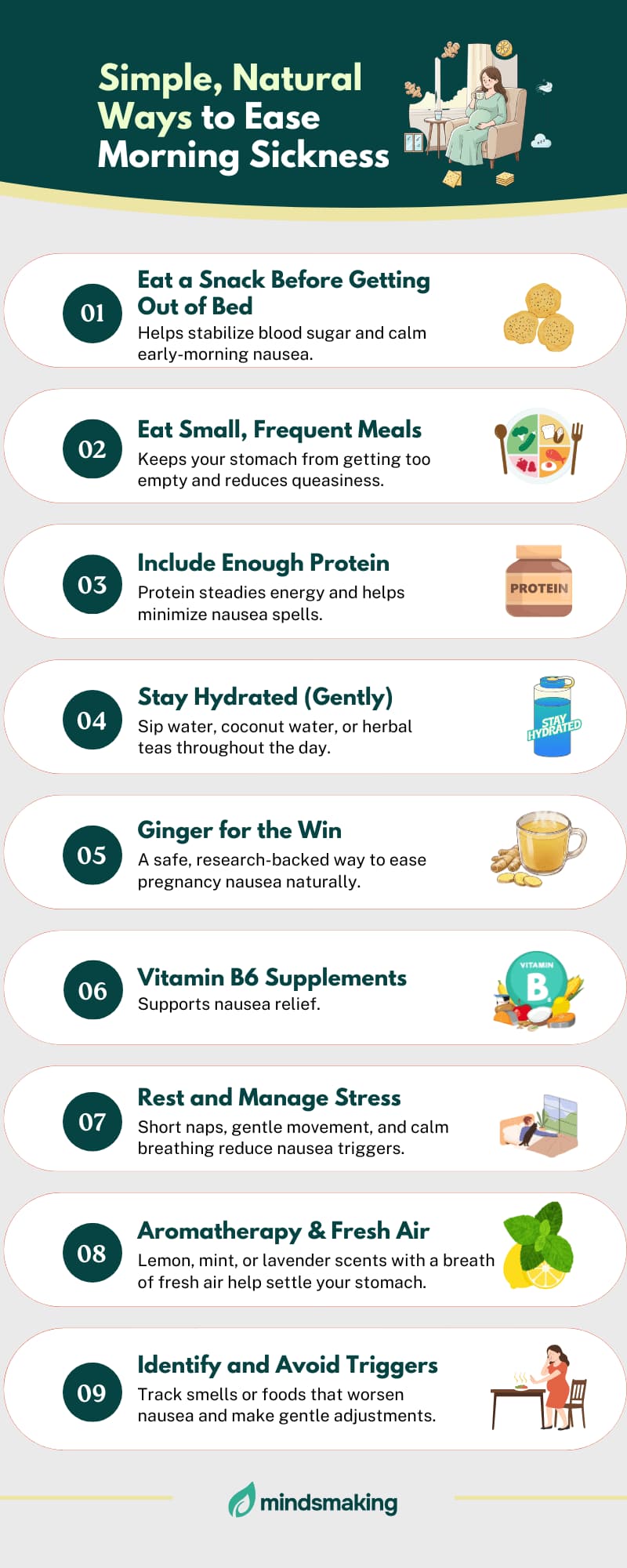
Morning sickness is common in early pregnancy, but knowing what causes it and learning safe, natural remedies can help ease nausea, stay comfortable, and feel better each day.
Let’s be honest, morning sickness sounds far too polite for what it actually feels like. It’s not just a “morning” thing, and it’s definitely not a mild “sickness.” Morning sickness is one of the most common symptoms of early pregnancy, marked by feelings of nausea, queasiness, or occasional vomiting, especially during the first trimester.
But here’s the reassuring truth, you are not alone, and this isn’t forever. Nearly every mom-to-be experiences some level of nausea or vomiting in early pregnancy. It is simply your body’s dramatic way of saying, “Hey, we’re growing a baby here!”
The good news is that there are safe, natural, and genuinely effective remedies to help calm your stomach and reclaim your mornings (afternoons, and nights). You deserve to feel better, and you absolutely can.
Key Takeaways
Rising levels of hCG and estrogen during early pregnancy heighten your senses and lower blood sugar, creating the perfect storm for nausea, but every woman’s experience is unique.
Small, practical habits like eating before getting up, staying hydrated, adding protein, and using ginger or Vitamin B6 can naturally calm nausea and make mornings manageable again.
Persistent vomiting, dehydration, or weight loss may signal hyperemesis gravidarum, a more severe form of morning sickness that needs prompt medical attention and professional care.
Why Morning Sickness Happens
If your stomach turns queasy at the mere smell of coffee or onions, you can thank your hormones, not your imagination. Morning sickness is one of the first signs that your body is working overtime to grow a tiny human. During early pregnancy, levels of hCG (human chorionic gonadotropin) and estrogen rise sharply. These hormonal changes can send your senses into overdrive, making everyday smells suddenly unbearable and foods you once loved taste completely different.
Another reason nausea creeps in is low blood sugar. Your body’s metabolism changes during pregnancy, and long gaps between meals can make your stomach extra sensitive. Add an empty stomach to the mix, and you’ve got the perfect setup for those unsettling waves of queasiness. Some experts even believe morning sickness may serve a protective role, keeping moms-to-be away from foods or odors that could be harmful in early development.
But here’s the interesting fact. “No two pregnancies are ever the same”. What triggers nausea for one person might not bother another at all. For some, symptoms fade after the first trimester; for others, they linger a bit longer.
Natural Remedies That Actually Help
You don’t have to just “ride it out”, there are plenty of gentle and natural ways to calm your queasy stomach. These small, everyday tweaks can make a big difference when morning sickness tries to take over your day.
Eat a Snack Before Getting Out of Bed
One of the simplest tricks that works like magic is to eat something before you even get out of bed. Morning sickness often strikes hardest when your stomach is empty, and that sudden drop in blood sugar after a night’s sleep can send nausea into overdrive.
Keeping a few easy snacks on your bedside table, like plain crackers, dry toast, or pretzels, can help stabilize blood sugar before you stand. When you wake up, sit up slowly, nibble a little, and give your body a few minutes to adjust before heading to the bathroom or kitchen.
It might sound too easy to work, but this simple routine can turn those dreaded first few minutes of the day into something much more manageable. Make it your gentle morning ritual, it is a small act of kindness to yourself (and your stomach).
Eat Small, Frequent Meals
When you are pregnant, an empty stomach is the enemy. Going too long without food can make nausea worse, so instead of forcing down three big meals a day, try eating small, frequent snacks every few hours. This helps keep your blood sugar steady and your stomach calm, no wild ups and downs.
Stick to simple, bland foods that are easy to digest, like bananas, oatmeal, rice, or toast. These are gentle, filling, and less likely to trigger queasiness. If big meals feel overwhelming, even a few bites of something mild can help settle your stomach.
Think of it this way you are not “eating all day”, you are just keeping your stomach comfortably occupied so it doesn’t get a chance to rebel. Listen to your body’s cues, and when hunger hits, don’t wait. A little fuel often goes a long way toward keeping nausea under control.
Include Enough Protein
Here’s a secret your stomach will thank you for, protein can actually calm nausea. While carbs are comforting, they burn off quickly, leaving you hungry (and queasy) again in no time. Adding a steady dose of protein helps balance blood sugar, reduce nausea, and keep your energy levels stable throughout the day.
Try easy-to-digest options like Greek yogurt, scrambled eggs, nut butter on toast, or smoothies with a scoop of protein powder. These foods are gentle on your system but still satisfying enough to keep hunger (and nausea) in check.
If the thought of heavy meals turns your stomach, start small, maybe a few bites of yogurt or a peanut butter cracker. Even little portions of protein can make a big difference in how you feel. It’s all about fueling your body without overwhelming it and keeping those queasy spells at bay one bite at a time.
Stay Hydrated (Gently)
When nausea strikes, even a sip of water can feel like too much, but staying hydrated is key to feeling better. The trick is to sip slowly throughout the day, rather than gulping down a whole glass at once. Small, frequent sips are easier on your stomach and help prevent that sloshy, unsettled feeling.
If plain water doesn’t sit well, try lemon or mint-infused water, coconut water, or mild herbal teas like ginger or chamomile. These can be soothing, refreshing, and easier to tolerate when your stomach is sensitive.
Try not to think of hydration as a chore. A few sips every few minutes add up without overwhelming your system. And if you are feeling extra queasy, even sucking on ice chips or frozen fruit pieces can help you sneak in fluids while giving your tummy a break.
Ginger for the Win
When it comes to natural nausea fighters, ginger is the ultimate hero. This spicy root has been trusted for centuries, and modern research supports it. Ginger has been shown to safely and effectively reduce pregnancy-related nausea, making it one of the most reliable natural remedies around.
There are so many easy ways to use it: sip on ginger tea, chew ginger candies, or add a sprinkle of freshly grated ginger to your meals or smoothies. Even a small amount can make a big difference in calming your stomach and easing those unpredictable waves of queasiness.
Best of all, it’s completely safe for most pregnant women when used in moderation. So the next time nausea tries to crash your day, reach for a little ginger, after all, it’s nature’s way of saying, “You’ve got this, mama.”
Vitamin B6 Supplements
If you’ve tried every snack and sip but nausea still won’t quit, Vitamin B6 might be your next gentle ally. This nutrient plays a key role in balancing brain chemicals that influence nausea, and can help reduce morning sickness naturally with no harsh side effects.
You can find Vitamin B6 in foods like bananas, avocados, whole grains, and chicken, but many moms-to-be benefit from a supplemental boost. Still, before adding any vitamin or supplement, it’s essential to check with your healthcare provider for the right dosage. Too much of a good thing isn’t always better, especially during pregnancy.
When used safely, Vitamin B6 can take the edge off that queasy feeling and help you get through the day with a little more calm (and a lot less nausea).
Rest and Manage Stress
Sometimes, the best remedy isn’t in your kitchen, it’s on your calendar. Fatigue and stress can make nausea much worse, so giving yourself permission to slow down and rest is self-care. Your body is working overtime growing a baby, and it deserves a break.
Try to sneak in short naps when you can, even if it’s just 15-20 minutes. Gentle movement, like light stretching or a slow walk, can also help ease tension and boost circulation without draining your energy. And when the day feels overwhelming, a few minutes of deep breathing can work wonders in calming both your body and mind.
Listen to what your body needs and rest without guilt. Sometimes, peace and quiet are the most powerful remedies of all.
Aromatherapy and Fresh Air
When your nose seems to pick up every scent within a mile, a little aromatherapy can be surprisingly soothing. Gentle fragrances like lemon, peppermint, or lavender can help ease nausea and calm your senses. You don’t need much, just a whiff or two can help reset your stomach and your mood.
Try using an essential oil diffuser, keeping a small aroma roller nearby, or even dabbing a drop of oil on a tissue to inhale gently when queasiness hits.
And don’t underestimate the power of fresh air. A short walk outside or simply opening a window can bring instant relief. Sometimes, a cool breeze and a few deep breaths are all it takes to make you feel human again.
Identify and Avoid Triggers
Morning sickness can feel random, but often, there’s a pattern hiding in plain sight. Strong smells, certain foods, or stuffy rooms can all make nausea worse, and once you start paying attention, you’ll notice what sets it off.
Try keeping a small “trigger diary” for a few days. Note what you ate, how you felt, and what you smelled or did before nausea struck. You might find that your once-beloved coffee, spicy dishes, or even the smell of cooking oil are sneaky culprits.
Once you spot the patterns, make gentle adjustments, open windows while cooking, ask for help with meals that bother you, or swap perfumes and cleaning products for milder versions. A few smart tweaks to your routine can mean fewer queasy moments and more calm, comfortable days.
When to Seek Medical Help
While most morning sickness is uncomfortable but harmless, there are times when it crosses the line from “normal pregnancy nausea” into something more serious. If you are vomiting so often that you can’t keep food or water down, feeling dizzy or weak, or noticing weight loss instead of gradual gain, it’s time to reach out to your healthcare provider.
These symptoms could signal a condition called hyperemesis gravidarum, a severe form of morning sickness that can lead to dehydration, nutrient deficiencies, and fatigue if left untreated. It’s not your fault, and you’re definitely not being dramatic. Your body simply needs extra care and medical support to recover.
Doctors can offer safe treatments, including hydration and anti-nausea medications, as well as dietary guidance tailored to your needs. So if you’re struggling, don’t tough it out alone. Seeking help early ensures you and your baby stay healthy, and that you get back to feeling like yourself again sooner.
A Word From Mindsmaking
If you’re in the thick of morning sickness right now, take heart, it usually eases by the second trimester as your body adjusts to pregnancy hormones. What feels overwhelming today will soon become just another chapter in your journey to motherhood.
Keep caring for yourself with patience and kindness. Rest when you need to, nourish your body with gentle foods, and lean on the remedies that bring comfort. Remember, you are doing an amazing job. Growing a tiny human is no small feat. This phase will pass, and brighter, calmer days are just around the corner.
Read This Next
No posts available
Morning sickness may be a rough ride, but the good news is that simple, natural remedies can make a real difference. From snacking before getting out of bed and eating small, frequent meals to sipping water slowly, adding protein, and embracing ginger or Vitamin B6, these gentle strategies help you feel more like yourself again.
Remember, every pregnancy is beautifully unique, and what soothes one person might not work for another. So listen to your body, experiment with what feels right, and give yourself permission to rest when you need it.
Above all, take it one gentle day at a time. Morning sickness doesn’t last forever, and with patience, care, and a few smart tweaks, brighter, more comfortable days are ahead. You’ve got this, mama.
Pregnancy by Week
Welcome to the enchanting journey of motherhood, where every week unfolds a new chapter of anticipation, growth, and wonder.













Was this article helpful?
How many stars are you giving this article?
Leave a comment
Your email address will not be published.