Hair Changes In Pregnancy
Africa images

Written by Mindsmaking Medical Writer

Fact Checked by Mindsmaking Professionals
24th, October, 2025
Pregnancy can bring surprising changes to your hair, while some are exciting, some can be frustrating. There are also simple tips to help you manage them all and make your journey easier.
Pregnancy has a funny way of keeping you on your toes, just when you think you know what to expect, your body surprises you. One day your hair feels thick and fabulous, and the next, it’s frizzy, flat, or shedding in handfuls. You can thank (or side-eye) your hormones working overtime to support your baby for that.
But here’s the comforting part, it’s all temporary. As your body adjusts to the hormonal roller coaster of pregnancy, your hair is simply responding to the ride. Once things settle after childbirth, your strands usually return to their usual selves.
Now, let’s talk about what’s actually happening up there, each common hair change, why it happens, and how to handle it without losing your mind (or your favorite hairbrush).
Key Takeaways
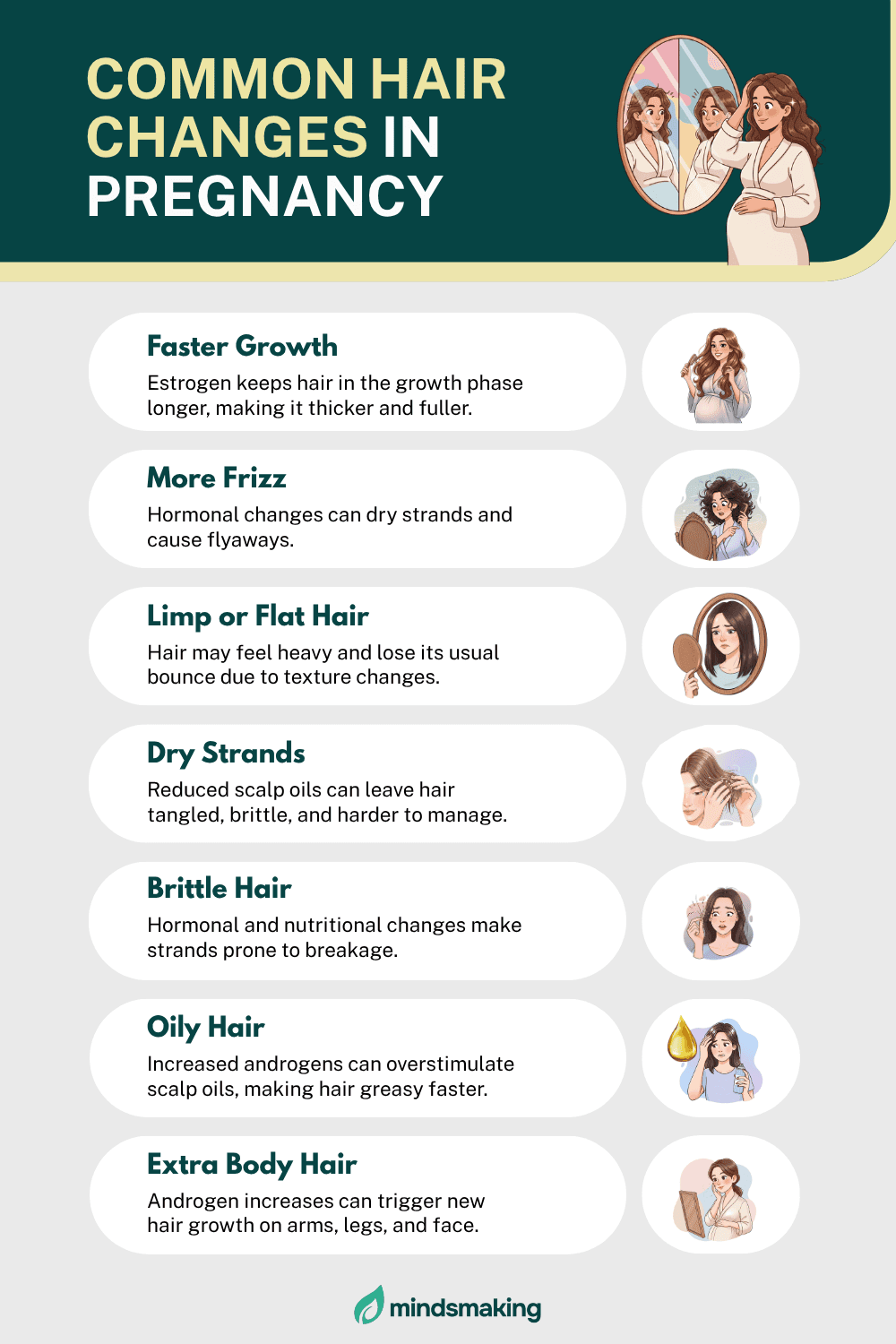
During pregnancy, estrogen keeps hair in its growth phase longer, which can make it appear thicker, fuller, and grow faster than usual.
Hormonal changes can disrupt your scalp’s natural oil balance, leaving strands drier and more prone to frizz and flyaways.
Shifts in pregnancy hormones can make hair feel heavy, flat, and limp, causing it to lose its usual bounce and volume.
Changes in estrogen and progesterone reduce the scalp’s natural oil production, leaving hair dry, tangled, and more difficult to manage.
Hormonal fluctuations and shifts in nutrition can weaken hair strands, making them more brittle and prone to breakage.
Increased androgen levels during pregnancy can overstimulate oil production, causing hair to become greasy faster than normal.
Hormonal increases, particularly androgens, can trigger extra hair growth on areas like the arms, legs, and face, which usually sheds after delivery.
Hair that grows faster than usual during pregnancy
If you have suddenly turned into Rapunzel, you are not imagining things. Pregnancy can make your hair grow like it’s in turbo mode. Those same hormones responsible for your mood swings and cravings are also working overtime on your follicles. Estrogen, in particular, keeps hair in its growth phase longer, meaning fewer strands fall out and more keep growing.
Add in improved circulation and extra nutrients, and voilà, thicker, fuller hair that looks straight out of a shampoo commercial. It’s one of those rare pregnancy perks worth celebrating, so enjoy the volume while it lasts, because once hormones shift after delivery, your hair will eventually return to its normal rhythm.
How to handle it: Keep your scalp healthy with gentle massages and mild shampoo. Get regular trims and enjoy the extra volume while it’s here.
Hair that Is more prone to frizz
If your once-smooth hair now looks like it’s auditioning for a cloud role, welcome to the frizz club. Hormonal changes during pregnancy can mess with your scalp’s oil balance, leaving strands drier and more prone to flyaways. With the extra humidity from those pregnancy hot flashes, your hair may decide to puff up like it has a mind of its own.
But don’t worry, frizz doesn’t mean your hair’s plotting against you. It’s just reacting to new hormone levels and moisture shifts. Once things even out postpartum, your hair usually chills out too.
How to handle it: Use a deeply hydrating conditioner, limit heat styling, and sleep on a silk pillowcase to keep those flyaways in check.
Hair that Is more limp than usual during pregnancy
Ever feel like your hair is suddenly auditioning for the “flat pancake” look? You are not imagining it. Pregnancy hormones can change your hair’s texture and weight, leaving it limp, lifeless, or just lacking its usual bounce. While increased blood flow and extra nutrients often give hair that coveted thick, shiny appearance, for some moms-to-be, the same hormonal shifts can make strands feel heavy and flat. It’s one of those unpredictable pregnancy quirks that can make mornings feel like a battle with your brush.
Don’t panic, this limp phase is temporary. Once your hormones settle after birth, your hair usually regains its bounce and body.
How to handle it: Use lightweight volumizing products, avoid heavy oils, and lift roots gently when styling.
Hair that Is drier than usual during pregnancy
If your hair has suddenly gone from silky to Sahara-level dry, blame pregnancy hormones. Changes in estrogen and progesterone can affect your scalp’s natural oil production, leaving strands thirsty and prone to breakage. Add in hot flashes, extra sweat, or sun exposure, and your hair may feel more like straw than silk. Dry hair can be frustrating, it tangles easily, frizzes up, and refuses to cooperate no matter how much product you pile on.
The silver lining is that this is temporary. As your hormones balance out postpartum, your hair usually regains its natural moisture and shine.
How to handle it: Hydrate with deep conditioners, use gentle shampoos, and limit heat styling to protect your strands.
Read This Next
No posts available
Hair that Is more brittle
Brittle hair during pregnancy can feel like your strands are auditioning for a “break at the slightest touch” contest. Hormonal shifts, along with changes in nutrition and mineral balance, can make hair weaker and more prone to snapping. Even gentle brushing or a light ponytail can sometimes lead to tiny breakages that weren’t happening before. It’s one of those annoying pregnancy quirks that can make your hair routine feel like a delicate operation.
Thankfully, most of this brittleness is temporary. Once your hormone levels and nutrient balance normalize after childbirth, your hair usually regains strength and resilience.
How to handle it: Be gentle when brushing, use protein-rich treatments, and avoid tight hairstyles that stress strands.
Hair that Is more oily
If your hair suddenly feels like it’s in a constant battle with grease, you are not alone. Pregnancy hormones, especially increased androgen levels, can stimulate oil production in your scalp, leaving strands looking flat and shiny faster than usual.
Some days, it might feel like you just washed your hair, only to see it limp and greasy by lunchtime. It’s a common, if frustrating, side effect of your body adjusting to new hormone levels. However, this phase is temporary. Once your hormones stabilize after birth, your scalp usually returns to its normal oil rhythm.
How to handle it: Wash gently with a mild shampoo, avoid heavy conditioners at the roots, and try dry shampoo for quick refreshes.
More hair on the body than usual during pregnancy
Notice a few surprise hairs popping up in places you never expected? You are not imagining it. During pregnancy, hormonal shifts, especially increases in androgens, can stimulate hair growth in areas like your arms, legs, and even face. It can feel a little shocking or annoying, but it’s a completely normal part of how your body adjusts to pregnancy.
The good news is that most of this extra hair will shed naturally after delivery, once your hormone levels return to their pre-pregnancy state.
How to handle it: Shave, wax, or tweeze as usual, knowing this is just a temporary pregnancy phase.
Pregnancy by Week
Welcome to the enchanting journey of motherhood, where every week unfolds a new chapter of anticipation, growth, and wonder.




Frequently Asked Questions
Is it normal to lose less hair during pregnancy?
Pregnancy hormones (especially estrogen) keep hair in its growth phase longer, which means you shed far less than usual. That’s why your hair may feel thicker and fuller.
Why is my hair growing faster than usual?
Increased blood flow and hormones like estrogen and progesterone boost hair growth by extending its active phase. You might notice faster growth on your head, and sometimes elsewhere too.
Can pregnancy make my hair texture change?
Hormonal shifts can temporarily alter your hair’s natural texture and pattern, straight hair may get wavier, and curly hair may loosen up. It usually returns to normal postpartum.
Will my hair color change during pregnancy?
Pregnancy hormones can sometimes tweak your hair color by influencing melanin production. You might notice your hair looking a bit lighter, darker, or glossier than usual. It’s a harmless, temporary shift that usually fades once your hormones return to normal after birth.
When will my hair return to normal after childbirth?
Most hair changes start to settle within months after giving birth, as hormone levels rebalance. Hair shedding (postpartum hair loss) is normal and temporary.
Do pregnancy hormones affect body hair too?
Pregnancy hormones affect body hair and can increase body hair growth in areas like the belly, face, or arms. It’s harmless and usually fades a few months after birth.
Is hair loss a sign of a pregnancy complication?
Hair loss is not usually a sign of pregnancy complications. Mild shedding is normal, but sudden or patchy hair loss could point to thyroid issues, nutrient deficiency, or stress and is worth mentioning to your doctor.
Does diet affect hair health during pregnancy?
Your diet affects your hair health during pregnancy. Hair thrives on nutrients like protein, iron, biotin, and omega-3s. Eating a balanced diet supports both your hair and your baby’s growth.
Can stress during pregnancy cause hair loss?
High stress can disrupt hair growth cycles, leading to mild shedding. Gentle exercise, rest, and relaxation techniques can help manage stress and protect your hair health.
Can prenatal vitamins help with hair growth?
Prenatal vitamins support healthy hair by supplying essential nutrients like folate, iron, and zinc. While they are not a miracle fix for growth, they promote overall hair and scalp health.
Does hair change during each pregnancy differently?
Your hair can change differently during each pregnancy because every pregnancy is unique. You might have thick, glossy hair in one and limp or oily strands in another, depending on your hormone balance and health.
Can pregnancy make my hair color fade faster?
Pregnancy can sometimes make your hair color fade faster. This is because hormonal changes can affect how your hair holds color, making dye fade sooner. If coloring your hair, opt for gentler, pregnancy-safe products and extend touch-up times.
Was this article helpful?
How many stars are you giving this article?
Leave a comment
Your email address will not be published.