5 Safe Sleeping Positions During Pregnancy
Getty Images Pro

Written by Mindsmaking Medical Writer

Fact Checked by Mindsmaking Professionals
29th, October, 2025
Sleep often becomes tricky during pregnancy as your body changes, but finding the right positions can help you rest comfortably, relieve common aches, and recognize when it’s time to reach out to your healthcare provider.
Sleep can be tricky during pregnancy, and it’s completely normal to find yourself tossing and turning as your body changes. Between a growing belly, new aches, and frequent wake-ups, rest doesn’t always come easily. But the good news is that you can still enjoy more peaceful nights with the right sleeping positions.
By finding the right sleeping positions, you can ease discomfort, breathe more easily, and enjoy calmer nights.
Key Takeaways
The way you sleep during pregnancy affects blood flow, digestion, and how well your baby receives oxygen and nutrients.
Sleeping on your side, especially the left side, supports circulation, reduces pressure, and helps you and your baby rest comfortably.
Occasional sleep trouble is normal, but persistent insomnia, pain, or breathing issues should be discussed with your healthcare provider.
Why Sleeping Positions Matter
Finding the right sleeping position during pregnancy goes beyond comfort, it is an important part of keeping both you and your baby healthy. As your body changes, the way you lie down can influence blood flow, digestion, and even how well you rest at night. Proper sleeping positions help maintain good circulation, ensuring that your baby receives a steady supply of oxygen and essential nutrients for growth and development.
The right sleeping positions also help ease you of some of the most common pregnancy discomforts. Lying in supportive positions can relieve pressure on your back and hips, reduce swelling in your legs and feet, and minimize heartburn caused by your expanding uterus pressing on your stomach. These benefits make a noticeable difference, especially in the later months when it becomes more difficult to rest well.
Good circulation and alignment also help your mind. When you are sleeping in a position that supports proper blood flow, your body can relax more deeply, leading to higher-quality rest and better energy during the day. You will wake up feeling more refreshed, balanced, and ready to take on your daily routine.
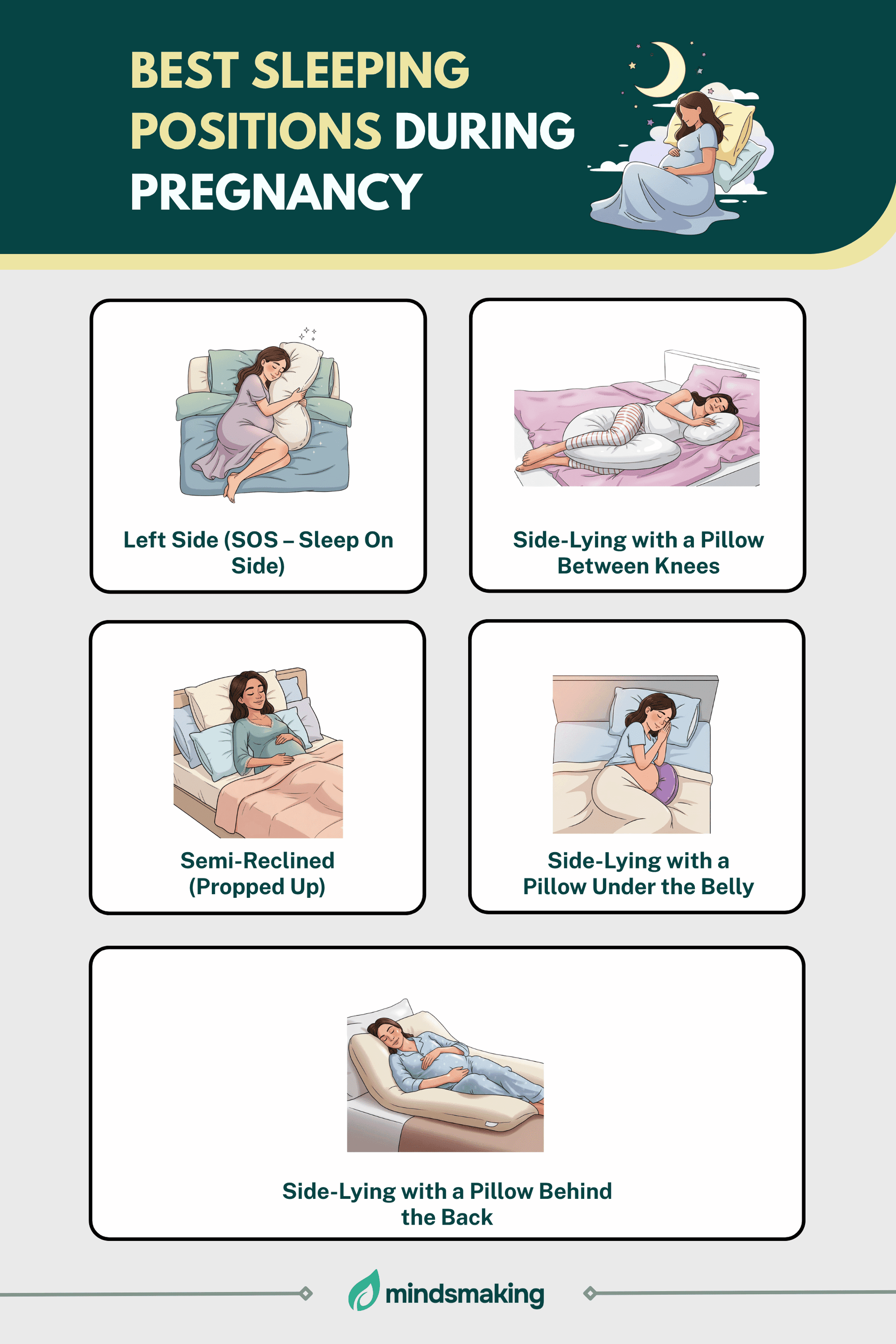
Best Sleeping Positions for Pregnant Women
Finding the best sleeping position during pregnancy can make a huge difference in how you feel each day. As your belly grows and your body works harder to support your baby, comfort and circulation become your top priorities. While there’s no single “perfect” position for every mum, some are safer and more supportive than others.
Left Side (SOS – Sleep On Side)
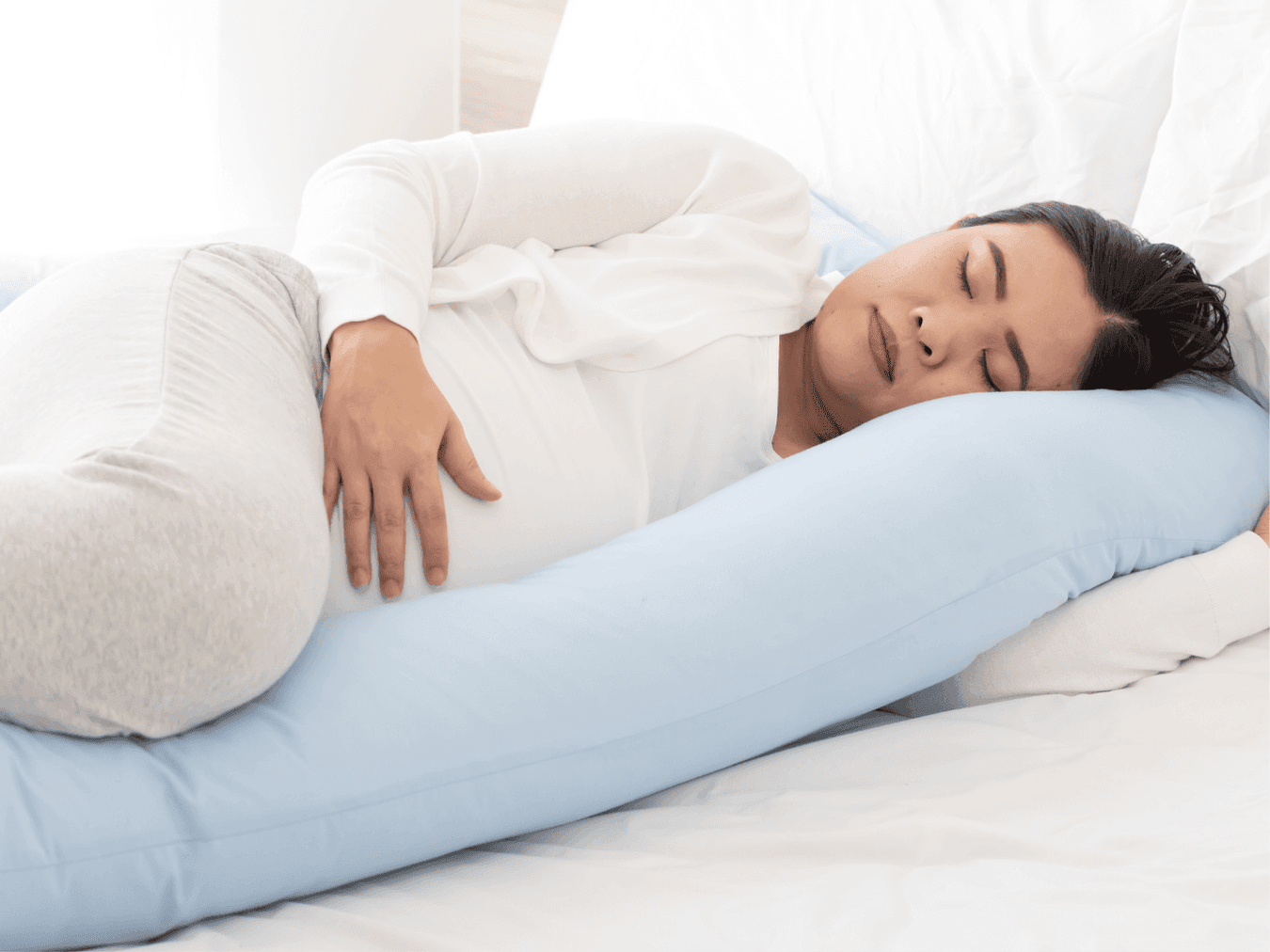
Sleeping on your left side is considered the best position during pregnancy. This position improves circulation by allowing blood to flow more easily between your heart, placenta, and baby, ensuring a steady supply of oxygen and nutrients. It also helps your kidneys function more efficiently, reducing swelling in your hands, ankles, and feet.
To make this position even more comfortable, place a pillow between your knees to keep your hips aligned, and another under your belly for gentle support. A small cushion behind your back can stop you from rolling onto your back while you sleep.
Sleeping on your left side not only benefits your baby but also helps you feel more rested and balanced. By taking pressure off your back and improving digestion, this position supports deep sleep, helping you wake up refreshed and ready for a new day.
Read This Next
No posts available
Side-Lying with a Pillow Between Knees
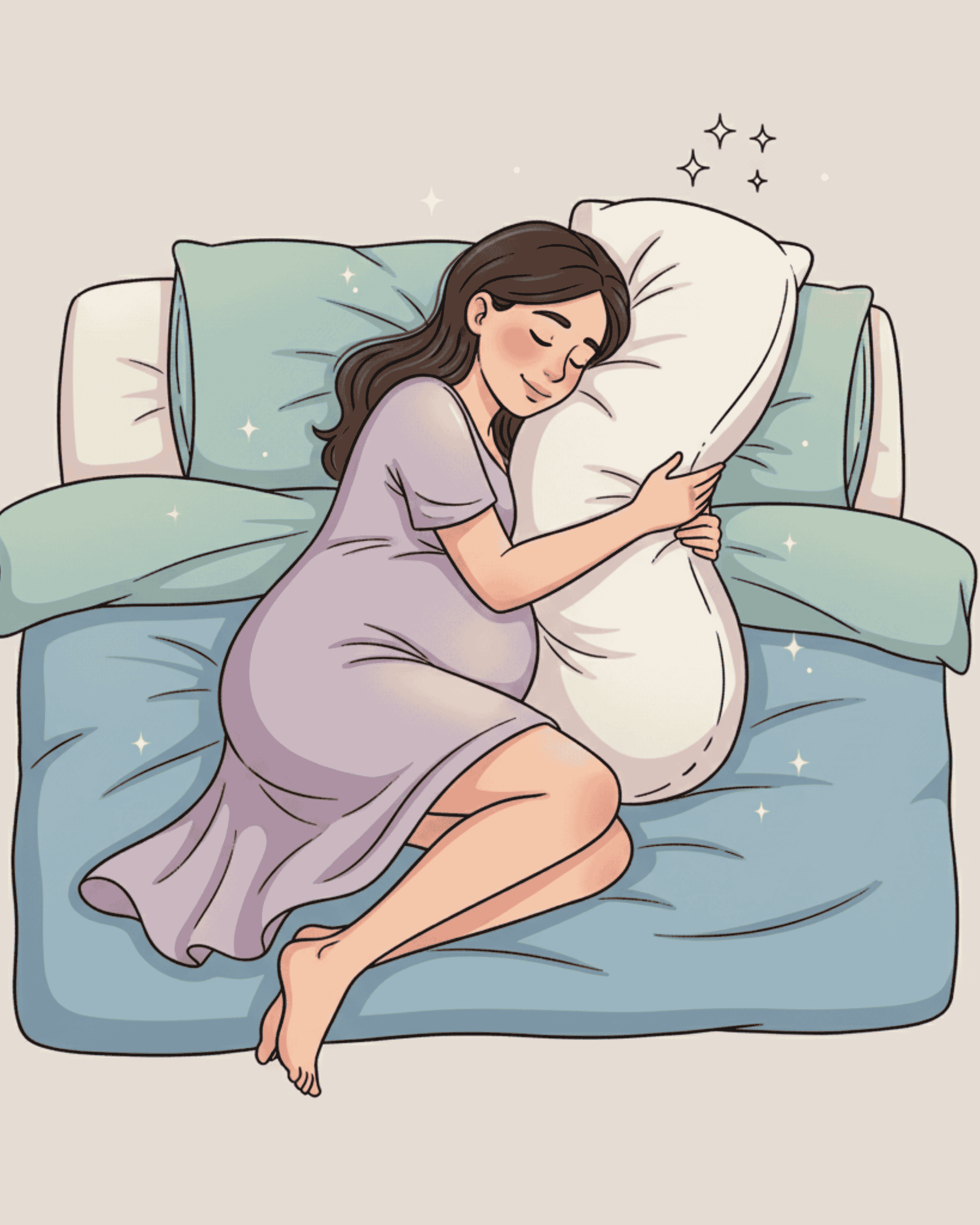
As your body changes during pregnancy, your hips, pelvis, and lower back carry more weight and tension. Sleeping on your side with a pillow between your knees is one of the ways to ease that strain while keeping your spine and hips properly aligned. This position also supports smoother blood circulation to the uterus and baby, helping both of you rest more peacefully.
Placing a firm or medium-support pillow between your knees helps to reduce pressure on your hips and lower back, which can become sore as your pregnancy progresses. If you would like extra support, you can tuck another small pillow or a folded blanket under your belly to cradle it gently.
Many mums find that this setup also helps with leg cramps and minimizes tossing and turning through the night. You can use a pregnancy pillow, a body pillow, or even two standard pillows, whatever feels most comfortable for your body.
Semi-Reclined (Propped Up)
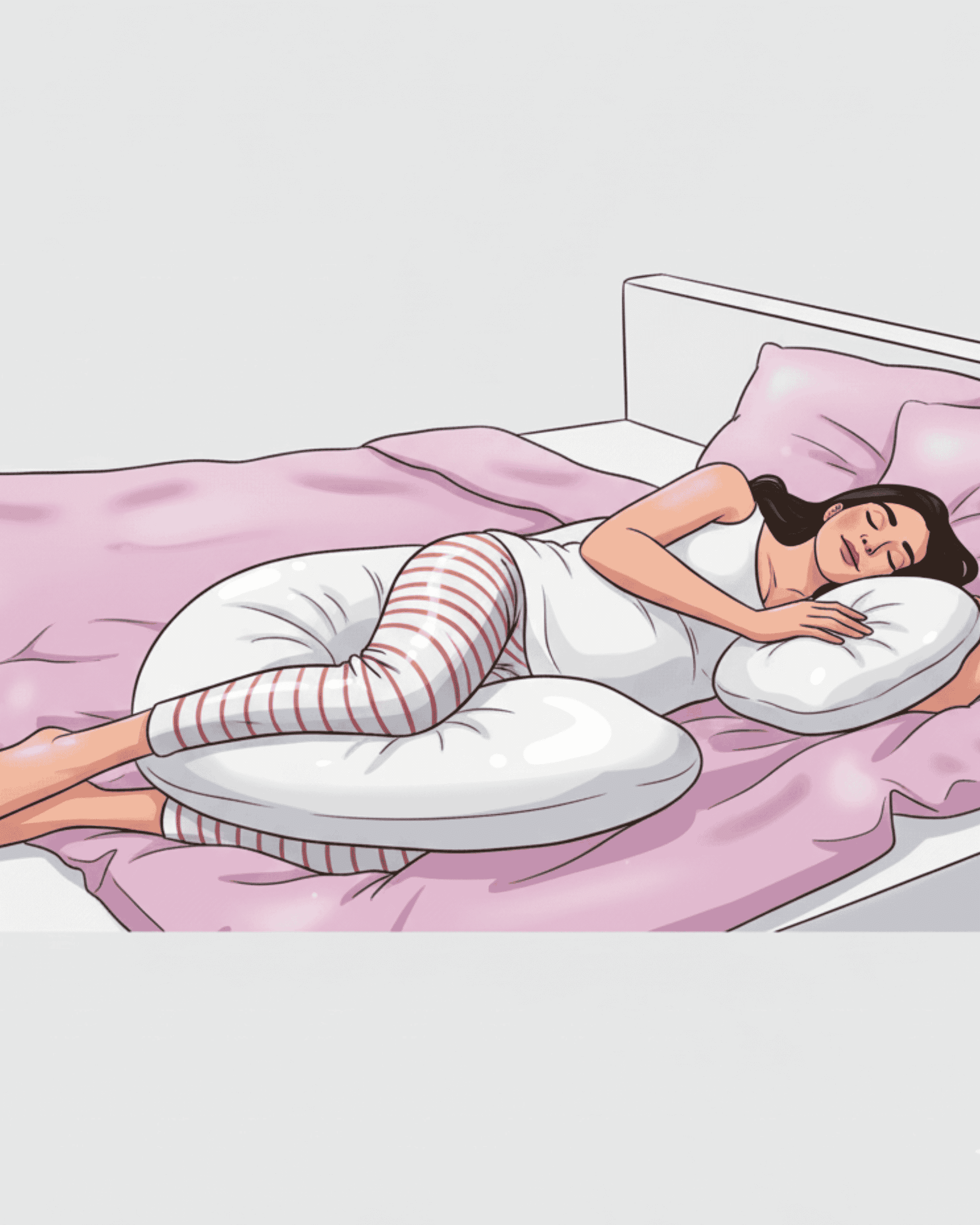
The semi-reclined or propped-up position can be a wonderful option for you when you are pregnant, especially during the later months when lying completely flat becomes uncomfortable. This position involves resting in a slightly upright angle with your back supported by pillows or an adjustable bed wedge. It helps take pressure off your lower back and pelvis while keeping your upper body elevated for easier breathing and better digestion.
Sleeping in a semi-reclined position can be particularly helpful if you experience heartburn, shortness of breath, or nasal congestion, common symptoms in the second and third trimesters. The gentle incline helps prevent stomach acid from flowing upward and reduces pressure on your diaphragm, allowing you to rest more comfortably. It is also a comfortable and flexible alternative to full side-sleeping, especially if you find it hard to stay in one position all night.
To create this position, arrange a few firm pillows or a wedge behind your upper back and shoulders, ensuring your neck stays well-supported. You can also place a pillow under your knees to relieve tension in your lower back and improve circulation in your legs.
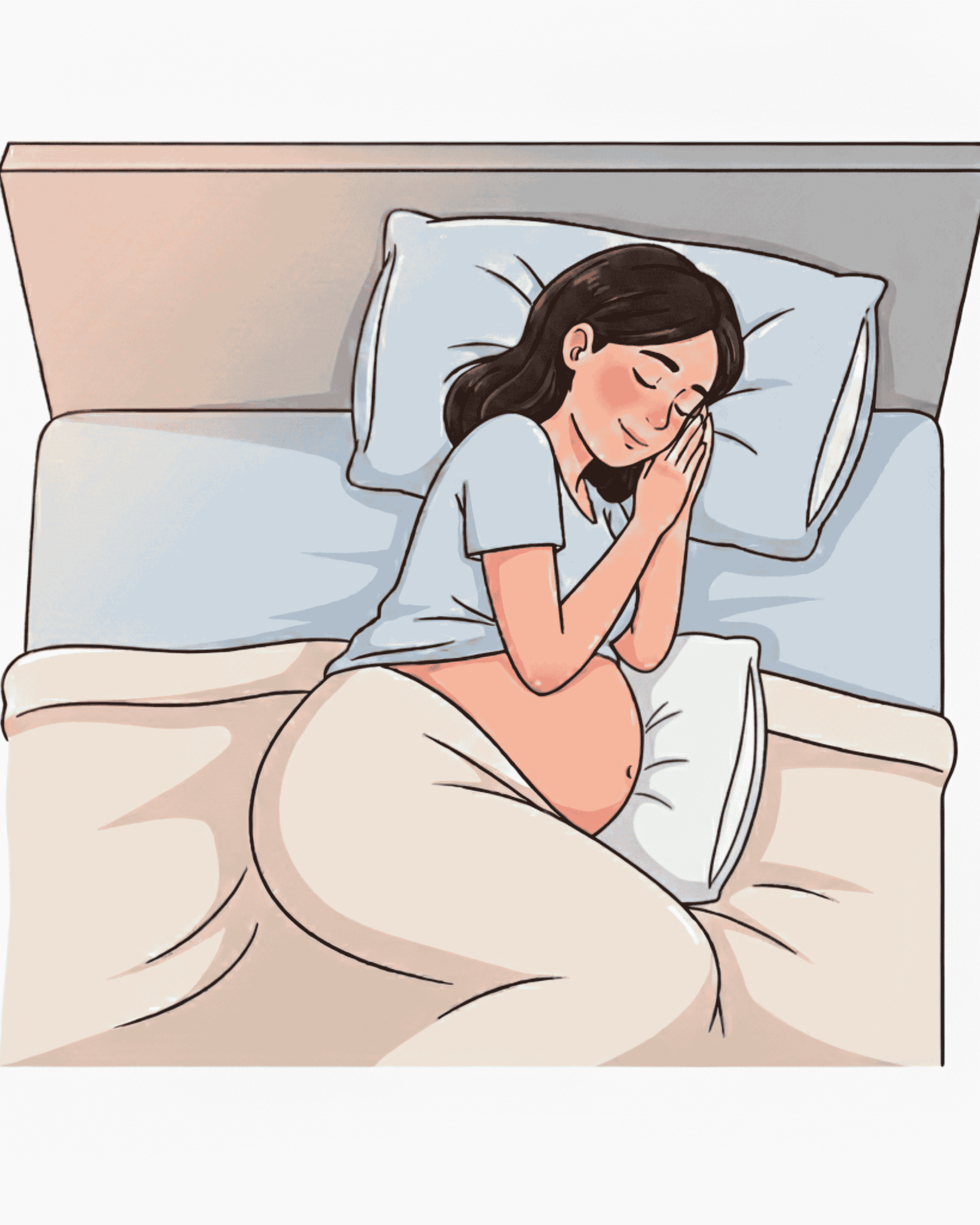
Side-Lying with a Pillow Under the Belly
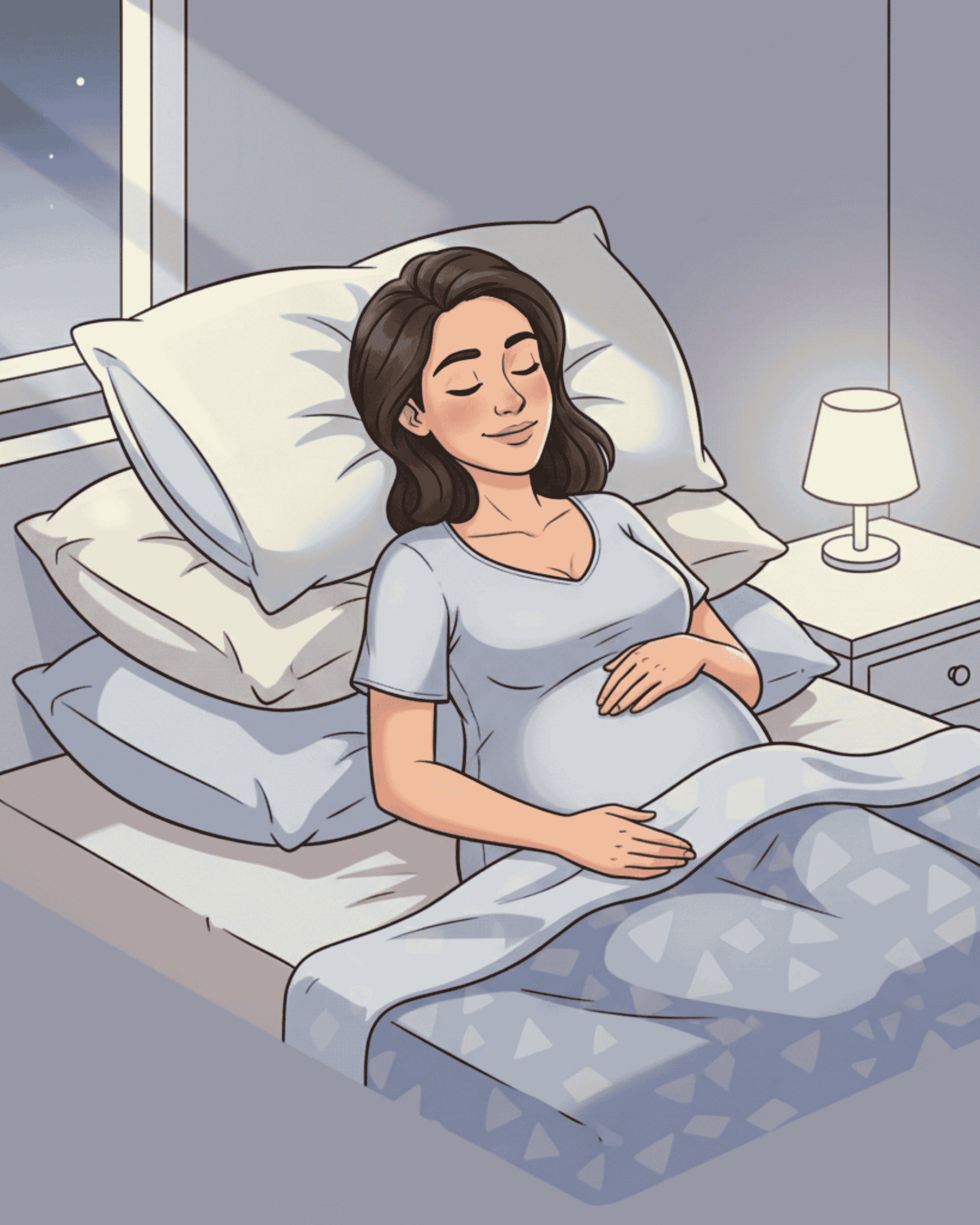
As your pregnancy progresses, your growing belly can begin to pull forward slightly when you lie on your side, creating tension in your lower back and hips. Adding a small pillow or a specially designed maternity pillow under your belly can make a difference, as it helps distribute your baby’s weight more evenly and keeps your spine in a neutral and comfortable position throughout the night.
In this position, lie on your side (preferably the left) and slide a soft pillow or folded blanket under your abdomen so that it lifts and supports your bump. This reduces the strain on your ligaments and back muscles, easing common pregnancy aches while improving circulation to the uterus and baby. It also helps prevent rolling forward or twisting awkwardly in your sleep.
For added comfort, try combining this position with a pillow between your knees and one behind your back for balance. This full-body support can relieve pressure on your hips and promote deeper rest.
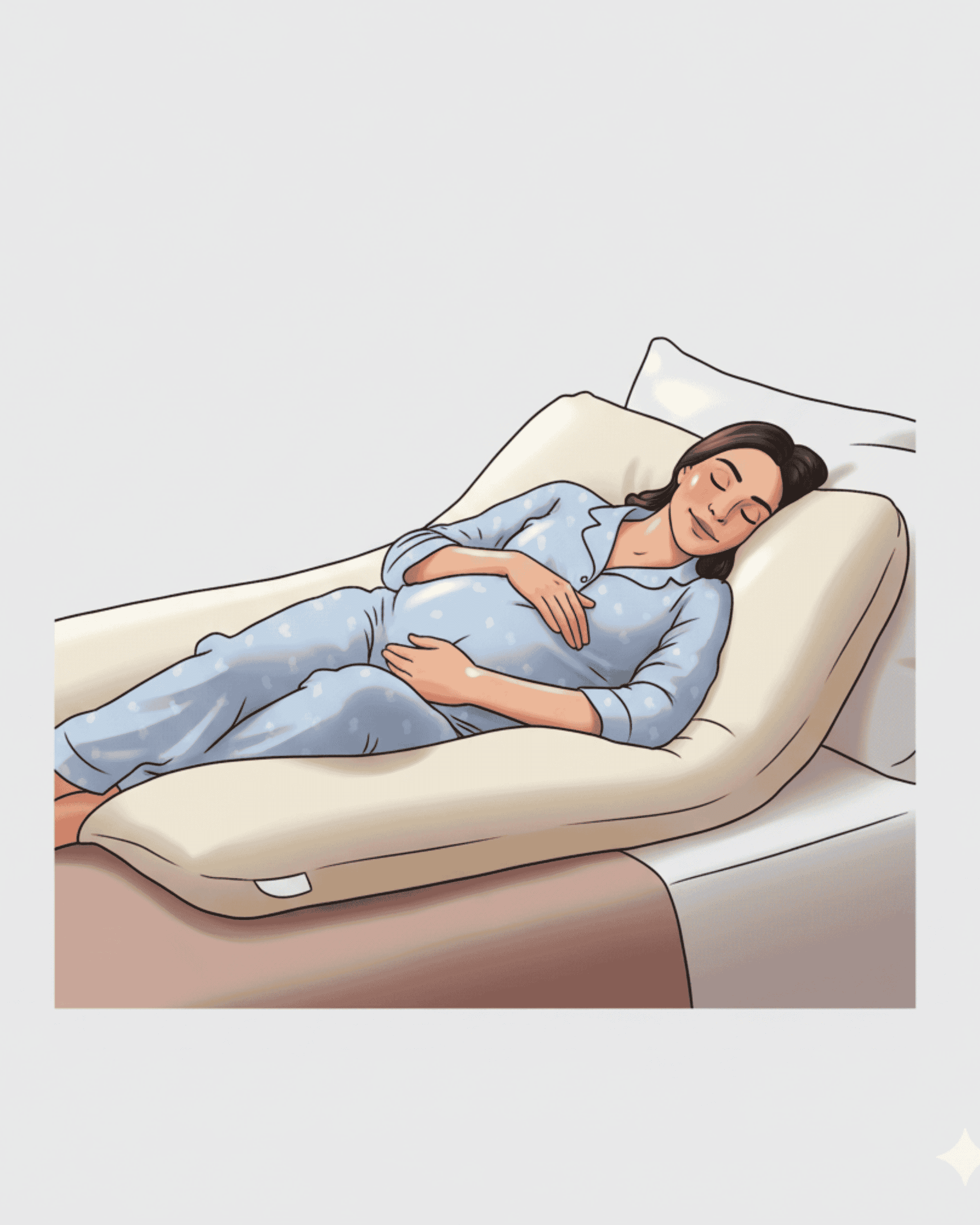
Side-Lying with a Pillow Behind the Back
As your belly grows, maintaining balance and comfort while lying on your side can become more challenging. A simple yet highly effective way to stay supported is by placing a pillow behind your back. This position helps keep you comfortably on your side throughout the night, prevents you from rolling onto your back, and provides support to your spine and hips.
Sleeping flat on your back during the last few months of pregnancy can sometimes restrict blood flow and cause discomfort or dizziness due to pressure on major blood vessels. The side-lying position with a pillow behind your back helps you avoid this, ensuring steady circulation to both you and your baby. It also relieves strain on your lower back and pelvis, two areas that often carry extra tension as your pregnancy progresses.
To try this position, lie on your left side and tuck a firm or medium pillow snugly behind your back. You can use a regular pillow, a wedge pillow, or part of a U- or C-shaped pregnancy pillow. For extra comfort, combine it with another pillow between your knees to keep your hips aligned and reduce joint pressure.
When to Ask for Help
Sleep challenges are very common during pregnancy, and most mums experience nights of tossing, turning, or waking often. However, there are times when persistent sleep problems may signal something that deserves extra attention. Many mums notice similar patterns as part of the common sleep challenges in pregnancy, but it’s always best to check in if something feels different or concerning to you.
You should talk to your healthcare provider if you experience severe insomnia, loud snoring or gasping for air, leg cramps or restless legs that keep you awake, or consistent pain that makes it hard to find a comfortable position. Sudden swelling, headaches, or shortness of breath during sleep also warrant a call to your doctor.
It is also important to remember that emotional wellbeing plays a major role in how well you sleep. Feelings of anxiety, sadness, or racing thoughts can make rest difficult, and seeking support for your mental health is just as valid as asking about physical discomfort. A calm mind supports a healthy pregnancy, so do not hesitate to reach out to your care provider or a trusted counselor if you are feeling overwhelmed.
Above all, trust your body and listen to its signals. Pregnancy comes with a lot of changes, and seeking help when something feels off is a sign of strength and awareness. You deserve rest, reassurance, and the right support to feel your best.
A Word From Mindsmaking
Good sleep is a form of care for both you and your baby. Each night of rest helps your body recover, supports healthy growth, and strengthens your emotional well-being. Be patient with yourself as you adjust and discover what feels most comfortable. Small changes like the right pillow, a gentle stretch, or a cozy position can make a big difference. Remember, every peaceful night adds to your strength, calm, and connection with your little one. You are doing beautifully, one restful breath at a time.
Pregnancy by Week
Welcome to the enchanting journey of motherhood, where every week unfolds a new chapter of anticipation, growth, and wonder.















Was this article helpful?
How many stars are you giving this article?
Leave a comment
Your email address will not be published.