10 Natural Ways to Soften and Prepare Your Cervix for Labor
Getty Images Signature


Written by Mindsmaking Medical Writer

Fact Checked by Mindsmaking Professionals
30th, January, 2026
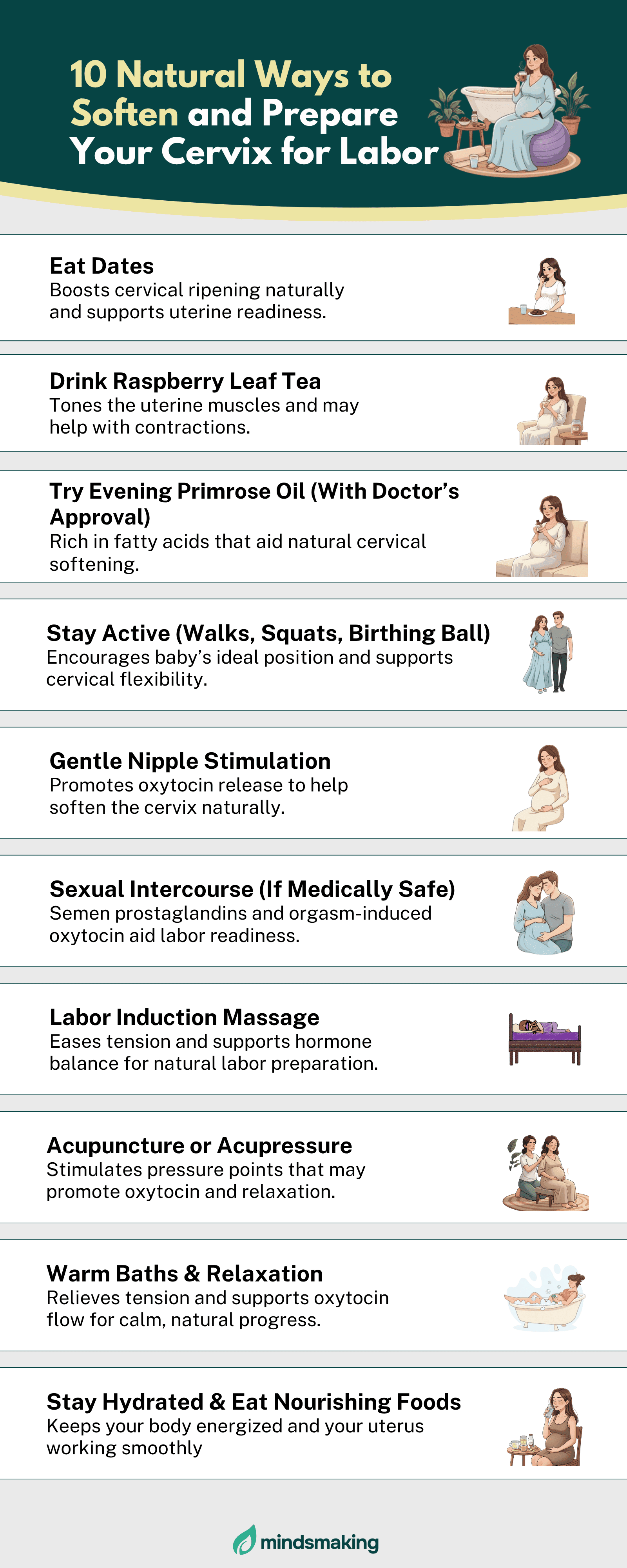
Cervical ripening is your body’s way of preparing for labor. There are natural ways to support this natural process, helping your body and baby get ready for a smoother and more confident birth.
Cervical ripening might sound like something out of a kitchen recipe, but this is actually your body’s way of softening, thinning, and preparing the cervix for labor. This process usually happens slowly, sometimes days or even weeks before labor begins, so there’s no need to rush or worry.
If you would like to give nature a gentle nudge, there are safe and natural ways to support cervical ripening, like staying hydrated, moving around, and eating well, letting those lovely pregnancy hormones do their work.
Every woman’s body moves at its own perfect pace, so trust the process and take it one calm breath at a time. Your body knows exactly what it’s doing.
Key Takeaways
Cervical ripening happens as hormones like prostaglandins, oxytocin, and relaxin work together to soften and open the cervix for labor.
Natural methods such as eating dates, gentle movement, and relaxation can safely support your cervix as it prepares for birth.
Seek medical help if you experience bleeding, pain, infection signs, or reduced baby movement, so that your provider can guide safe next steps.
Why Cervical Ripening Happens
Cervical ripening is simply your body’s way of getting ready for labor. Think of your cervix as a flexible door that gradually softens, thins, and opens so your baby can make an easy entrance. This process is guided by key hormones working quietly in the background. Prostaglandins soften the cervix, oxytocin encourages gentle contractions, relaxin loosens the pelvic joints, and estrogen helps the cervix respond to these signals more effectively.
Everyone’s timing is different. Some women notice changes in their bodies weeks before labor, while others progress just a few days or even hours beforehand. Both are completely normal. Your body has its own schedule, and that’s okay.
The best thing you can do is support the process without putting pressure on it. Stay hydrated, keep moving gently, and try to relax. Trust that your body and baby are working together perfectly. Cervical ripening is simply a sign that your body is preparing for the big moment in its own natural and steady way.
Natural Methods That Help
While your body naturally knows how to prepare for labor, a few habits can support the process along the way. There are safe and simple ways to help your cervix and body get ready in their own time. From wholesome foods to light movement and relaxation, these natural methods can make the waiting period a little more productive, and maybe even a bit sweeter.
Eat Dates
Dates can be a sweet pregnancy craving, but they also help your cervix prepare for labor. These naturally sugary fruits are packed with fiber, potassium, and antioxidants, and may boost your body’s response to oxytocin, the hormone that softens the cervix and triggers contractions.
Research shows that women who eat dates during the last four weeks of pregnancy have been said to have better cervical ripening compared to those who don’t eat them. Dates also affect the hormones estrogen and progesterone, which help prepare the uterus and ripen the cervix. Plus, they are an easy, healthy snack.
It’s a small, tasty step that supports your body’s natural rhythm. No fancy supplements needed, just a handful of nature’s sweetness doing quiet, helpful work.
Tip: Blend them into smoothies, stuff them with nut butter, or enjoy them plain.
Drink Raspberry Leaf Tea
Raspberry leaf tea has long been a favorite among moms-to-be for its gentle support during the final weeks of pregnancy. This herbal tea doesn’t induce labor, but it may help tone the uterine muscles and improve the efficiency of contractions when labor begins.
Rich in fragrine, a plant compound believed to strengthen the pelvic and uterine muscles, raspberry leaf tea is also a good source of iron and antioxidants. Some studies suggest it may shorten the pushing stage of labor and reduce the need for medical interventions, though results vary from person to person.
Start slowly around 32 to 34 weeks of pregnancy, one cup a day, then gradually increase if it feels right for you. Always check with your healthcare provider before adding any herbal tea to your routine.
Tip: Enjoy it warm with a splash of honey or chilled over ice for a refreshing twist.
Try Evening Primrose Oil (With Doctor’s Approval)
Evening primrose oil (EPO) may help your cervix prepare for labor by gently supporting the natural softening process. It’s often used in the last few weeks of pregnancy and is rich in healthy fatty acids that your body can use to make prostaglandins, the same hormones that help the cervix ripen.
Most moms take it in capsule form, usually starting around 37 weeks, but it’s important to talk with your doctor before using it. Some people also apply it topically or insert capsules vaginally, though that should only be done under medical guidance. Every pregnancy is different, and your provider can help you decide what’s safest for you.
Tip: Try pairing EPO with other gentle, natural habits like light movement, hydration, and rest for well-rounded support as your body prepares for birth.
Stay Active (Walks, Squats, Birthing Ball)
Gentle movement can go a long way toward helping your body prepare for labor. Staying active encourages your baby to move into a good position, increases blood flow to the uterus, and can even help your cervix soften naturally. It is your way of helping gravity, and your muscles work together to keep things moving, literally.
Walking is one of the easiest and most effective ways to keep your body in sync with labor prep. Squats can open the pelvis and strengthen the lower body, making labor positions more comfortable later on. And if you have a birthing ball, gentle bouncing or hip circles can ease tension, improve posture, and help your baby settle lower into the pelvis.
Tip: Listen to your body. Short, frequent movement is better than overdoing it; comfort and consistency matter more than intensity.
Gentle Nipple Stimulation
It might sound surprising, but gentle nipple stimulation can help your body produce oxytocin, the same hormone that triggers contractions and supports cervical ripening. It’s one of the few natural methods shown to have a real effect on encouraging the body toward labor readiness.
You can do this manually or with the help of a breast pump, but the keyword is gentle. Overdoing it can cause strong or frequent contractions, so keep it moderate. A few minutes at a time, several times a day, is usually enough if your healthcare provider says it’s safe for you. It’s best to try this only when you’re full-term and your doctor or midwife gives the go-ahead.
Tip: If you choose to try nipple stimulation, relax and take your time, it’s not a race.
Sexual Intercourse (if medically safe)
Yes, sex can actually help your body prepare for labor. Semen contains prostaglandins, the same hormones that help soften and ripen the cervix naturally. Meanwhile, orgasms trigger the release of oxytocin, which can encourage uterine contractions, both working together to nudge your body closer to labor.
Beyond the biology, sex can also help you relax and release tension. Feeling close to your partner boosts comfort and calm, which are just as important when your body’s gearing up for birth.
Of course, this method isn’t for everyone. Avoid intercourse if your water has broken, if you’ve been advised to abstain due to medical reasons (like placenta previa or preterm labor risk), or if your doctor says it’s not safe.
Tip: Keep it light, slow, and comfortable, there’s no need to turn it into a “labor project.”
Labor Induction Massage
A labor induction massage is a gentle and relaxing way to help your body prepare for labor while easing late-pregnancy tension. The goal isn’t to “force” labor but to encourage relaxation, improve circulation, and naturally stimulate hormones like oxytocin, which can support cervical ripening and contractions.
This type of massage often focuses on pressure points in areas like the shoulders, lower back, hands, and ankles, and these places are believed to help promote relaxation and balance in the body. A skilled prenatal massage therapist can use safe techniques tailored for your stage of pregnancy.
Even if labor doesn’t start right away, you will likely feel calmer and more rested, and that can make the early stages of labor smoother when they do begin.
Tip: Always see a trained prenatal massage therapist and check with your healthcare provider before booking a session, especially if you have any complications or a high-risk pregnancy.
Acupuncture or Acupressure
Acupuncture and acupressure have been used for centuries to support natural labor preparation. These methods focus on specific pressure points that may help stimulate oxytocin release, encourage cervical ripening, and promote relaxation.
Acupuncture involves the use of fine needles at targeted points, while acupressure uses firm, steady pressure with the hands or a massage tool. Common points include areas on the ankles, hands, and shoulders, which are believed to help balance energy flow and gently nudge the body toward labor.
Research suggests acupuncture may reduce the need for medical induction, though results vary from person to person. At the very least, many moms find them helpful for easing stress, back pain, and tension in late pregnancy.
Tip: Always visit a licensed practitioner experienced in prenatal care, and get the all-clear from your doctor before trying acupuncture or acupressure in the final weeks of pregnancy.
Warm Baths and Relaxation
Sometimes, the simplest comforts are the most effective. Taking a warm bath or practicing relaxation techniques can help your body release oxytocin, a hormone that encourages contractions and supports cervical ripening. Warm water soothes tired muscles, eases back and pelvic tension, and promotes overall calm, creating the perfect environment for your body to progress naturally.
A relaxing soak shouldn't focus on “starting” labor, instead, it should help you reduce stress and support balance. When you are relaxed, your body can produce hormones more efficiently, and your cervix may respond to those natural cues.
You can also pair your bath with deep breathing, gentle stretching, or calming music to enhance the effect. Just make sure the water is comfortably warm, not hot (you are not trying to boil yourself).
Tip: Think of it as your mini spa moment before the baby arrives: calm mind, relaxed body, and a little peace before the big day.
Stay Hydrated and Eat Nourishing Foods
It might sound simple, but drinking enough water and eating real, nourishing food can make a big difference as your body prepares for labor. When you are well-hydrated, everything. from your muscles to your cervix, it works more smoothly. Dehydration can actually make your uterus crampy or contractions less efficient, so keep that water bottle close.
As for food, focus on fresh and balanced meals that keep your energy steady: whole grains, fruits, veggies, healthy fats, and proteins. Think of it as fueling up for one of the biggest workouts of your life (because, well, it is!).
Tip: Sip water often and snack smart. Your body’s doing amazing work, and it deserves to be well-fed and cared for.
When to Seek Medical Help
While these natural methods can gently encourage your body to get ready for labor, it’s important to know when it’s time to involve your healthcare provider. Contact your doctor or midwife right away if you experience vaginal bleeding, severe or persistent pain, fever, foul-smelling discharge, or any signs of infection. Another important warning sign is decreased baby movement. If your baby seems less active than usual, reach out to your healthcare provider.
Even with all the patience and preparation, sometimes the cervix may not ripen on its own. In that case, your healthcare team can safely help things along using medical methods such as prostaglandin gels or tablets, cervical ripening balloons, or low-dose oxytocin to encourage dilation. These approaches are closely monitored to keep both you and your baby safe.
Every pregnancy progresses differently, and needing medical help doesn’t mean your body has failed. It’s simply getting a little assistance to make sure you and your baby stay safe and healthy.
Read This Next
No posts available
A Word From Mindsmaking
Everybody’s pace is different, and patience truly matters. Trust your body and the process it’s beautifully designed for. You’re doing amazing work, even when it feels slow or uncertain. Every gentle stretch and every small change is a step closer to meeting your baby. You’ve got this.💛
Cervical ripening is one of those quiet, behind-the-scenes miracles your body handles beautifully. Supporting it is about gentle encouragement through balance, nourishment, and relaxation. From eating dates and sipping raspberry leaf tea to taking soothing baths or staying lightly active, these small acts can help your body and mind feel more in tune as labor approaches.
Remember, every woman’s timeline is unique, and that’s perfectly okay. Trust your body, stay patient, and focus on caring for yourself. With a little faith in nature’s timing, you are preparing for the beautiful moment when you finally meet your baby.
Pregnancy by Week
Welcome to the enchanting journey of motherhood, where every week unfolds a new chapter of anticipation, growth, and wonder.


























Was this article helpful?
How many stars are you giving this article?
Leave a comment
Your email address will not be published.