14 Labor Coping Tips
RyanKing999


Written by Mindsmaking Medical Writer

Fact Checked by Mindsmaking Professionals
26th, October, 2025
These Labor coping techniques will help you stay calm, confident, and in control. From breathing to movement, these simple strategies make contractions more manageable and turn labor into a more positive experience.
Whether you’re hoping for a calm, natural birth at home… planning to use medical pain relief but want extra tools to stay in control… or preparing for those first contractions of early labor before a scheduled C-section…
You can benefit from practical coping strategies that ease discomfort, reduce stress, and help make the birthing process more positive and empowering.
These small strategies help you stay calmer and more confident to work with your body, not against it. These techniques can transform the birth experience by helping you feel less pain during contractions, stay calmer and more in control, and even reduce the chances of an unplanned C-section.
They can support a quicker recovery, boost your confidence as a new mom, and encourage stronger bonding with your baby. Many parents also find that these strategies lead to a more settled newborn, a smoother start to breastfeeding, and a lower risk of postpartum depression.
Key Takeaways
Having supportive people like a partner, doula, or trusted providers during labor can reduce stress, provide comfort, and help you feel empowered and safe.
Childbirth classes prepare you for labor with breathing, relaxation, pain relief options, and teamwork skills that make the experience more confident and calm.
Hypnobirthing uses relaxation, breathing, and visualization to release fear, reduce pain, and boost confidence, helping labor feel calmer and more manageable.
Focused, deep breathing helps manage labor pain and keeps oxygen flowing to you and your baby.
Moving, swaying, or leaning during labor eases back and hip pressure and helps your baby descend.
Sitting or gently bouncing on a birthing ball reduces discomfort and encourages optimal baby positioning.
Pregnancy-safe essential oils can calm your nerves and make contractions feel more manageable.
Gentle massage or comforting touch eases tension and shifts focus from pain to support.
Warm water relaxes your muscles, reduces back pain, and helps contractions feel more manageable.
Alternating warm and cold packs can relieve muscle tension and improve comfort during labor.
Using a long scarf to rock or lift your belly helps position the baby and ease hip/back tension.
Soft lighting and calming music create a relaxing environment that eases contraction intensity.
Applying pressure to both hips reduces pelvic tension and back discomfort during contractions.
Mental focus or distraction techniques help shift attention away from pain and make labor more manageable.
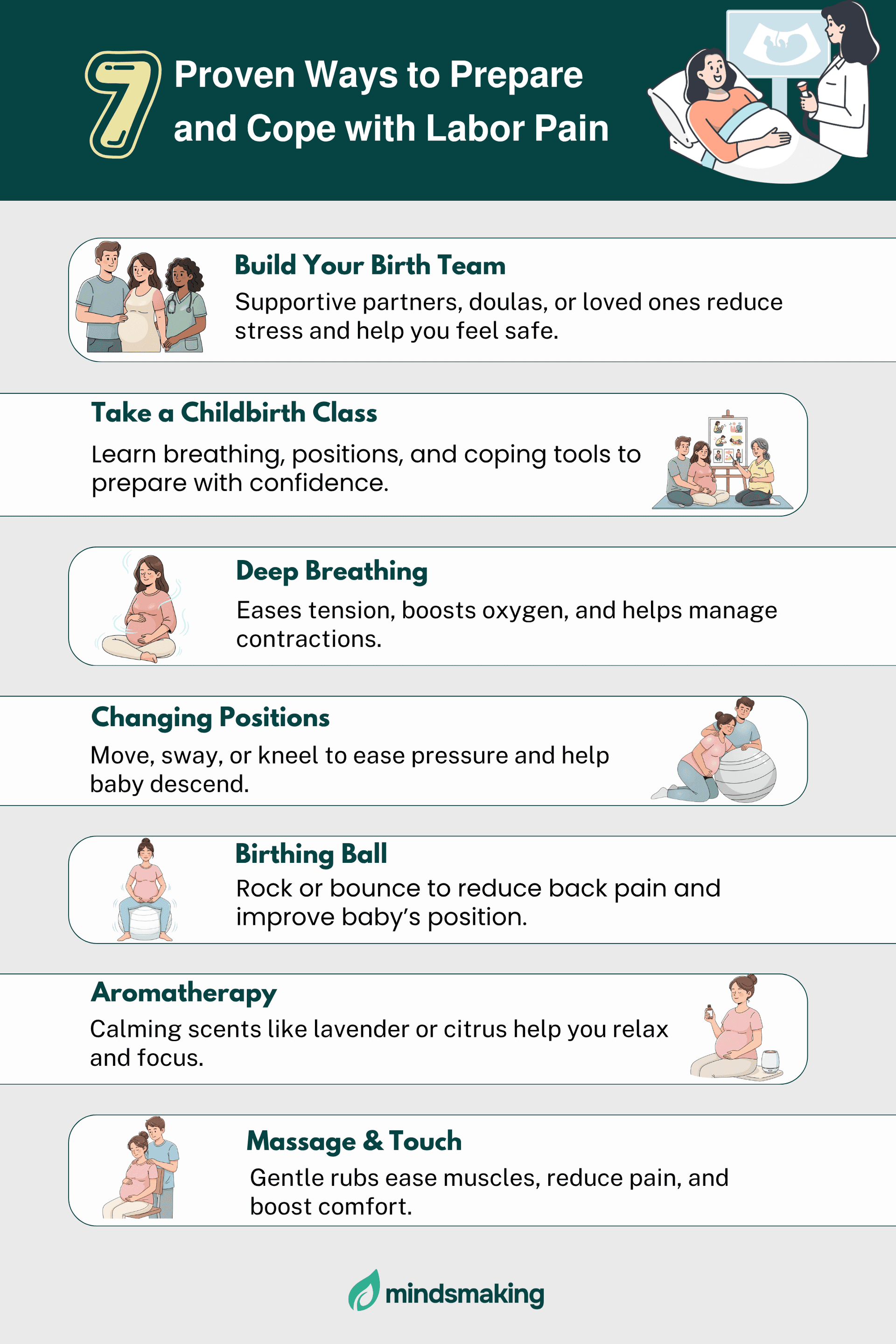
Build Your Birth Team
Having the right birth team can make a huge difference in how supported and empowered you feel during labor. Your team might include your partner, a trusted family member, a doula, midwife, or medical providers who respect your preferences. Each person plays a role in offering emotional support, advocating for your wishes, and helping you use different labor coping techniques when you need them most. Knowing you’re surrounded by people who understand your goals can reduce stress and create a calmer, more positive birth experience.
Tip: Choose your birth team carefully, invite only those who help you feel safe, calm, and respected.
Take a Childbirth Class
A childbirth class can be one of the best ways to prepare for labor. You’ll learn what to expect during each stage, practice breathing and relaxation techniques, explore different labor positions, and discover both natural and medical pain relief options. These classes also teach support skills — whether for your partner, a doula, or your care team — so everyone knows how to work together, making birth feel more supported and empowering.
Tip: Look for a class that matches your birth goals, whether that’s natural coping methods, hospital birth preparation, or a mix of both.
Practice Hypnobirthing Techniques
Hypnobirthing is a method that uses breathing exercises, guided relaxation, visualization, and positive affirmations to help you stay calm and reduce the sensation of pain during labor. By focusing on relaxation and releasing fear, hypnobirthing allows your body to work more efficiently, helping contractions feel less overwhelming. It can also shorten labor, lower stress hormones, and increase confidence, making birth a more empowering experience.
Tip: Start practicing hypnobirthing techniques during pregnancy so they feel natural and easy to use when labor begins.
Breathing Techniques
Deep breathing is not just for yoga; it’s a labor lifesaver. When contractions make your body tense, it’s easy to hold your breath without noticing, which can make pain worse and slow your progress. Focused breathing helps you stay calm, manage discomfort, and keep oxygen flowing to both you and your baby. Think of each breath as your personal rhythm, guiding you through each contraction like gentle waves.
Tip: Inhale slowly through your nose, exhale through your mouth. Try a steady pattern, like “in for four, out for six.” Practice beforehand so it feels natural when labor begins, turning tense moments into manageable waves of progress.
Read This Next
No posts available
Changing Positions
Labor can feel overwhelming if you stay in one spot, but using different labor positions helps your body work more effectively. Shifting, swaying, kneeling, or rocking on a birthing ball can help ease pressure on your back and hips while making contractions feel more manageable. Walking around, leaning on a partner, or even gently swaying side to side gives your baby room to descend. Think of it as giving your body little reminders to work with each contraction instead of against it.
Tip: Don’t feel stuck, stand, sway, kneel, or lean whenever it feels good. You’ve got this!
Birthing Ball
Who knew a big, bouncy ball could become your best labor buddy? Sitting, rocking, or gently bouncing on a birthing ball can ease back and hip pressure while giving your baby a little nudge into the best position for birth. It’s like your own personal labor dance floor, without the embarrassing moves. Each gentle motion helps contractions feel more manageable and keeps your body working with, not against, the process.
Tip: Roll your hips, sway side to side, or kneel over it for extra relief. Even a few minutes at a time can make a big difference in comfort, help labor progress, and keep you feeling in control.
Aromatherapy
Labor can be intense, but a little aromatherapy can go a long way. Scents like lavender, peppermint, or citrus can help calm your nerves, ease tension, and even make contractions feel more manageable. It’s like sending your brain a tiny “relax” memo while your body does the heavy lifting. You might even find that familiar, soothing smells help you focus and feel more in control, turning stressful moments into ones you can actually breathe through.
Tip: Keep a few pregnancy-safe essential oils handy on a cotton ball, in a diffuser, or in a personal inhaler. Take slow, deep breaths whenever you need a calming boost.
Massage and Touch
Who knew a few gentle hands could feel like magic during labor? Massage or comforting touch can ease tension, soothe sore muscles, and even make contractions feel less intense. A simple shoulder rub, back stroke, or hand-hold can shift your focus from discomfort to connection and support. It’s like your very own cheer squad giving you high-fives, one wave at a time. Touch can also calm your nerves, help your body relax, and make you feel cared for, turning tough moments into ones you can handle with a little extra comfort and confidence.
Tip: Ask a partner or friend for a back rub, shoulder massage, or hand squeeze. Even small touches can make a big difference.
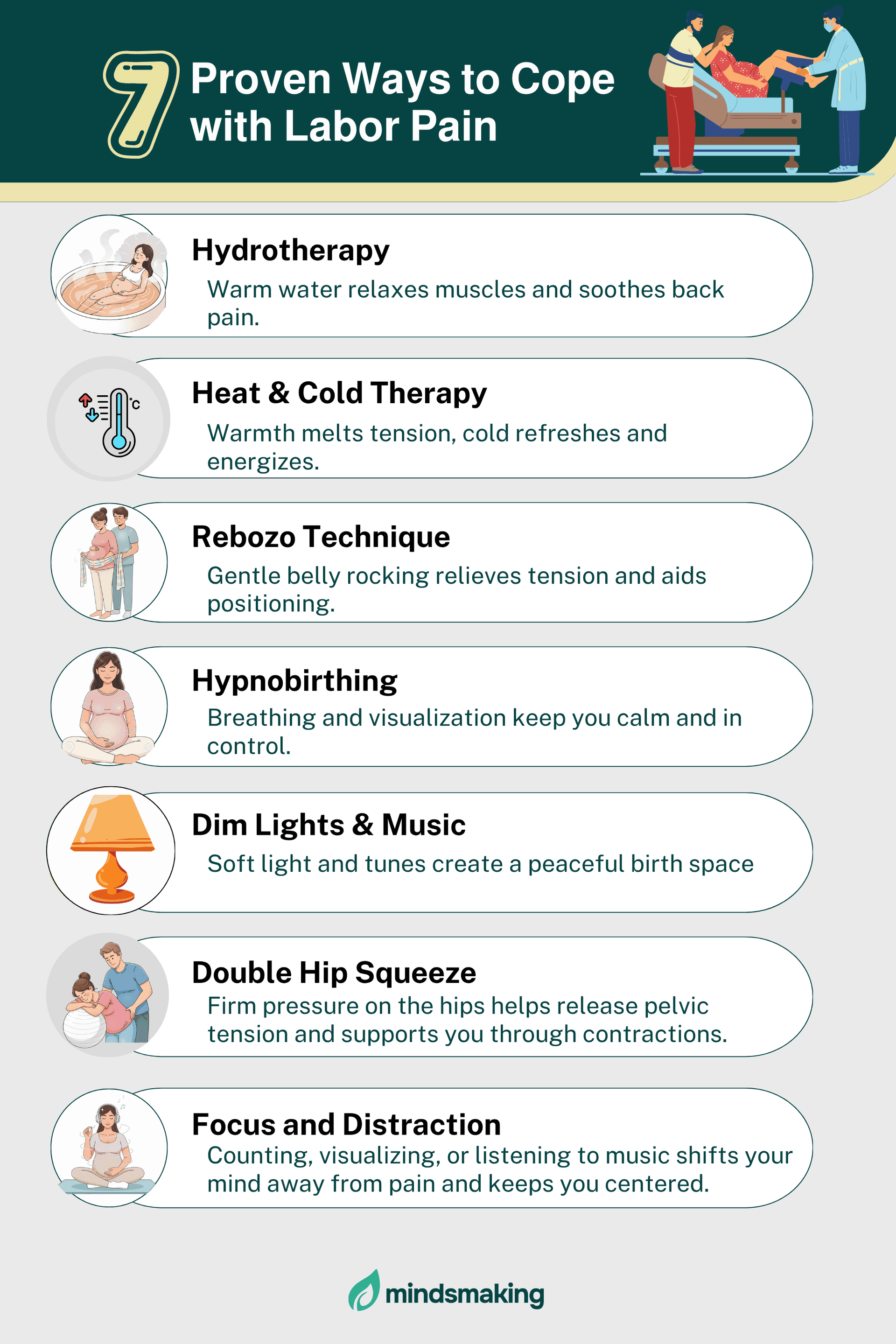
Hydrotherapy
A warm bath or shower during labor is a simple form of hydrotherapy that can feel like hitting the “easy” button. The soothing water helps relax tense muscles, ease back pain, and make contractions feel more manageable. It’s like turning your bathroom into a mini spa, without the cucumber slices on your eyes. Gentle movement in water can also encourage your baby to settle into the best position for birth, while the comforting sensation of water helps calm your mind as your body works hard.
Tip: Try a warm shower, bath, or birthing pool if available. Let the water work its magic while you breathe through each wave.
Heat & Cold Therapy
Sometimes labor pain just needs a little mood swing, but in a temperature style. A warm compress or heating pad on your lower back can melt tension and soothe sore muscles, while a cool pack on your forehead or shoulders can refresh you when things get intense. It’s like giving your body a tiny reset button, helping you breathe, relax, and focus through each contraction. Alternating heat and cold can make a big difference, turning stiff muscles and discomfort into something more manageable and a little less grumpy.
Tip: Apply warm or cool packs to sore areas. Switch between heat and cold as needed, and combine with gentle massage or movement for extra relief.
Rebozo Technique
No, it’s not a new dance move, although it might feel like one! The rebozo technique uses a long, soft scarf or cloth to gently rock, lift, or sway your belly during labor. This can help shift your baby into an optimal position, relieve back or hip tension, and make contractions feel more manageable. You will find the gentle motion comforting, almost like a supportive hug for both body and mind. It’s a simple trick that turns labor into a little coordinated teamwork between you, your baby, and your helper.
What to do instead: Ask your partner, doula, or birth assistant to use a rebozo to sway, lift, or gently rock your belly.
Dim the Lights and Play Music
One moment, the room feels too bright and clinical, and the next, you’re wishing for a little calm amidst the chaos. It turns out you don’t have to be in a club to enjoy dim lights and music. Creating a soft, soothing environment during labor can help you relax, focus, and even make contractions feel less intense. Gentle lighting and your favorite tunes turn the labor room into your own little sanctuary. It’s a small change that can make a big difference in how supported and calm you feel while your body works hard.
Tip: Lower the lights, pick calming music or playlists you love, and let the atmosphere help you breathe, focus, and stay relaxed during contractions.
Double Hip Squeeze
Sometimes contractions make your hips feel like they’re being stretched in every direction, and you just wish for a little relief. That’s where the double hip squeeze comes in. With gentle pressure applied to both hips by a partner or support person, pelvic tension can ease, back discomfort can soften, and contractions can feel more manageable. It’s almost like your hips are getting a well-timed hug, helping your body work with each contraction instead of against it. This simple technique can make a noticeable difference, turning moments of discomfort into something you can handle with a little more comfort.
Tip: Ask someone to press both hips inward during contractions. Short bursts of pressure can bring noticeable relief.
Focus and Distraction
Sometimes contractions feel like they are demanding all your attention, and it’s easy to get caught up in the intensity. Using focus or distraction can help you take a mental step back. Concentrating on your breath, a favorite song, or a calming image gives your mind something to do besides dwelling on discomfort. You can count, visualize a peaceful place, or talk to your support person to shift attention and ease tension. It’s a gentle way to help your body work with each contraction while keeping your mind calmer and more centered. Even small moments of distraction or focus can make a noticeable difference in how manageable labor feels.
Tip: Try guided visualization, favorite music, or chatting with a partner to ease tension and stay grounded during contractions.
Pregnancy by Week
Welcome to the enchanting journey of motherhood, where every week unfolds a new chapter of anticipation, growth, and wonder.

























Frequently Asked Questions
Which labor coping technique is the most effective?
There’s no single “most effective” technique. It depends on your comfort and preferences. Many people find that combining deep breathing, movement, and support from a partner works best.
When should I start practicing labor coping techniques?
It’s best to start practicing during pregnancy, ideally in the second or third trimester. This helps your body and mind feel more prepared and comfortable using them during labor.
Can labor coping techniques reduce the need for pain medication?
For some people, these techniques can lower pain intensity and delay or reduce the need for medication. However, their effectiveness varies for each person.
Is massage helpful during labor?
A gentle massage can ease muscle tension, improve relaxation, and make contractions feel more manageable. Back, shoulder, and hip massages are especially soothing during labor.
Can changing positions help during labor?
Moving and changing positions can ease pain, help your baby descend, and improve labor progress. Try walking, swaying, or using a birthing ball.
Is hypnobirthing effective?
Many people find hypnobirthing effective for staying calm, focused, and in control. It works best with regular practice before labor begins.
Was this article helpful?
How many stars are you giving this article?
Leave a comment
Your email address will not be published.