14 Things to Avoid in Your First Trimester of Pregnancy
Getty images

Written by Mindsmaking Medical Writer

Fact Checked by Mindsmaking Professionals
28th, October, 2025
Not sure what’s safe in early pregnancy? Here are 14 things to avoid in your first trimester for a smoother, healthier start.
The first trimester, lasting from conception to week 12 of pregnancy, is a time of incredible growth and change. During these early weeks, your baby’s organs, brain, and heart begin to form, making their development especially sensitive to outside influences. Because of this, being cautious and intentional with your choices is essential.
It’s also the perfect time to talk about a few important dos and don’ts. From smart food choices to avoiding certain risks, these small, mindful steps can help protect your health and your baby’s development setting the stage for a smoother, healthier pregnancy ahead.
Key Takeaways
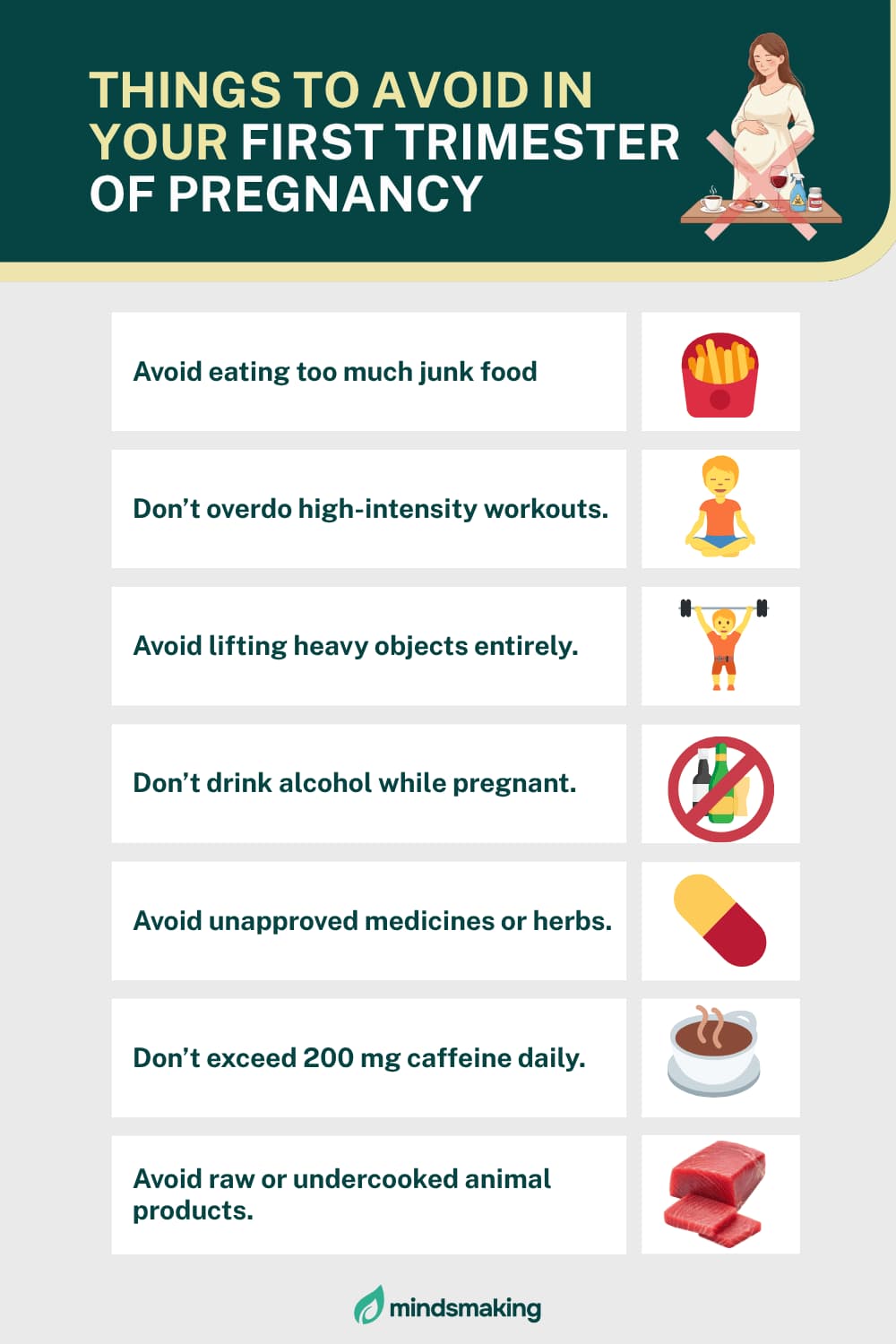
Skip junk food that lacks nutrition.
Avoid intense, high-impact workouts that can be unsafe for you.
Don’t lift heavy items while pregnant.
Say no to alcohol during pregnancy.
Avoid taking any medicine without checking with your healthcare provider first.
Avoid consuming more than 200 mg of caffeine a day to reduce risks during pregnancy.
Do not eat raw or undercooked foods to prevent illness.
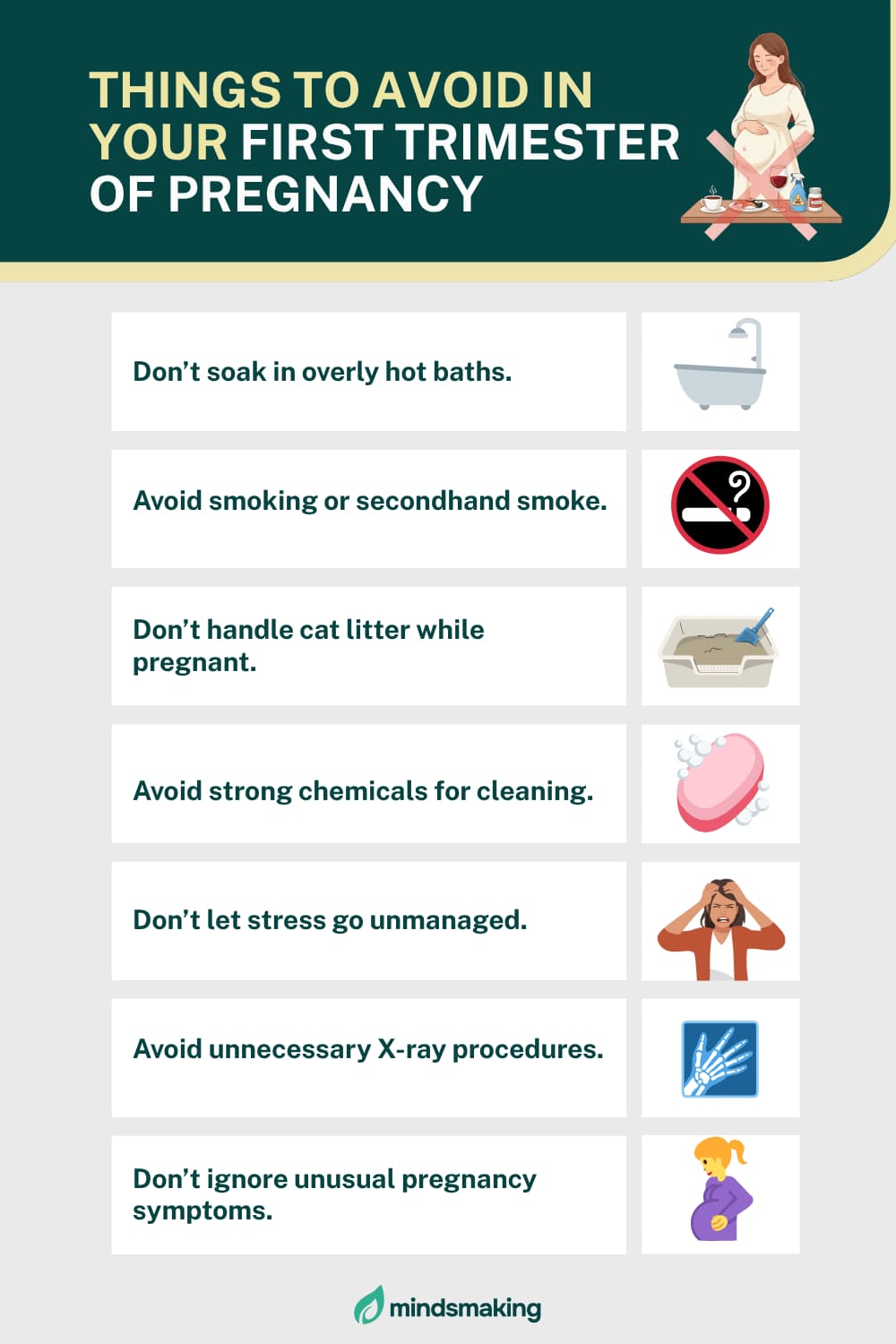
Don’t bathe in overly hot water.
Stay away from smoking and smoky places.
Avoid litter box cleaning to keep your baby safe.
Skip heavy-duty or deep cleaning tasks.
Limit stress that can strain your body.
Postpone non-urgent X-rays when possible.
Never ignore unusual symptoms or concerns.
Cut Back on Junk Food
Those chips and sugary treats might feel comforting right now, but they are not doing you or your baby any real favors. During pregnancy, your body’s nutritional needs increase significantly, and junk foods are mostly empty calories that take the place of the nutrients you truly need. An occasional treat is perfectly fine, but relying too much on fries and soda means missing out on the vitamins, minerals, and proteins that help your baby grow strong and healthy.
What to do instead: Swap junk snacks for natural options like fruits, nuts, yogurt, or whole-grain crackers. It’ll satisfy your cravings and give your baby the nutrients they need to thrive.
Skip Strenuous Exercise
Pregnancy is not the time to push your body to its breaking point. High-intensity workouts can lead to overheating, dehydration, or put extra strain on joints and ligaments already loosened by pregnancy hormones. While staying active is healthy, your body’s energy is now shared with your growing baby. Overdoing it can leave you exhausted rather than energized, and may increase the risk of injury. Think balance, not burnout, and remember that gentle, consistent, and pregnancy-safe activity is your best friend during these months.
What to do instead: Opt for walking, swimming, or prenatal yoga instead of high-impact moves. Listen to your body and stop if you feel discomfort or dizziness.
Avoid Heavy Lifting
During pregnancy, your center of gravity shifts, your joints loosen, and your back is already working overtime. Lifting heavy objects can strain your muscles, cause back pain, or even increase the risk of pregnancy complications like hernias. What used to feel easy can suddenly leave you sore or unbalanced. Even if you’ve always been strong, now is the time to rethink your approach. Ask for help, use proper posture, and let your body focus on carrying its most precious load, your baby.
What to do instead: Ask others to handle heavy lifting, or split loads into smaller, manageable parts to protect your back and balance.
Read This Next
No posts available
Avoid Alcohol
Alcohol passes quickly from the bloodstream to the baby’s, and their developing liver isn’t ready to process it. Even drinking a small amount can increase the risk of miscarriage, stillbirth, premature birth, or fetal alcohol spectrum disorders, which can affect the child’s growth and brain development. There’s no proven “safe” level of drinking during pregnancy, so skipping it altogether is your best bet. The good news is that there are plenty of tasty alcohol-free alternatives that let you join in the fun without the risks.
What to do instead: Whether you are out with friends or celebrating at home, order a fun, non-alcoholic drink to avoid the temptation to drink alcohol. Swap cocktails for sparkling water, mocktails, or fresh juices to celebrate safely.
Use Medications Carefully
Not all medicines are safe during pregnancy, and some medications can affect your baby’s growth or cause complications. Even everyday painkillers, cold remedies, or herbal supplements may carry risks. Your body processes drugs differently now, and your baby’s developing organs are more vulnerable to their effects. Never assume that because something is herbal or sold over the counter, it is automatically safe. Just like a chef double-checking a recipe, the safest approach is to get your doctor’s guidance before starting, stopping, or changing any medication during pregnancy.
What to do instead: Always consult your healthcare provider before taking prescription, over-the-counter, or herbal medicines.
Limit Your Caffeine Intake
While it is tempting to load up on caffeine to feel sharper, too much can affect your baby’s development and increase the risk of low birth weight or miscarriage. Caffeine crosses the placenta, and your baby’s immature system can’t process it as quickly as yours can. Experts generally recommend keeping your intake below 200 mg a day. Remember, caffeine also hides in tea, chocolate, and some sodas, so it adds up quickly without you realizing it.
What to do instead: Keep caffeine under 200 mg per day by tracking all sources, including coffee, tea, sodas, and chocolate. Swap with decaf, warm milk, or fruit-infused water for a safer energy boost.
Avoid Raw or Undercooked Food
Sushi with raw fish, runny eggs, or that rare steak might sound tempting, but during pregnancy, they can come with unwanted “guests” like Listeria or Salmonella. Your immune system is a little more laid-back right now, which means these germs have an easier time causing trouble, and they can affect your baby, too. Luckily, swapping to fully cooked options still lets you enjoy plenty of delicious meals without the risk of food poisoning.
What to do instead: Skip raw sushi, runny yolks, and rare meats, and reheat leftovers until steaming hot, because your dinner should only surprise you with flavour, not bacteria.
Soaking in Overly Hot Baths
A long soak in the bath sounds heavenly when you are tired and achy, but water that’s too hot can raise your core body temperature, which is not great for your baby’s development, especially in the first trimester. Overheating can also leave you dizzy, dehydrated, and feeling more wilted than refreshed. You can still enjoy bath time, just with a temperature that is warm and relaxing rather than sauna-level intense. You should feel like it’s a spa day, not like you are trying to boil yourself.
What to do instead: Keep bath water comfortably warm (around 37–38°C / 98–100°F) and skip hot tubs or steam rooms.
Avoid Smoking
Every puff you take also reaches your baby, along with chemicals that can cut down oxygen and slow growth. Smoking during pregnancy raises the risk of premature birth, low birth weight, and other complications, and vaping or secondhand smoke is not safer. The silver lining is that the moment you quit, you start improving your baby’s environment. Think of it as trading in smoky clouds for fresh, healthy air. Your little one can grow strong in it.
Tip: Skip smoking, steer clear of smoky areas, and get support if you need it. Fresh air is the best gift you can give your baby.
Avoid Cleaning the Litter Box
Yay! Here’s one chore you can happily hand over. Cat litter can carry a parasite called Toxoplasma that’s usually harmless for healthy adults but can cause problems for the baby’s developing brain, eyes, and other organs. The risk comes from handling soiled litter, not from snuggling your cat, so cuddle away without worry! Pregnancy is the perfect time to pass this job to a partner, roommate, or that helpful neighbor who “loves cats.”
What to do instead: Let someone else do litter duty, or wear gloves and wash up well if you absolutely must. Cleaning the litter box daily lowers the risk.
Heavy-Duty Cleaning
Scrubbing floors, lifting furniture, or tackling dusty attics might feel productive, but during pregnancy, these chores can strain your back, overheat you, or expose you to harsh fumes. Many strong cleaning products also contain chemicals that are not great for you or your baby to inhale. You can still keep things tidy, but this is the perfect time to delegate the “deep clean” to others or break tasks into smaller, gentler steps.
What to do instead: Wear gloves, choose non-toxic cleaners, ventilate rooms, and let someone else handle heavy lifting or intense scrubbing.
Stressing Too Much
Pregnancy already comes with enough changes without signing up for a gold medal in overthinking. Constant stress can mess with your hormones, raise blood pressure, and even affect your baby’s growth. A little worry is natural because you love your baby, but living in “what if” mode will just leave you drained. This is your cue to slow down, breathe, and let a few non-urgent things slide. The laundry will wait; your sanity is worth more.
What to do instead: Use light exercise, deep breathing, or hobbies you love to keep stress in check and maintain a steady flow of smiles.
X-Rays
X-rays are great for spotting broken bones or dental issues. Still, during pregnancy, high doses of radiation can be risky for your baby’s rapidly developing cells, especially in the first trimester. The good news is that most routine X-rays can be delayed or done with extra shielding to keep you both safe. Emergencies are different, so if an X-ray is truly needed, your healthcare provider will take every precaution.
What to do instead: Let your doctor or dentist know you are pregnant so they can shield your belly or postpone the X-ray. You will still get the care you need while keeping your baby’s first “portrait session” strictly ultrasound-only.
Ignoring Your Gut Feeling
Pregnancy comes with plenty of advice, some helpful, some not-so-much. But no one knows your body better than you. If something feels off, whether it’s unusual pain, strange new symptoms, or a nagging sense that “this isn’t right,” it’s worth speaking up. Brushing it aside could mean missing an early sign of something important. Your instincts are like your built-in GPS, maybe not perfect, but often pointing you in the right direction. Trust them.
What to do instead: Call your healthcare provider anytime you are concerned. Peace of mind is priceless, and it’s always better to check than regret.
Pregnancy by Week
Welcome to the enchanting journey of motherhood, where every week unfolds a new chapter of anticipation, growth, and wonder.




Frequently Asked Questions
Why is it important to avoid certain things in the first trimester?
Avoiding certain things in the first trimester is vital because this is when your baby’s major organs start developing. Harmful substances or activities can increase the risks of miscarriage and congenital disabilities. Protecting yourself now supports a healthy pregnancy from the very start.
Can I drink coffee during the first trimester?
You can drink coffee in moderation during the first trimester. Experts generally recommend keeping caffeine intake below 200 mg per day to reduce risks like low birth weight or miscarriage. Remember to count all sources of caffeine, including tea, chocolate, and soda.
Should I avoid high-stress environments?
It's best to avoid high-stress environments during pregnancy. Excessive stress can affect your hormones, raise blood pressure, and impact your baby’s growth. Finding ways to manage stress helps keep you and your baby healthy.
Can I use essential oils?
Some essential oils are safe in pregnancy, but many can pose risks such as contractions or allergic reactions. It’s best to avoid using essential oils unless your healthcare provider approves them. Always consult your doctor before using any during pregnancy.
Should I avoid noisy environments?
It’s a good idea to avoid very loud or constant noisy environments during pregnancy. Excessive noise can increase stress and may affect your sleep and well-being. Keeping a calm, peaceful setting helps support your health and your baby’s development.
Should I avoid certain skincare products?
It's important to avoid certain skincare products during pregnancy. Ingredients like retinoids, salicylic acid, and some chemical peels can harm the baby’s development. Always check labels and consult your healthcare provider before using new skincare products.
Is Alcohol Safe in Early Pregnancy?
Alcohol is not safe in early pregnancy. Even small amounts can increase the risk of miscarriage, congenital disabilities, and developmental problems. It’s best to avoid alcohol completely to protect your baby’s health.
What Medications Should I Avoid in the First Trimester?
Avoid medications that can harm your baby’s development in the first trimester, such as certain painkillers, some antibiotics, and herbal supplements without approval. Always consult your healthcare provider before taking any medication during pregnancy.
Can I Exercise Normally?
During pregnancy, it’s best to avoid high-intensity or strenuous exercise. Instead, choose gentle, pregnancy-safe activities like walking, swimming, or prenatal yoga to stay healthy without overdoing it. Always listen to your body and consult your healthcare provider.
Can I travel during the First Trimester?
You can usually travel during the first trimester if your pregnancy is healthy. Just take precautions like staying hydrated, avoiding risky destinations, and checking with your healthcare provider before planning a trip.
Was this article helpful?
How many stars are you giving this article?
Leave a comment
Your email address will not be published.