Zinc for Kids: How Much They Need and Top Food Sources


Written by Mindsmaking Medical Writer

Fact Checked by Mindsmaking Professionals
17th, February, 2026
Wondering how much zinc kids need? Knowing the right zinc dosage, signs of deficiency, and the best zinc-rich foods helps you to support your child’s healthy growth and a strong immune system.
Zinc might be a small mineral, but in your child’s body, it plays a big role behind the scenes. From supporting everyday growth to helping little bodies heal and develop properly, zinc is involved in hundreds of processes that keep kids thriving. It’s especially important for a strong immune system, helping your child fight off common colds, recover faster from illness, and stay resilient during those daycare and school years.
Beyond immunity, zinc supports healthy growth and brain development, contributing to appetite regulation, learning, memory, and overall development during infancy and childhood. The good news is that your child can usually get all the zinc they need from simple, everyday foods, no complicated meal plans or automatic supplements necessary. With a balanced diet that includes zinc-rich foods, you are likely already giving your child what they need to grow, learn, and stay healthy.
Key Takeaways
Zinc requirements increase as children grow, but most healthy kids can meet their needs through a balanced, varied diet.
The best zinc-rich foods for kids include animal-based options like meat, eggs, fish, and dairy, as well as plant-based sources such as beans, lentils, nuts, seeds, whole grains, and fortified cereals.
Zinc supplements may help in specific situations, such as poor appetite, limited diets, or certain medical conditions, but they should only be used with guidance from a healthcare professional.
Regularly offering zinc-rich meals and snacks, supporting absorption with protein, and planning thoughtfully for vegetarian or vegan diets can help your child meet zinc needs naturally.
Frequent infections, slow recovery from illness, poor appetite, slow growth, delayed wound healing, skin or hair changes, and changes in taste or smell may indicate that your child’s zinc intake needs closer attention.
How Much Zinc Do Kids Need by Age?
Zinc requirements for kids vary with age because their growth rate and body size change rapidly. As they transition from breast milk or formula to solid foods, the amount and type of zinc they can absorb also change. Additionally, their developing immune system and metabolism affect the amount of zinc they need at different stages. Here is the recommended daily zinc intake for kids by age:
Infants 0–6 months: For newborns and very young babies, zinc needs are usually met through breastfeeding, as breast milk contains zinc in amounts suited to infants. The recommended intake during this stage is about 2 mg per day. If your baby is formula-fed, check that the formula is fortified with zinc. Most standard infant formulas meet this need. At this stage, zinc supports rapid growth, immune system development, and helps protect delicate cells from damage. You can rest assured that healthy, full-term infants typically get enough zinc from milk alone.
Infants (7–12 months): As babies begin solid foods, their zinc requirements increase slightly to around 3 mg per day. Introducing zinc-rich foods for babies, such as pureed meats, legumes, or iron-fortified cereals, helps meet this growing need. Zinc supports not only physical growth but also cognitive development, appetite regulation, and immune function. As your baby begins exploring new foods and environments, adequate zinc intake helps protect their health and supports healthy development.
Toddlers (1–3 years): Toddlers are curious eaters, and their zinc requirements rise to about 3 mg per day. This age can be tricky because picky eating is common, but zinc-rich foods like eggs, yogurt, cheese, beans, and small portions of lean meat can be incorporated into snacks and meals without stress. Zinc at this stage supports steady growth, healthy digestion, and continued brain development. Focus on nutrient-dense foods rather than worrying about exact measurements every day.
Preschoolers (4–8 years): The recommended zinc intake is around 5 mg per day. This period often involves school or daycare meals, so variety is key. Including whole grains, dairy, nuts, and lean meats helps your child get enough zinc to support bone growth, immunity, and brain development. Zinc also helps maintain energy levels, which is especially important as kids become more active both physically and mentally.
School-age children (9–13 years): As kids enter middle childhood, zinc requirements increase to 8 mg per day. Adequate zinc intake now supports puberty, growth spurts, and immune health. Ensuring zinc-rich foods for kids, like chicken, beans, nuts, and fortified cereals, are part of their daily diet helps prevent zinc deficiency, which can affect growth and concentration. Encouraging balanced meals and snacks lays the foundation for healthy nutrition habits that last into the teen years.
Teens (14–18 years): Teens experience rapid growth and hormonal changes, which make zinc even more important. Recommended intake rises to 11 mg per day for boys and 9 mg per day for girls. Adequate zinc supports muscle growth, skin health, and reproductive development, while still supporting immunity and brain function. Including lean meats, seafood, legumes, nuts, and whole grains helps teens meet their needs naturally. Zinc supplements can be considered if your child’s diet is low in zinc, but most teens usually get enough through a balanced diet of whole grains, dairy, nuts, and lean meats.
Top 2 Food Sources of Zinc for Kids
When it comes to zinc for kids, food is your best friend. While supplements are sometimes needed, most children can get enough zinc naturally by including zinc-rich foods in their diet. To make it simple, we can split zinc sources into animal-based and plant-based options, both offering unique benefits that support growth and brain development.
Animal-Based Sources
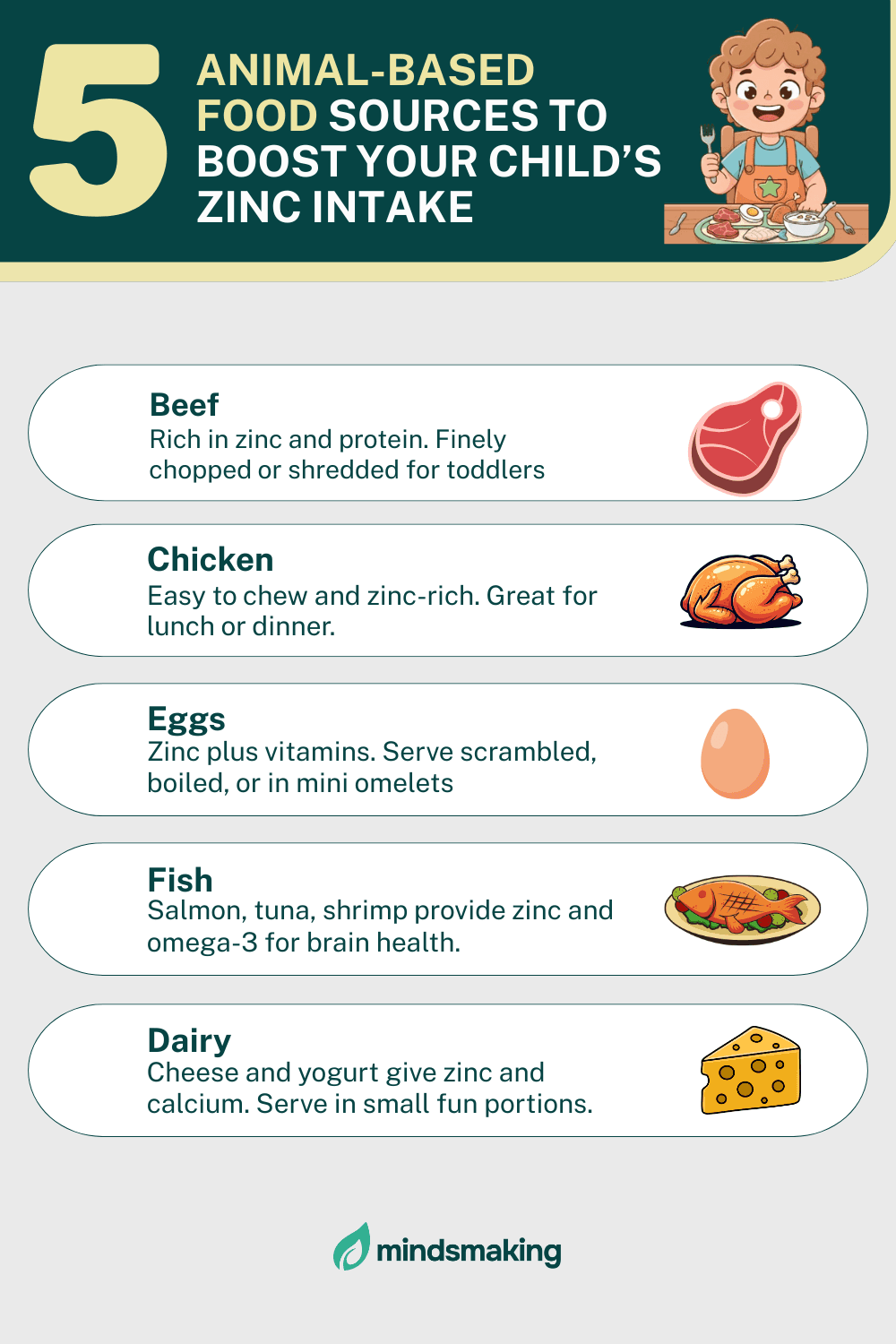
Animal foods are generally the most bioavailable sources of zinc, meaning your child’s body can absorb the mineral more efficiently. Here are some common sources:
- Beef, chicken, and turkey are high in zinc and protein for muscle growth. Finely chopped or shredded meats are ideal for toddlers and preschoolers.
- Fish and seafood (salmon, tuna, shrimp) are rich in zinc and healthy omega-3 fats that support brain development.
- Eggs are easy to scramble, boil, or make mini omelets. They provide zinc plus essential vitamins.
- Dairy (cheese and yogurt) supplies zinc and calcium for strong bones. Small portions in fun forms like yogurt parfaits help picky eaters enjoy them.
Plant-Based Sources
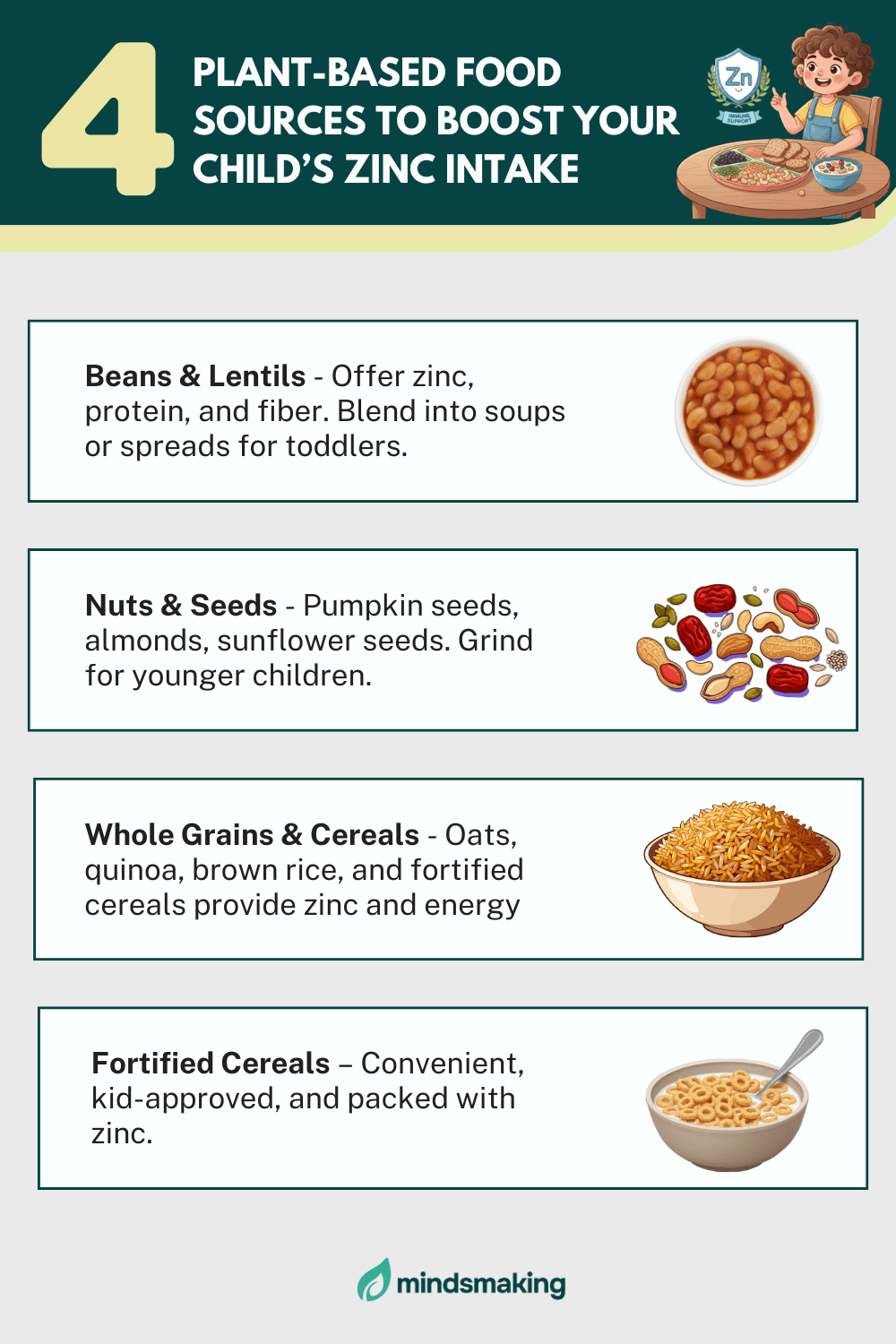
Plant foods can also be a great way to boost zinc intake, though absorption is slightly lower than from animal sources. Here are some common sources:
- Beans and lentils are nutrient-dense, offering zinc, fiber, protein, and iron. Blend into soups, stews, or spreads for easy toddler-friendly meals.
- Nuts and seeds, such as pumpkin seeds, sunflower seeds, or chopped almonds, provide zinc and healthy fats. For younger children, grind or finely chop to reduce the risk of choking.
- Whole grains such as oats, quinoa, and brown rice provide steady zinc and energy-sustaining carbs. Fortified cereals are convenient, kid-approved, and packed with zinc for breakfast.
Read This Next
No posts available
Do Kids Need Zinc Supplements?
Most kids who eat a balanced diet get enough zinc from everyday foods like meat, dairy, beans, and whole grains. A variety of these zinc-rich foods provides all the zinc they need to support healthy growth, immunity, and brain development, without the need for pills or powders.
For many families, supplements aren’t necessary, but there are situations where they can be helpful. Supplements may be recommended when:
- If your child consistently eats very little, they may not get enough zinc from food alone.
- Picky eaters, children with allergies, or kids following strict dietary patterns may need extra support.
- Some health issues affect how the body absorbs nutrients, making supplementation beneficial.
It’s important to remember that zinc supplements should only be used with medical advice. Too much zinc can cause side effects like nausea or stomach upset and can interfere with the absorption of other essential minerals, such as copper. A pediatrician or registered dietitian can guide you on whether a supplement is necessary and make sure it’s safe and appropriate for your child.
4 Practical Ways to Help Your Child Get Enough Zinc
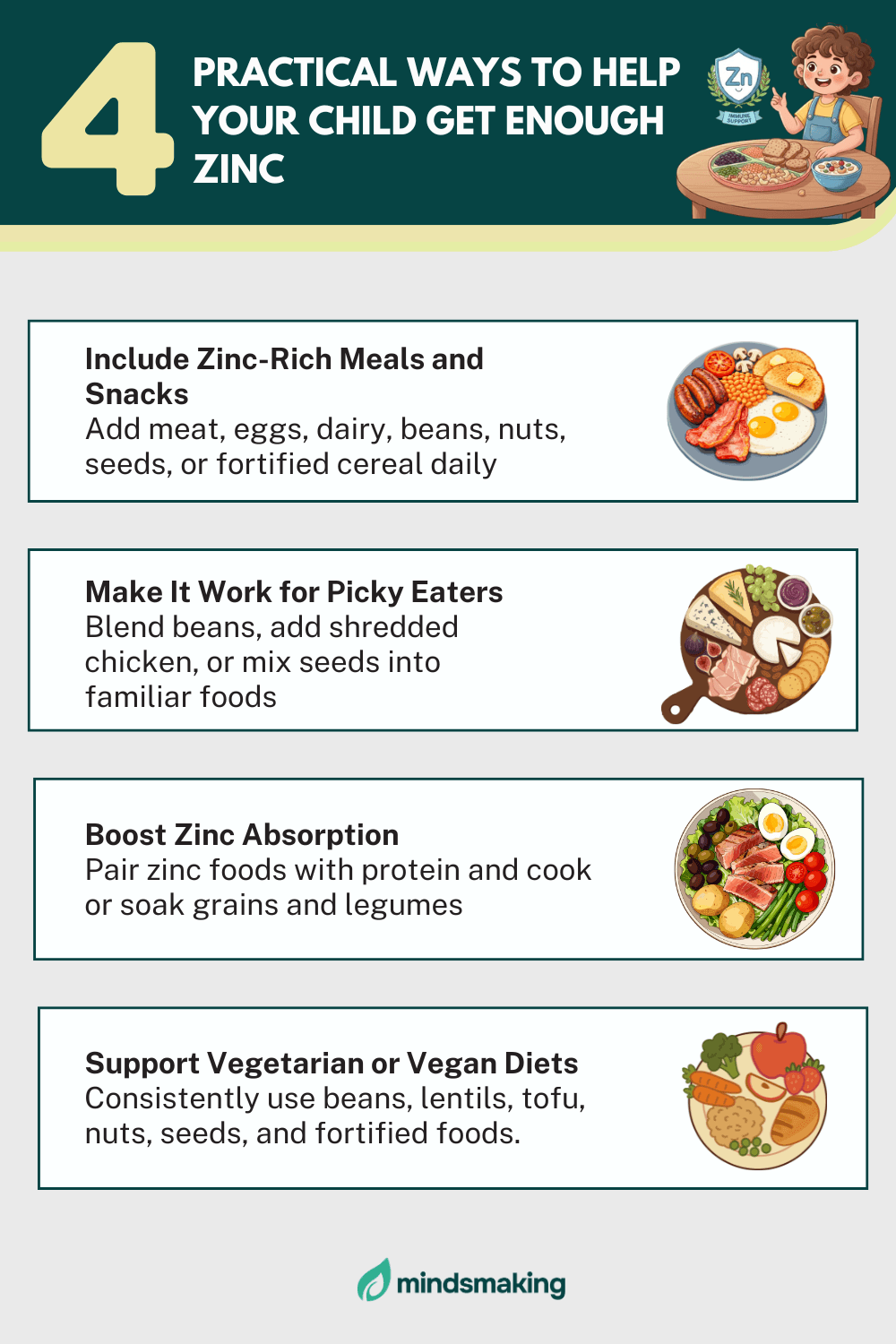
It’s natural to worry whether your child is getting enough zinc for healthy growth and immunity. There are a few simple strategies you can easily include zinc in their meals without turning mealtime into a battle. Here are 4 practical ways to make it happen, tailored for real-life families.
1. Include Zinc-Rich Meals and Snacks: Start by adding zinc-rich foods into everyday meals and snacks. Small portions of lean meats, eggs, dairy, beans, lentils, nuts, seeds, and whole grains go a long way. For toddlers and preschoolers, try mini meatballs, cheese cubes, or yogurt parfaits. They’re fun, bite-sized, and packed with zinc. Even breakfast counts! A bowl of fortified cereal with milk or yogurt is an easy way to start the day right.
2. Make It Work for Picky Eaters: If your child is picky, you’re not alone. Many parents face this challenge. The trick is to start with foods they already like and gradually introduce new zinc-rich options. Blend beans into soups or spreads, add shredded chicken to pasta, or sprinkle ground seeds or nuts into smoothies or oatmeal. Over time, these small changes add up, giving your child the zinc they need without stressful mealtime battles.
3. Boost Zinc Absorption: It’s not just about eating zinc; it’s about making sure their bodies absorb it efficiently. Pair zinc-rich foods with protein, like eggs, meat, or dairy, to help your child get the most benefit. Some food such as high-phytate grains or legumes, can slightly reduce zinc absorption. Still, cooking beans, soaking grains, or offering a mix of protein-rich foods at meals can naturally help maximize zinc intake.
4. Consider Vegetarian or Vegan Diets: If your child follows a vegetarian or vegan diet, don’t worry, you can still meet zinc needs. Focus on beans, lentils, tofu, nuts, seeds, and whole grains, and pair them with protein-rich foods for better absorption. Fortified cereals and plant-based milks are also handy for filling any gaps. With some planning, your child can get all the zinc they need while enjoying a varied and balanced diet.
Signs Your Child May Not Be Getting Enough Zinc
It’s natural to notice when something feels “off” with your child. Sometimes, subtle signs can indicate a zinc deficiency. Keep an eye out for patterns like these:
- Frequent infections or slow recovery may suggest your child’s immune system needs extra nutritional support.
- Poor appetite can mean your child is missing out on zinc and other essential nutrients needed for healthy digestion and growth.
- Slow growth or poor weight gain may indicate that your child is not getting enough zinc for proper development.
- Delayed wound healing, such as cuts or scrapes that take longer to heal, can be a sign of low zinc levels.
- Hair thinning or skin problems like dryness and irritation may sometimes be linked to insufficient zinc intake.
- Changes in taste or smell can affect eating habits and may signal that zinc levels are too low to support normal sensory function.
Spotting these signs early allows parents to adjust their diet by incorporating zinc-rich foods or to seek guidance from a pediatrician. While occasional illness or picky eating is normal, consistent patterns in these areas can be an important cue that your child may benefit from a closer look at their zinc intake.
A Word From Mindsmaking
You’re already doing so much to support your child’s growth, immunity, and development, and zinc is one of those quiet nutrients that helps make all of that possible. It supports healing, appetite, and immune strength in ways you may not always see, but your child’s body relies on it every day as they grow, learn, and play.
The reassuring part is that most kids get enough zinc from everyday food, especially when meals include a mix of familiar, nourishing options. You don’t need to aim for perfection or overthink every bite. And if something ever feels off, maybe your child is often sick, eating very little, or not growing as expected, reaching out to a pediatrician or nutrition professional can help you feel supported.
Frequently Asked Questions
Can my child get enough zinc from food alone?
Many children meet their zinc needs through everyday foods like meat, eggs, dairy, beans, whole grains, nuts, seeds, and fortified cereals. If your child eats a reasonably varied diet, you’re likely already covering their zinc needs without realizing it.
How do I know if my child isn’t getting enough zinc?
You might notice signs like frequent infections, slow recovery from illness, poor appetite, slow growth, delayed wound healing, or skin and hair changes. These signs don’t automatically indicate zinc deficiency, but if they persist, it’s worth reviewing your child’s overall diet or checking in with a pediatrician.
Is it safe to give my child a zinc supplement?
Zinc supplements can be safe and helpful in certain situations, but they should always be given with medical guidance. A pediatrician can help determine whether your child truly needs a supplement and recommend the right dosage for their age.
Can too much zinc make my child sick?
Too much zinc can cause side effects like nausea, stomach pain, or vomiting, and over time, it can interfere with other important minerals. That’s why supplements shouldn’t be used casually or “just in case.” More isn’t always better when it comes to nutrients.
Which foods are best to boost my child’s zinc intake naturally?
Some of the best natural sources include beef, chicken, fish, eggs, dairy products, beans, lentils, nuts, seeds, whole grains, and fortified cereals. Mixing animal-based and plant-based foods helps make zinc intake easier and more balanced.
Can zinc help my child’s growth and immunity?
Zinc supports healthy growth, helps wounds heal, supports appetite, and plays a key role in immune function. Getting enough zinc helps your child’s body fight off everyday infections and grow steadily over time.
Was this article helpful?
How many stars are you giving this article?
Leave a comment
Your email address will not be published.