Beef for Babies: When & How to Introduce It Safely

Written by Mindsmaking Medical Writer

Fact Checked by Mindsmaking Professionals
3rd, February, 2026
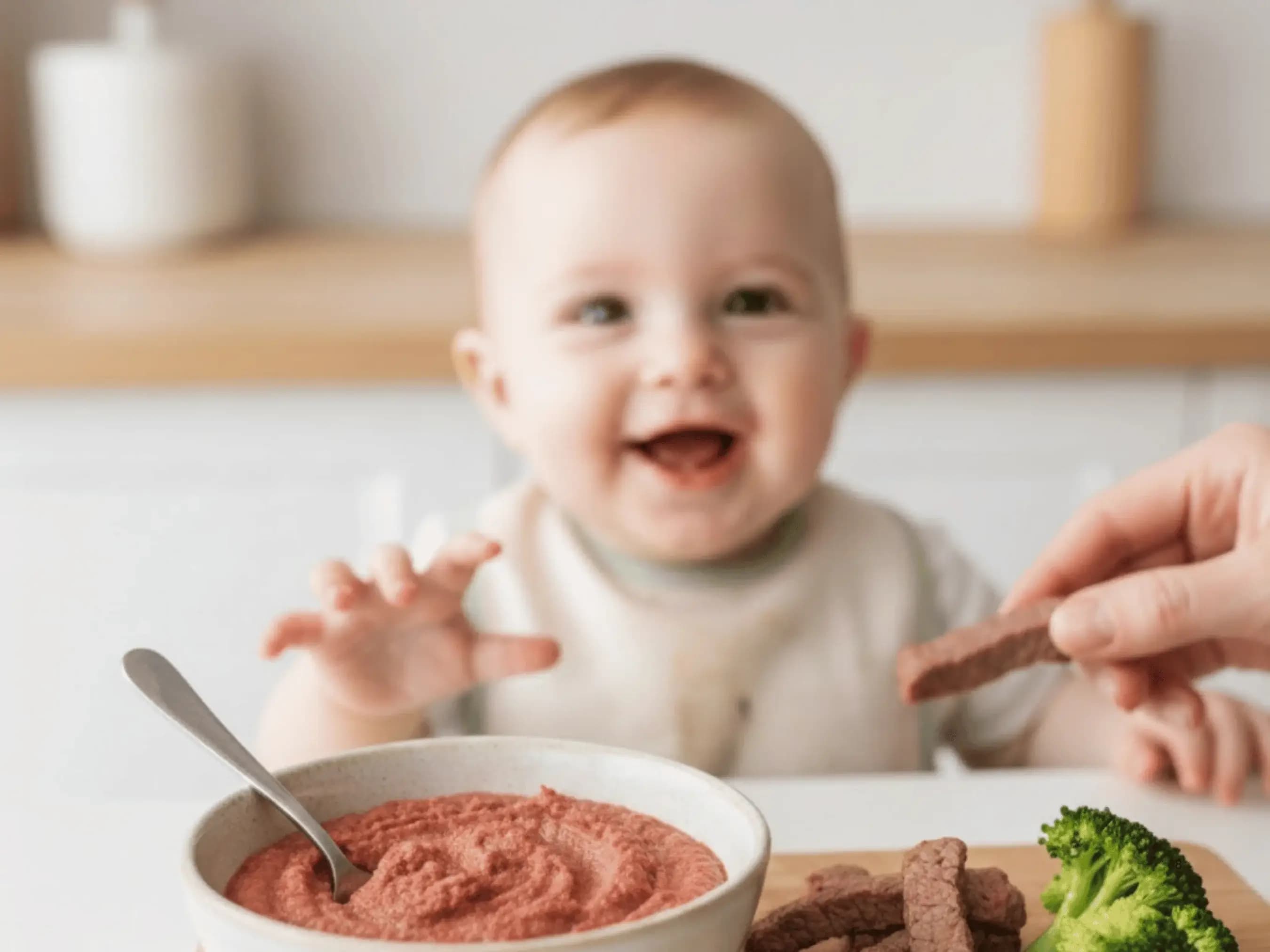
Wondering when babies can have beef? Knowing the right age, safe preparation methods, and easy ways to serve soft, iron-rich beef helps you support your baby’s healthy growth and development.
If you’ve ever paused and wondered whether beef is “too heavy,” “too soon,” or “too risky,” you’re not alone. This stage isn’t about perfection; it’s about thoughtful choices, patience, and building confidence one bite at a time.
Beef can be a nutritious choice for babies when introduced at the right time and prepared properly. Beef is packed with iron for healthy blood and brain development, high-quality protein for growth, and zinc to support immunity and healing nutrients babies need in larger amounts as their iron stores begin to drop. The good news? With soft textures, age-appropriate cuts, and safe cooking methods, beef can be a gentle, nourishing, and confidence-boosting addition to your baby’s meals.
Key Takeaways
Beef can usually be introduced around 6 months, once babies show readiness signs like sitting with support, good head control, and interest in food, ensuring they’re developmentally ready for solids.
Beef is packed with iron, protein, zinc, and vitamin B12, nutrients that support healthy growth, brain development, immunity, and overall energy during the critical first year.
Gentle cooking methods like boiling, steaming, or slow-cooking keep beef tender and digestible, while adjusting textures for age from purees to minced meat to soft strips reduces choking risk.
Try easy, nutritious options like pureed beef with vegetables, minced beef with rice or oats, or soft beef strips for toddlers, helping babies explore flavours safely while practising chewing and self-feeding.
Start with 1 to 2 teaspoons, 1 to 2 times per week, gradually increasing portion size and texture while following your baby’s cues and monitoring for allergic reactions or digestive issues.
Beef should be introduced gradually in small, age-appropriate portions because its iron is essential for a baby’s growth, but tolerance varies. Watching your baby’s cues and reactions helps ensure beef is both safe and well accepted.
Always cook beef thoroughly, store portions properly, and avoid processed meats to prevent foodborne illness, ensuring your baby enjoys beef safely while receiving all its nutritional benefits.
When Can Babies Eat Beef?
Babies can start eating beef once they show readiness for solid foods. For most babies, that milestone happens around 6 months of age. This is the point when babies need more than breast milk or formula to meet their nutritional needs, particularly iron, an area where beef is especially beneficial.
Rather than watching the calendar too closely, it helps to look for “readiness cues” from your baby. Babies are typically ready for solids (including beef) when they can:
- Sit with support and stay upright during meals
- Show good head and neck control
- Display interest in food, like watching you eat or reaching for your plate
If these signs aren’t there yet, it’s best to wait. Beef or any solid food should not be introduced before babies are developmentally ready, even if they’re close to the 6-month mark. Starting too early can increase the risk of choking and digestive discomfort, which no parent wants.
Beef works beautifully for both spoon-feeding and baby-led weaning, as long as the texture matches your baby’s stage. Smooth beef purée or finely minced meat is ideal for early spoon-feeding, while soft meat strips or well-cooked ground beef can be safely offered to babies as they begin self-feeding.
It’s also worth remembering that every baby moves at their own pace. Some babies dive into new flavours eagerly, while others take a more cautious approach. If your baby turns their head away, closes their mouth, or loses interest, those are gentle signs saying “not yet,” and that’s perfectly okay. There’s no prize for rushing.
Nutritional Benefits of Beef for Babies
It’s natural to wonder which foods give your baby the most nutrition for their size. That’s where beef for babies truly stands out. Packed with essential nutrients in forms your little one can easily absorb, beef supports rapid growth and brain development without requiring large portions.
- Beef is especially rich in iron, specifically heme iron, which is absorbed far more efficiently than the iron found in plant-based foods. This makes beef a powerful ally in preventing iron-deficiency anaemia and helps keep your baby energised, alert, and thriving.
- Beef is an excellent source of high-quality protein, which supports muscle development, tissue repair, and overall growth. During the first year, babies grow at a rapid pace, and protein helps build the strong foundation their bodies need.
- Another standout nutrient in beef is zinc. Zinc plays a key role in immune function, wound healing, and healthy growth, helping your baby’s body protect itself and develop properly.
- Beef also provides vitamin B12, which supports brain development, nerve function, and red blood cell formation. This nutrient is harder to obtain from plant-based foods alone, making beef especially valuable during infancy.
Compared to other meats, beef generally contains more iron and zinc than chicken or turkey while still delivering the same high-quality protein. Fish offer healthy fats but typically have less iron, while plant-based foods like beans, lentils, and spinach contain non-heme iron, which is absorbed less efficiently. If you want to support your baby’s growth and brain development safely and effectively, add soft, age-appropriate beef to their meals.
How to Serve Meat to Babies
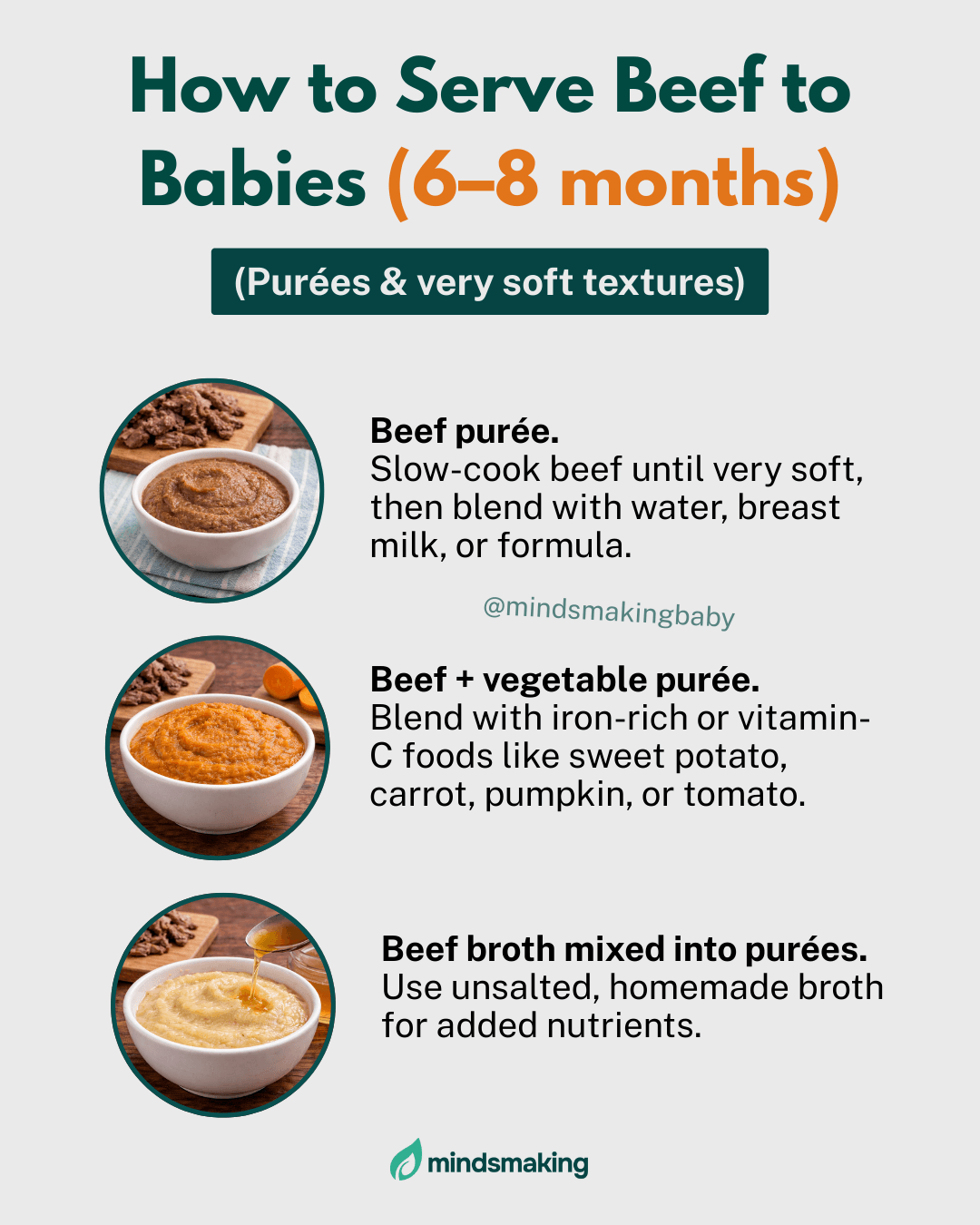
6–8 months (Purées & very soft textures)
Best for babies just starting solids.
- Beef purée. Slow-cook beef until very soft, then blend with water, breast milk, or formula.
- Beef + vegetable purée. Blend with iron-rich or vitamin-C foods like sweet potato, carrot, pumpkin, or tomato.
- Beef broth mixed into purées. Use unsalted, homemade broth for added nutrients.
Read This Next
No posts available
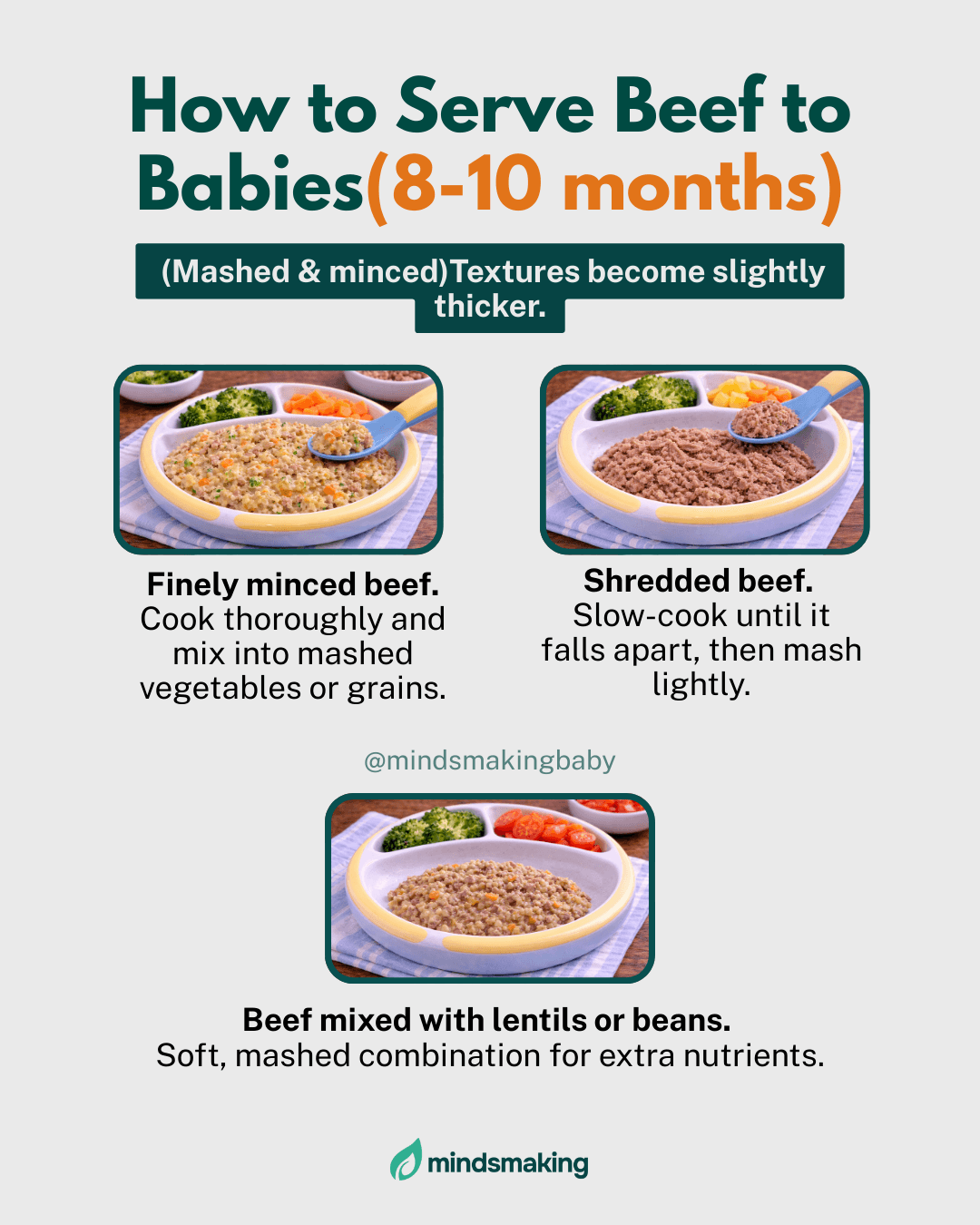
8–10 months (Mashed & minced)
Textures become slightly thicker.
- Finely minced beef. Cook thoroughly and mix into mashed vegetables or grains.
- Shredded beef. Slow-cook until it falls apart, then mash lightly.
- Beef mixed with lentils or beans. Soft, mashed combination for extra nutrients.
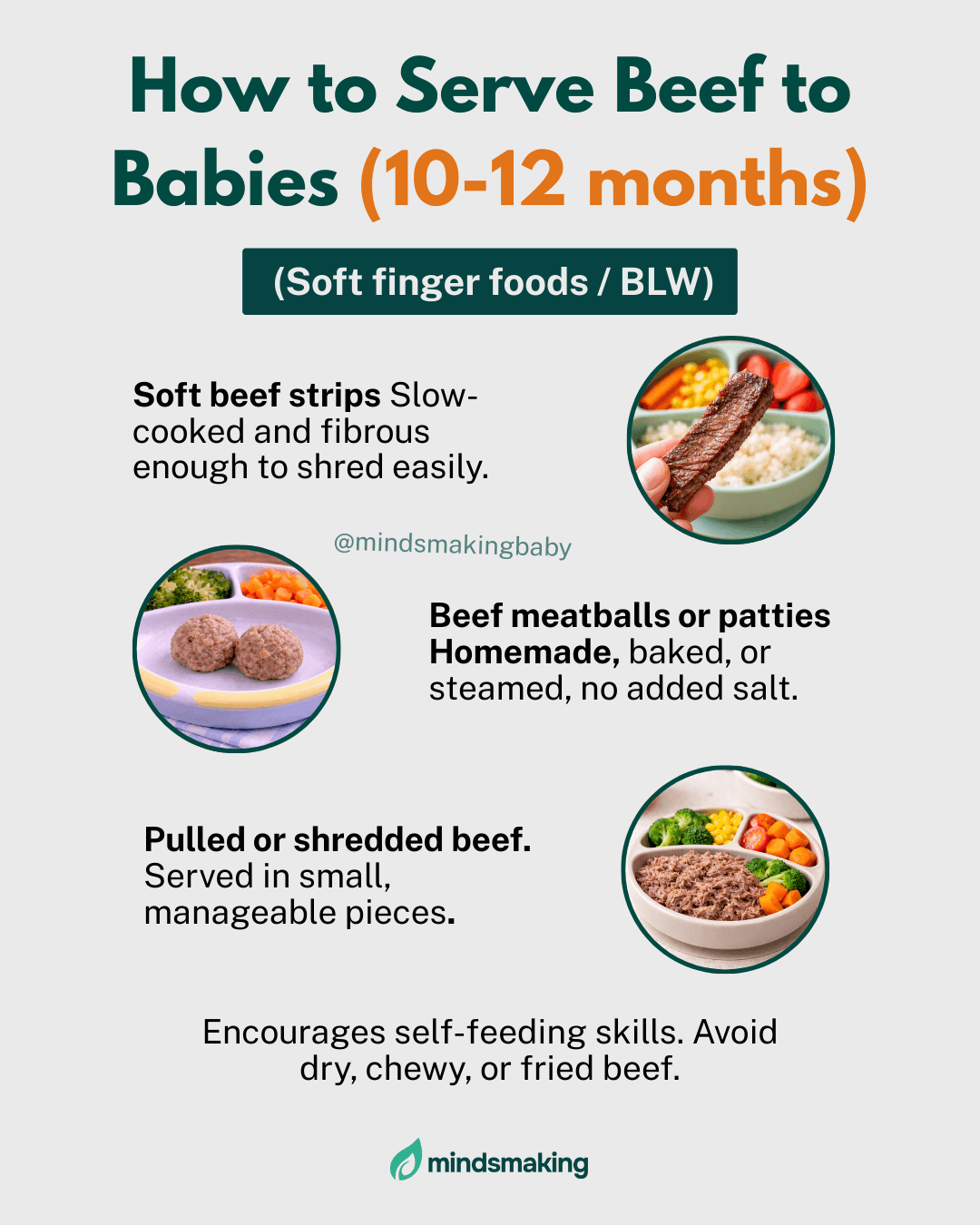
10–12 months (Soft finger foods / BLW)
Encourages self-feeding skills. Avoid dry, chewy, or fried beef.
- Soft beef strips Slow-cooked and fibrous enough to shred easily.
- Beef meatballs or patties Homemade, baked, or steamed, no added salt.
- Pulled or shredded beef. Served in small, manageable pieces.
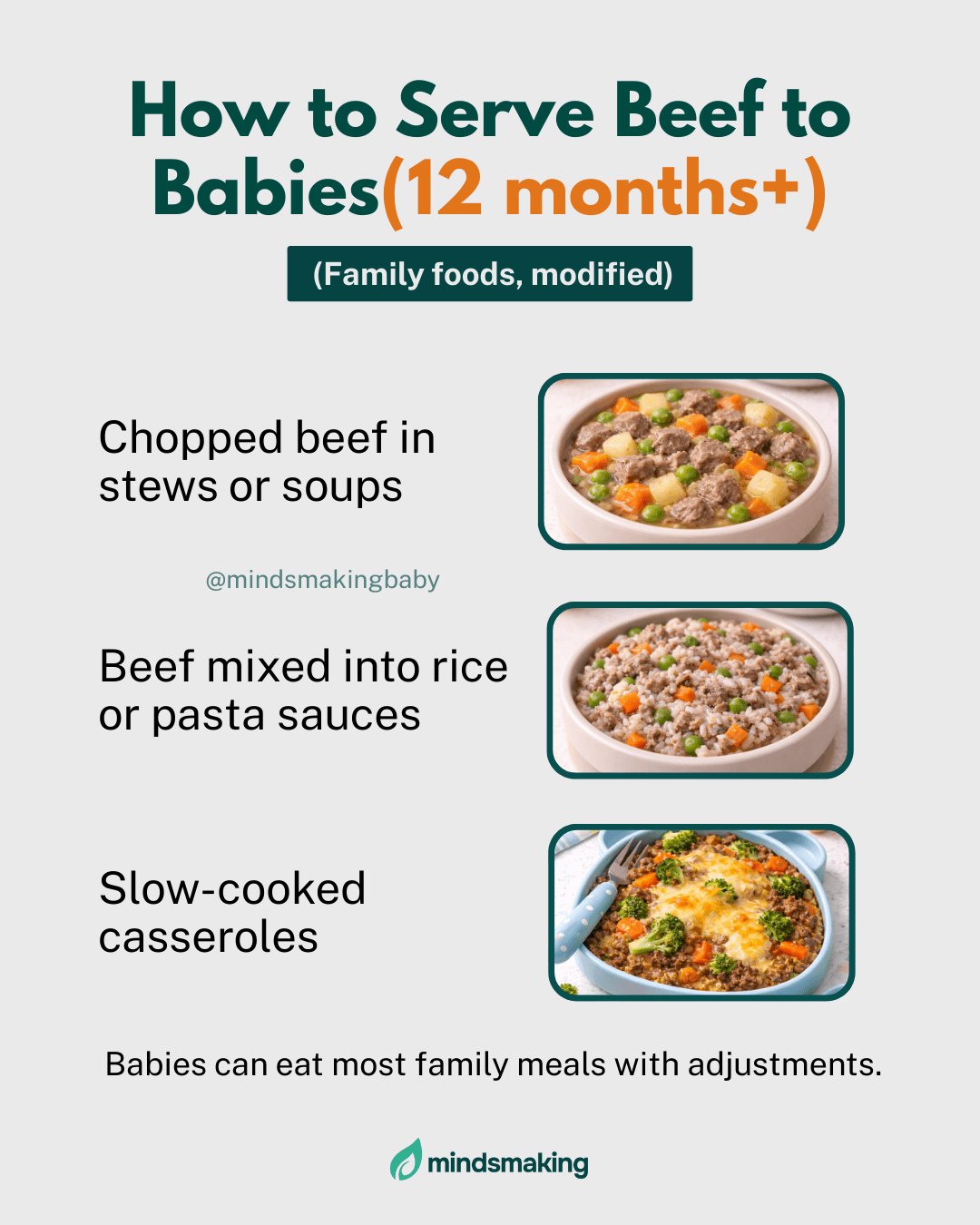
12 months+ (Family foods, modified)
Babies can eat most family meals with adjustments.
- Chopped beef in stews or soups
- Beef mixed into rice or pasta sauces
- Slow-cooked casseroles
How to Prepare Beef Safely for Babies
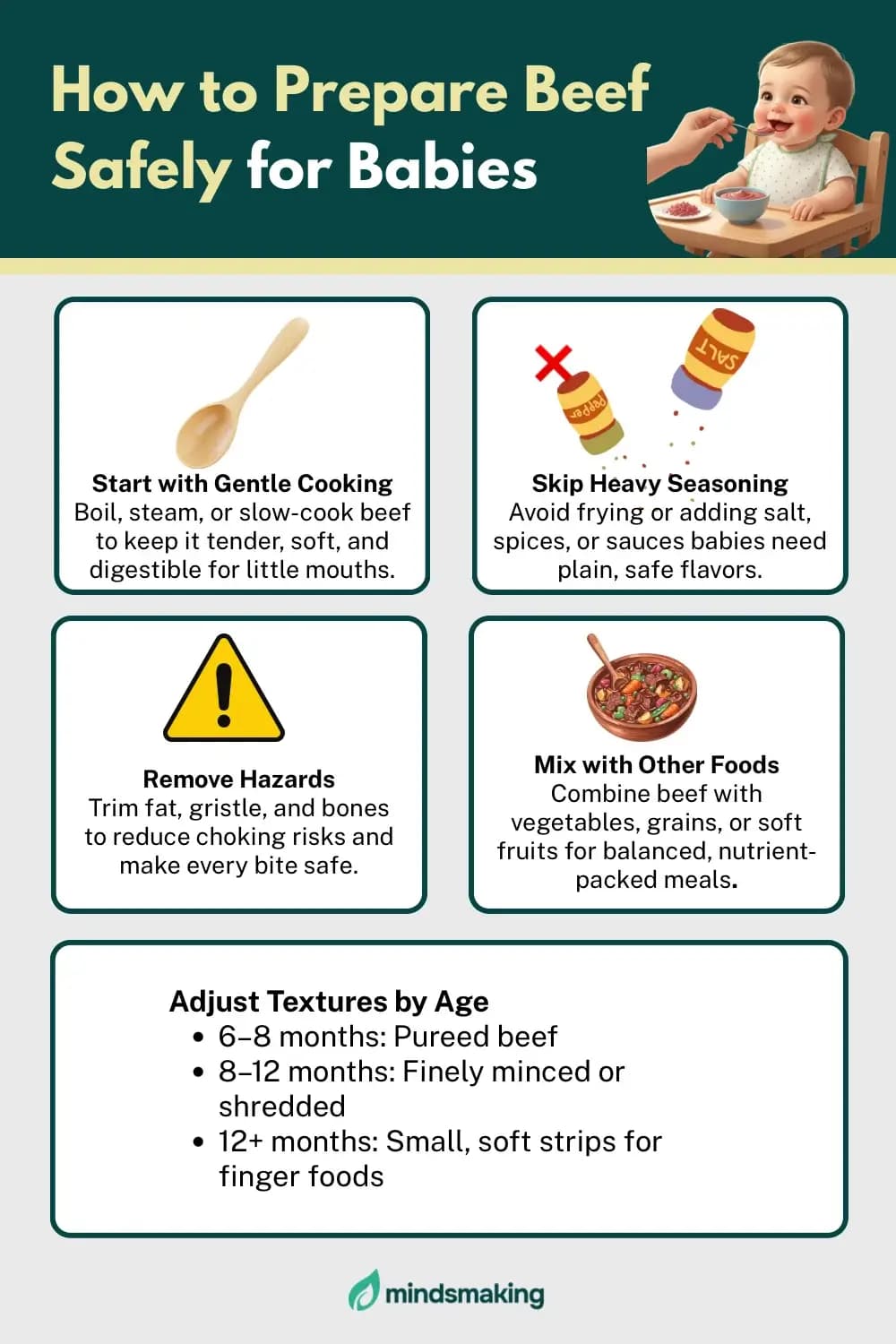
Because babies’ gums, swallowing skills, and digestion are still developing, beef should always be soft, mild, and easy to manage.
Choose gentle cooking methods: boiling, steaming, and slow-cooking are the safest ways to prepare beef for babies. These methods break down tough muscle fibers, making the meat soft enough to purée or shred easily. Slow-cooked beef is especially helpful as it becomes fork-tender and works well as babies progress to thicker textures.
Avoid frying or grilling: Fried or grilled beef can become dry and tough, increasing the risk of choking. Skip added salt, spices, sauces, and seasonings. Babies’ kidneys are sensitive, and strong flavors can be overwhelming at this stage.
Adjust texture by age: From around 6 to 8 months, beef should be fully puréed and blended with breast milk, formula, water, or unsalted broth until it is completely smooth with no lumps. Between 8 and 12 months, offer finely minced or well-shredded beef that is very soft. After 12 months, small, tender pieces can be served as finger foods, as long as they are easy to chew.
Remove choking hazards: To reduce the risk of choking, always remove visible fat, gristle, and any bones before cooking or serving beef to your baby. These tough parts are hard for babies and young children to chew and swallow safely, even when the meat is well-cooked. Trimming them off helps ensure the beef stays soft, manageable, and safer for your child to eat.
Improve texture and moisture: To improve texture and moisture, mash the beef well or mix it with soft foods like sweet potatoes, rice, lentils, or mashed carrots. Combining beef with these foods helps keep it moist, reduces dryness, and creates a smoother texture that is easier for babies to move around their mouth. This makes swallowing safer and more comfortable, especially for babies who are still learning how to chew.
How to Introduce Beef to Your Baby
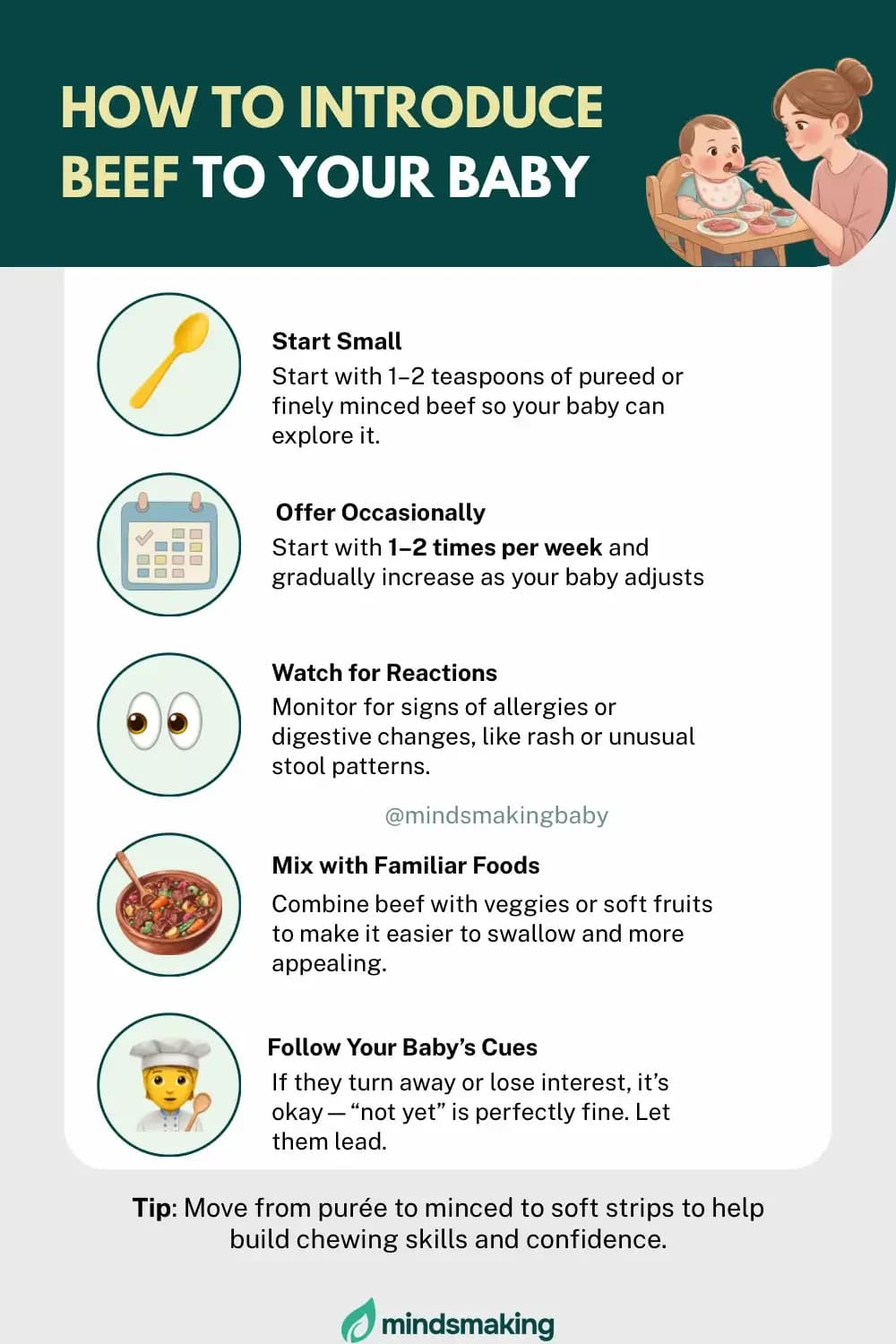
The key is to go slow, keep things simple, and follow your baby’s lead. Here are practical and parent-friendly tips to make introducing beef a positive experience.
- Start with very small portions. Begin with 1 to 2 teaspoons of puréed or finely minced beef. Small amounts are easier for your baby to digest and help them adjust gradually to the new taste and texture.
- Offer beef gradually. Start by serving beef 1 to 2 times per week. This spacing gives your baby time to adapt and makes it easier to notice how they respond before increasing frequency.
- Mix with familiar foods. Combine beef with mashed vegetables, grains, or a small amount of breast milk or formula to improve texture and boost acceptance.
- Watch closely for reactions. Look out for signs such as rash, vomiting, diarrhea, constipation, gas, or unusual fussiness. Mild digestive changes can be normal, but persistent or severe symptoms should be discussed with your paediatrician.
- Follow your baby’s cues. If your baby turns their head away, pushes food out, or becomes upset, pause and try again another day. Respecting hunger and fullness cues helps build a healthy, stress-free relationship with food.
Safety Tips and Considerations When Cooking Beef For Babies
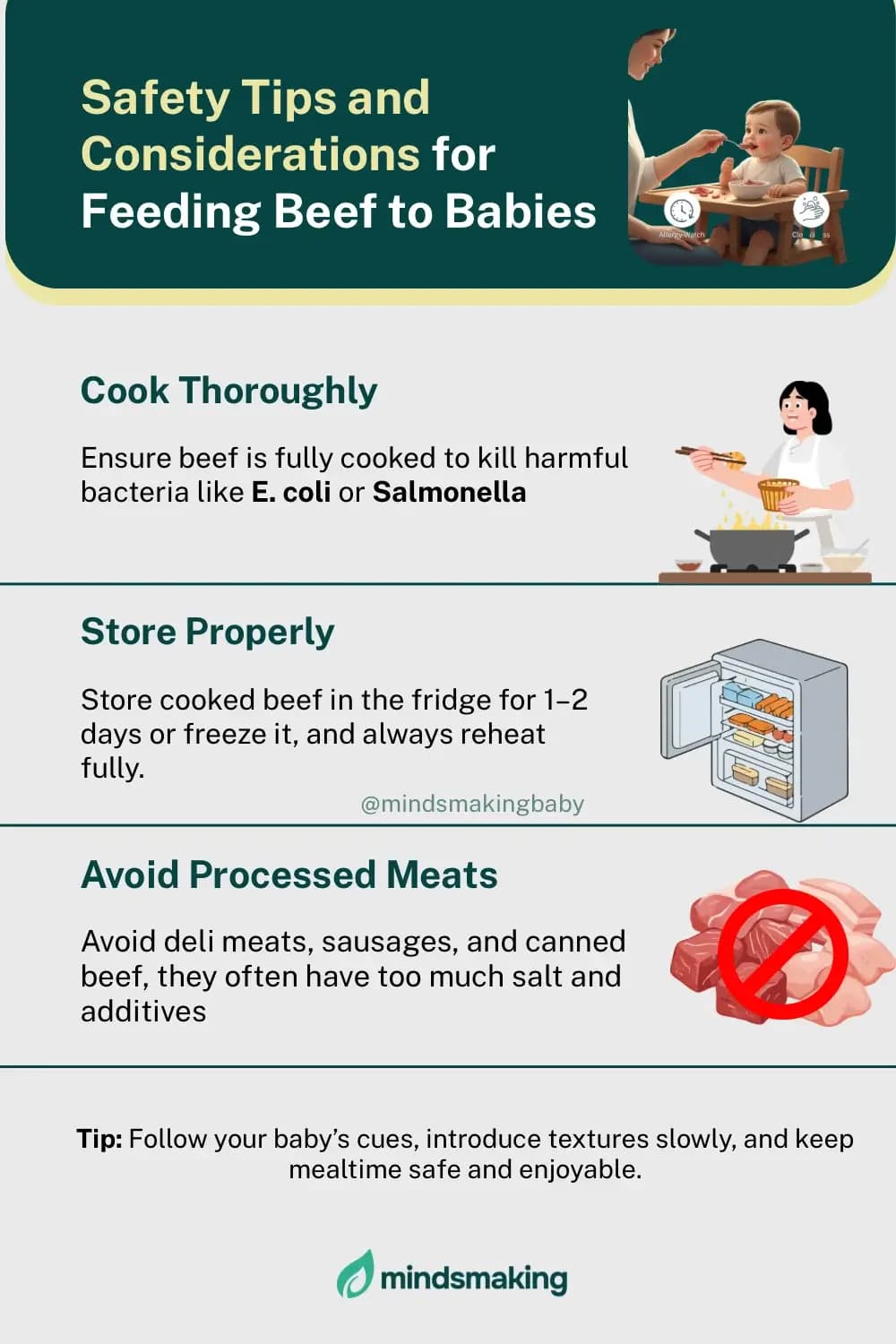
Since babies’ digestive and immune systems are still developing, a few simple precautions can go a long way in keeping mealtimes safe and stress-free.
Cook Beef Thoroughly: Always cook beef fully to eliminate harmful bacteria such as E. coli and Salmonella. Proper cooking keeps your baby safe while preserving key nutrients like iron, protein, and zinc. Whether boiling, steaming, or slow-cooking, the goal is beef that is well-done yet soft and tender enough for tiny mouths.
Store Safely: Proper storage is just as important as cooking. After preparation, refrigerate cooked beef in small portions if it will be used within 1 to 2 days, or freeze in baby-sized servings for later. This helps prevent spoilage, reduces the risk of foodborne illness, and makes meal prep easier. Always reheat thoroughly and check the temperature before serving to avoid burns.
Avoid Processed Beef: Skip processed beef products, such as sausages, deli meats, or heavily seasoned beef. These often contain excess salt, preservatives, and additives that aren’t suitable for babies. Stick to fresh, whole beef prepared simply to maximise nutrition and minimise risk.
By cooking beef thoroughly, storing it properly, and avoiding processed meats, you can confidently introduce beef as a safe, nourishing, and enjoyable part of your baby’s diet, supporting healthy growth, development, and a positive first experience with meat.
A Word From Mindsmaking
Adding beef to your baby’s diet is a wonderful way to provide nutrient-rich support for growth, brain development, and immunity. Packed with iron, protein, zinc, and vitamin B12, it’s a wholesome choice that can be both delicious and gentle when prepared with the right textures and care.
Take it one bite at a time, observe your baby’s reactions, and trust their cues, whether they love it immediately or need a few tries to warm up to new flavours. And if you’re ever unsure, don’t hesitate to consult your paediatrician for guidance tailored to your little one. With patience and care, introducing beef can become a stress-free, confidence-boosting, and nourishing milestone in your baby’s early eating journey.
Frequently Asked Questions
How do I prepare beef safely for my baby?
To prepare beef safely for your baby, cook it thoroughly using gentle methods such as boiling, steaming, or slow cooking. Remove fat, gristle, and bones, and adjust the texture by age: puree for younger babies, finely mince or shred for older babies, and soft pieces for toddlers.
How much beef is too much for a baby?
Offer 1 to 2 teaspoons of beef per serving, 1 to 2 times per week, to let your baby get used to the taste and texture. As they become comfortable, you can gradually increase portions and introduce more textured forms. Always follow your baby’s hunger cues. Some days they may eat more, others less, and avoid forcing bites.
Can beef cause allergies in babies?
Beef allergies are relatively rare, but mild reactions like rash, vomiting, diarrhoea, or digestive discomfort can occur. Introduce beef gradually, offering a small portion and watching for any unusual symptoms. If your baby shows signs of a severe reaction, such as swelling of the lips or difficulty breathing, stop feeding immediately and seek medical attention.
Can I give my baby ground beef?
Ground beef is a safe and versatile option for babies. Make sure it is fully cooked, soft, and finely minced, and combine it with vegetables or grains for added flavour and nutrition. Ground beef works well for both spoon-feeding and baby-led weaning, making it an easy way to introduce meat in small, manageable bites.
How often can my baby eat beef?
Start with 1 to 2 times per week to see how your baby tolerates it, then increase gradually as your little one becomes accustomed to different textures and flavours. Incorporating beef alongside a variety of vegetables, fruits, and grains ensures a balanced diet and exposes your baby to diverse tastes.
Are canned beef products safe for babies?
It’s best to avoid canned or processed beef, such as deli meats, sausages, or beef in sauces, because they often contain added salt, preservatives, or artificial flavours. Fresh, home-cooked beef is safer, more nutritious, and easier to adjust to the right texture for your baby’s stage.
What is the best way to cook beef for babies?
The safest methods are gentle cooking techniques like boiling, steaming, or slow-cooking, which keep the meat tender and digestible while maintaining nutrients. Avoid frying or adding heavy seasonings, especially for babies under 12 months, to protect their sensitive digestive system and developing kidneys.
Was this article helpful?
How many stars are you giving this article?
Leave a comment
Your email address will not be published.