19-Month-Old Toddler Development and What to Expect

Written by Mindsmaking Medical Writer

Fact Checked by Mindsmaking Professionals
15th, December, 2025
Your 19-month-old is joining activities like a little grown-up, communicating more clearly, and walking and running with confidence. Yet, there is still so much to discover about their development.
Your 19-month-old is stepping into a stage of bold independence, stronger opinions, and growing self-awareness. They have clear ideas about everything, from what to wear to how to get your attention. At 19 months, your toddler is eager to do things on their own, which means plenty of chances to cheer, guide, and sometimes hold your breath.
Since the 18-month-old toddler development stage, you have likely noticed big leaps in motor skills like walking, running, and climbing, along with progress in speech development and learning skills. Your little one is more expressive, curious, and determined than ever, and every decision reflects their growing personality.
This stage can bring tantrums, messy feeding patterns, and sleep schedule surprises, but each challenge comes with moments of joy, discovery, and pride. Understanding 19-month-old toddler development and what to expect helps you support them as they grow more confident and independent.
Key Takeaways
Your 19-month-old is full of energy: walking, running, climbing, and using their hands more skillfully as they explore the world around them.
At 19 months, your toddler’s language is expanding rapidly. They’re beginning to understand more, use simple words and short phrases, and communicate needs and emotions with growing confidence.
Your toddler’s brain is rapidly developing at 19 months. They are remembering routines, solving simple problems, experimenting with cause and effect, and using imagination to make sense of the world around them.
At 19 months, your toddler is discovering emotions, independence, and empathy. They express big feelings, seek comfort, test limits, and begin to connect with others.
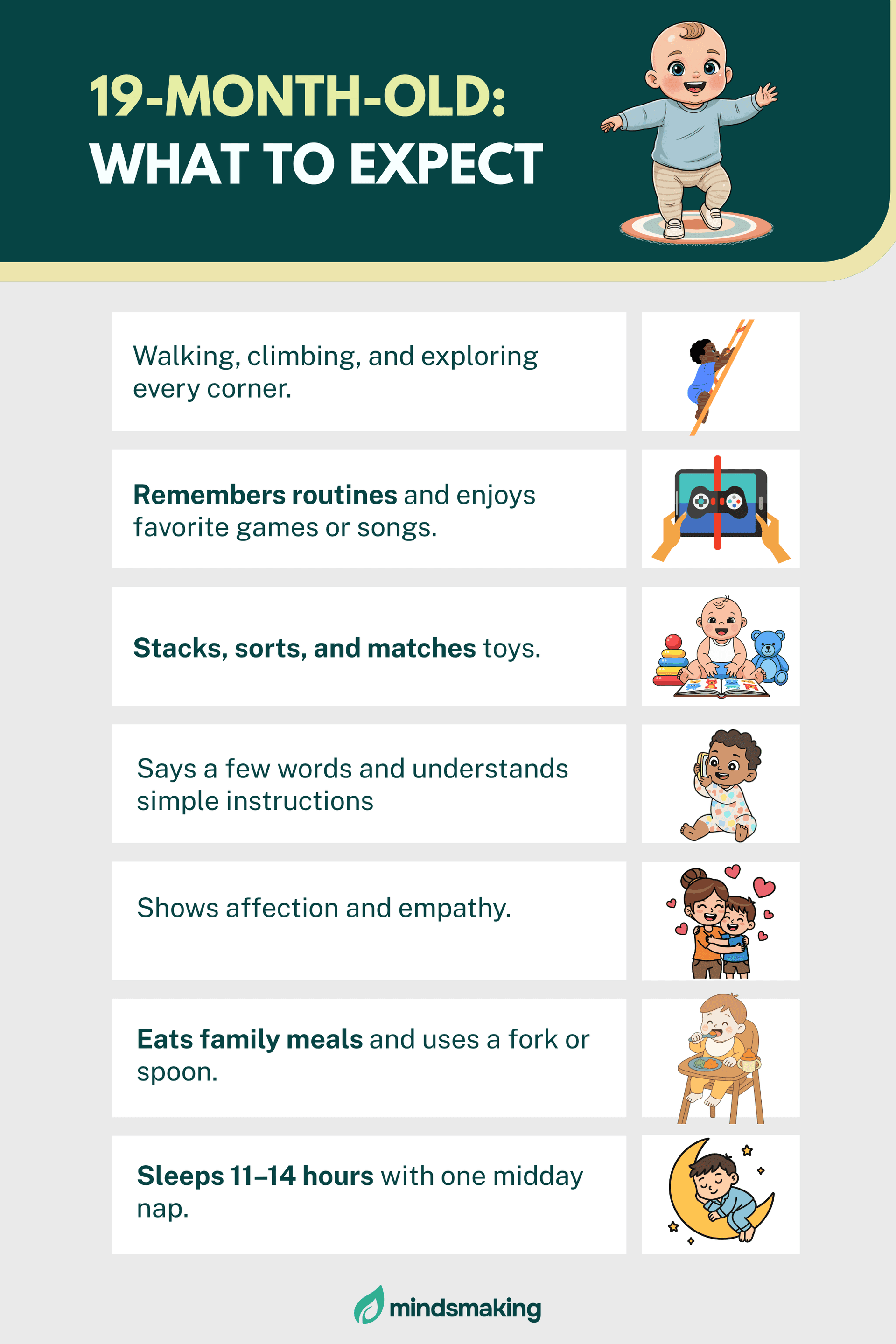
At 19 months, your toddler needs 11–14 hours of sleep, explores family foods as appetites change, and thrives on steady routines and shared mealtimes for comfort and growth.
Meaningful play at 19 months boosts your toddler’s physical skills, language, creativity, and emotional awareness while strengthening bonds through everyday interactions.
Consult your pediatrician if your 19-month-old shows delays in movement, speech, social interaction, sleep, or feeding, or if they lose previously learned skills.
Physical and Motor Development
If it feels like your 19-month-old never stops moving, you are not imagining it. Whether they are running down the hall, climbing onto the couch, or spinning in circles just because it is fun, it is all part of the 19-month-old toddler's development and what to expect. Physically, this stage is bursting with energy and discovery. Toddlers at this age are learning what their bodies can do, and they love showing you every new move. Here is what to expect at this exciting stage:
Physical and Motor Development

Walking confidently and running with better balance
The wobbly steps of early toddlerhood are gone. Your little one now walks with purpose, often running from one adventure to the next. They might not always stop smoothly, but that determined little sprint toward your open arms makes every near fall worth it.

Climbing stairs with growing courage
Stairs are no longer obstacles for your toddler, they are challenges waiting to be conquered. Your toddler may hold onto the railing or your hand while climbing the stairs. Of course, you will probably hold your breath more than once when they do this, but that is part of the journey too.

Throwing and kicking with better control
Your toddler’s coordination is catching up with their curiosity. They love seeing objects move because of them. This is just proof that they are in control of their world. Now, you will see them throw or kick anything within reach, like a ball or toys.

Loving active Movement
Movement is now your toddler’s favorite way to express joy. You may see them jumping, dancing or spinning. Also, they may dance to music, copy your steps, or laugh hysterically as they hop in place. It is messy, unpredictable, and completely delightful.

Using utensils with more control
Mealtimes are still experiments, but progress is clear. They can now scoop with a spoon or poke with a fork. It may not always come out neatly, but with visible effort and pride. The spills are just proof of how hard they are trying to “do it myself.”

Building Towers and Turning Pages
From stacking six-block towers to matching shapes in puzzles, your toddler’s fine motor skills are shining through. They might even turn the pages of a book carefully or hold a crayon with surprising focus.
Language Development
Your 19-month-old is becoming quite the chatterbox, or at least trying to be. This is the stage where words start bubbling out like a little language fountain. Communication is no longer a guessing game, your baby is now using words in ways that surprise, impress, and bring a smile to your face. Here is what their language development looks like:
Growing vocabulary (30–75 words): New words are popping up almost daily. Some toddlers talk nonstop, others prefer quiet observation, and both are perfectly normal. You will start to hear familiar favorites like “mama,” “ball,” or “up,” and each new word feels like a little celebration.
Forming short phrases: Those adorable one-word requests are turning into mini sentences. “Want more juice” or “go outside now” are early signs of how quickly your toddler is learning to express needs and ideas. They are not just talking, they are communicating with purpose.
Understanding and following directions: Short instructions like “bring your shoes” or “sit down” make sense now, and your toddler loves showing that they understand. Of course, there will be moments when they “forget” what you said, especially when they are in the middle of an adventure. Regardless, they now understand you better.
Naming and identifying familiar things: Pointing at noses, animals, and toys is part of daily fun. Ask, “Where’s your nose?” or “What does the cow say?” and watch them beam with pride at getting it right. Recognition and repetition is now part of your baby's development.
Repeating new words: Toddlers love to echo what they hear, sometimes sweetly, other times, funnily. They are experimenting with sounds, tone, and rhythm, learning how language works through pure imitation and joy.
Starting to Use Pronouns: The words “me” or “mine” might become your soundtrack this month. It is not just about possession, but how your toddler is showing independence, ownership, and self-awareness.
Listening with growing interest: Storytime, nursery rhymes, and songs now hold their attention longer. They love filling in missing words and reacting to your voice. These little moments build language, imagination, and the bond between you.
Cognitive Development
Your 19-month-old’s brain is brimming with curiosity like a little detective trying to figure out how everything works. From remembering where you hid their favorite toy to pretending to cook dinner right beside you, this stage is all about connecting the dots. Their mind are growing fast, and every game, giggle, and “uh-oh” moment adds to the learning progress. Here is what their cognitive development looks like:
Stronger memory and recognition: Your toddler now remembers more than you think. They know their daily routine, recognize familiar faces, and can even lead you straight to the cookie jar. Familiar places bring comfort, and that sign of recognition shows just how quickly their brain is organizing the world.
Cause-and-effect play: Your little scientist is now conducting experiments all day long, pushing buttons, stacking blocks, and pouring water just to see what happens. They now know that a spoon makes a sound when it drops and water can splash everywhere when it pours. This playful testing helps them understand how actions lead to reactions, which is a sign of brain development.
Sorting and organizing: Those piles of toys or scattered blocks are not just chaos, your baby is learning from them. Your toddler may start grouping things by color, shape, or size. It is not about neatness yet, but about discovering patterns. To them, it is pure fun, and naturally, it is early organization skills at work.
Problem-solving skills: Watch how they stretch, climb, or stack boxes just to reach a toy sitting on a shelf. That is determination, and early critical thinking in action. They can now start solving problems in their own way at 19 months.
Pretend play: Your baby is already having a wide imagination with plays like pretending to cook, feeding dolls, or talking on a toy phone. They are copying what they see you do every day, and blending real-life understanding with make-believe. These are beautiful moments that put a smile on your face.
Better focus and attention: Storytime is no longer a five-second event. Your toddler can now sit through short stories or spend more time building a block tower. Their growing ability to focus means they are learning to enjoy longer and more meaningful play.
Read This Next
No posts available
Social and Emotional Development
Your 19-month-old is learning more about feelings every day. You will see bursts of joy, stubborn protests, and even tears of frustration when things do not go their way. These ups and downs are completely normal. Toddlers at this stage are learning to understand and express emotions, not yet to control them. They may laugh loudly when something excites them or throw a mini tantrum when their block tower falls. Each reaction is part of emotional growth and self-awareness.
Independence is also becoming a big deal. Your toddler wants to feed themselves, choose their clothes, or decide where to sit, even if it means a little mess or struggle along the way. Still, they need your comfort and reassurance when things feel too big to handle. That quick hug after a fall or your calm voice after a meltdown reminds them that they are safe and loved, even when emotions run wild. It is this balance between freedom and security that helps them build confidence.
You will also notice signs of baby empathy and connection. Your toddler might offer a toy to a crying friend or pat your cheek just to make you smile. They are becoming more aware of others’ feelings, a sign of emotional maturity. When playing, they will enjoy parallel play, sitting or playing near other toddlers, and watching and sometimes imitating them. Of course, this is also the age of testing limits. Saying “no,” refusing to share, or pushing boundaries is how they learn about rules and reactions. Your calm, steady guidance teaches them that love and limits can coexist beautifully.
Sleep and Feeding Patterns
Sleep and mealtimes with a 19-month-old can feel like a mix of calm routines and surprise twists. One day they nap perfectly and eat everything on their plate, the next day they act like sleep and food are optional. On average, your toddler needs 11–14 hours of sleep a day, including one solid midday nap. However, do not be surprised by the occasional sleep regression. Learning new skills like climbing or running can make it hard for them to settle down, and a bit of separation anxiety might creep in at bedtime. A consistent bedtime routine, like a warm bath, cuddles, and a quiet story, can help them wind down and feel secure.
When it comes to food, your baby becomes fascinated by taste and texture. Your toddler is now eating a variety of textures and exploring more family foods. One minute they love mashed potatoes, the next, they refuse them, but it is all part of learning preferences. They will also insist on self-feeding. Expect spills, splats, and smiles; it is messy but meaningful progress.
Also, if you notice their appetite fluctuates, do not worry, as this is completely normal. Growth slows a bit after the first year, so they might eat less on some days and more on others. What matters most is offering healthy options and letting them listen to their hunger cues. Shared family meals are golden opportunities now. Sitting together lets your toddler observe, imitate, and join conversations, which also helps in speech development.
Activities to Support Development
Engaging your 19-month-old in meaningful activities is one of the best ways to nurture their growing mind and body. At this stage, play is not just fun, but how your toddler learns, experiments, and connects with the world around them. Simple, everyday interactions help strengthen coordination, build language skills, and foster emotional awareness.
- Encourage safe climbing, running, and pushing with ride-on toys, as they help your baby build strength, balance, and confidence in movement.
- Offer stacking, sorting, or shape-matching toys, as these help improve problem-solving, focus, and hand-eye coordination.
- Read daily and point to objects as you name them, as it supports speech development, vocabulary growth, and listening skills.
- Provide pretend-play materials such as dolls, toy food, or vehicles to nurture creativity, empathy, and imagination through role-play.
- Sing interactive songs to build vocabulary, rhythm, and memory while strengthening your bond.
- Name emotions and model calm responses to big feelings, as it teaches your toddler emotional awareness and helps them learn self-regulation in a safe, loving way.
When to Talk to a Pediatrician
Every child grows at their own pace, but it is always important to check with your pediatrician if something does not feel right. Early support can make a big difference, so trust your instincts and speak with your child’s doctor if you notice any developmental problems.
- Not walking or showing little interest in moving independently.
- Not using at least a few words or struggling to understand simple requests
- Avoiding eye contact or showing limited interest in people or play.
- Ongoing sleep difficulties or persistent feeding challenges.
- Not attempting to imitate sounds, gestures, or actions.
- Losing skills they once had.
A Word from Mindsmaking
The 19-month stage is such a beautiful mix of curiosity, imagination, and newfound independence. Your little one is eager to explore, test boundaries, and show off new skills, sometimes all in the same hour. It is always a rollercoaster of giggles, surprises, and the occasional toddler meltdown, usually when you least expect it.
Stay patient and consistent as they learn about limits and emotions; these moments are shaping their confidence and understanding of the world. Remember, every child grows at their own pace. With love, interaction, and play, everything eventually falls into place.
Was this article helpful?
How many stars are you giving this article?
Leave a comment
Your email address will not be published.