14-Month-Old Toddler Development and What to Expect

Written by Mindsmaking Medical Writer

Fact Checked by Mindsmaking Professionals
18th, November, 2025
Your 14-month-old is now on the move, standing, walking, exploring, babbling, and testing independence. Growth may slow a bit, as much of the focus is on movement, yet there is still much to learn.
At 14 months, your baby has become a full-fledged toddler. They already reached this baby milestone during their 12-month-old baby's development, and this phase of toddlerhood will continue till 3 years. At this stage, expect more movement, curiosity, and various displays of independence that will have you both laughing and marveling.
As they go through their 14-month-old baby's development, your toddler is exploring more, trying out new words that show improved communication skills, and their personality is starting to shine. They are always on the move and may even test your patience with a bit of defiant behavior, mostly just to see how you will react.
As a parent or caregiver, it is important to remember that development at this stage varies widely. Some toddlers walk confidently while others are still finding their balance. Understanding what is typical at this stage can help you support your child’s growth while enjoying all the small victories, laughter, and surprises along the way.
Key Takeaways
At 14 months, your toddler’s physical and motor skills are developing, from those first wobbly steps to climbing and stacking toys, they are actively building strength, balance, and growing independence.
A 14-month-old’s brain is bursting with curiosity that leads to solving tiny problems, remembering familiar faces, and experimenting to see how their actions make things happen.
Your 14-month-old is turning sounds into meaning, babbling, copying your tone, and saying their first real words. Every sound, wave, or playful imitation shows how quickly their communication is growing.
Your toddler is becoming more independent but still needs reassurance; big emotions, clingy moments, and little tantrums are all normal signs of healthy social and emotional growth.
Your toddler’s mealtime is now all about exploration, independence, and mess. Appetite may change daily, but every bite, spill, and spoon attempt helps them build healthy habits and confidence.
Your toddler’s sleep is settling into longer nights and fewer naps. Consistent bedtime routines and gentle comfort during wake-ups help them feel secure, rested, and ready for new adventures each day.
Simple daily moments like talking, playing, guiding, and sharing meals support your toddler’s growth and healthy development.
Every child develops at their own pace, but if your toddler is not standing, showing interest in sounds or people, or trying to speak, it is best to talk with your doctor for guidance and reassurance.
Physical and Motor Development
Since their first birthday, your toddler’s world has expanded with movement and curiosity. Crawling is mostly behind them, and those little legs are now carrying them on tiny adventures everywhere, from the living room to the kitchen, and sometimes straight into trouble. The 14-month-old baby’s development is full of discoveries, little triumphs, and moments that will have you laughing, marveling, and occasionally holding your breath.
Physical and Motor Development

Walking and Balance
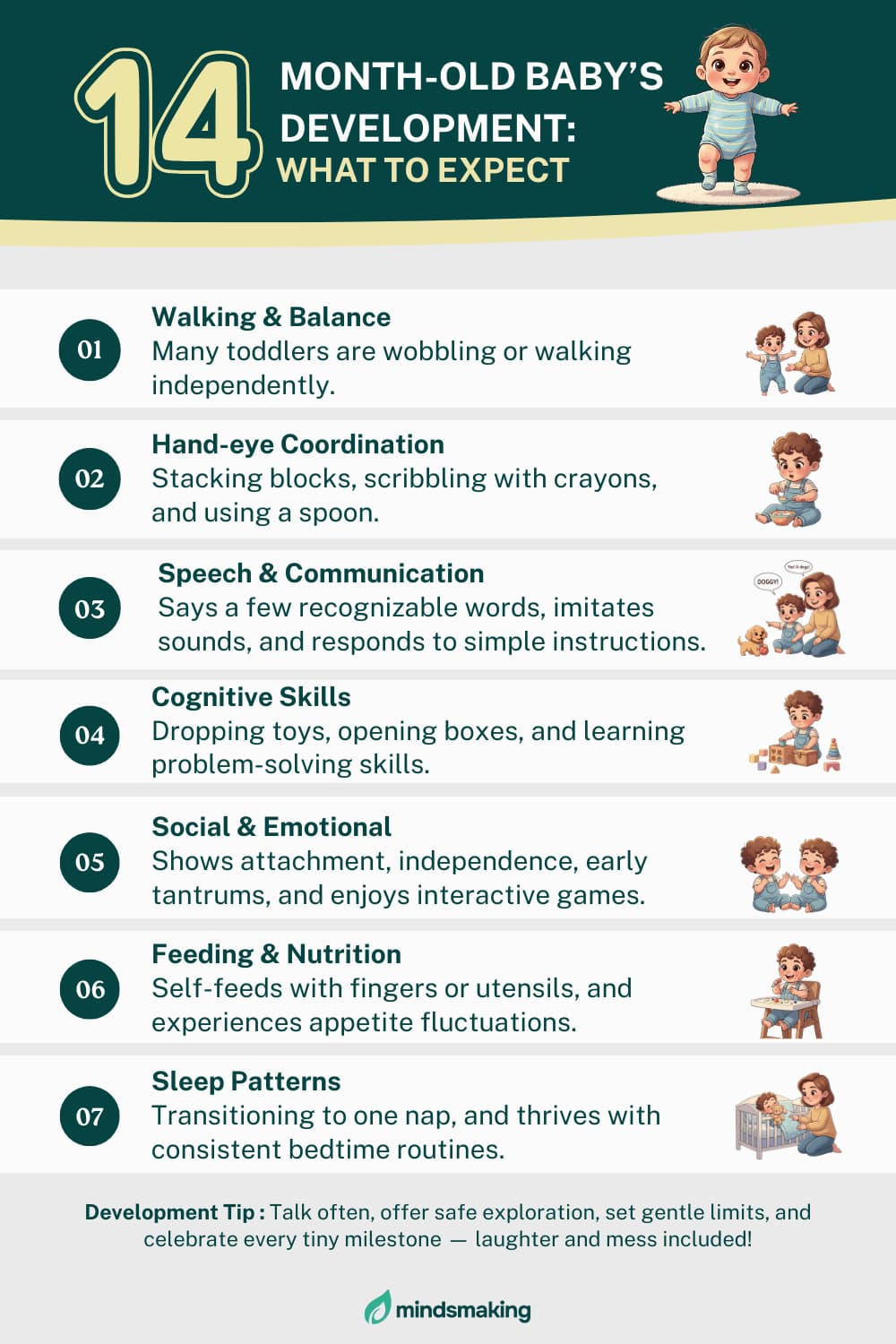
Many toddlers are walking on their own now or wobbling across the room with the cutest mix of determination and uncertainty. This is how they display their gross motor skills. Climbing suddenly becomes a favorite activity, whether it is onto the sofa, a low table, or even your neatly folded laundry. Every step, squat, or mini-climb is helping them find their balance and hit important baby milestones, even if it makes you double-check that the TV remote survived another day.
Improved Hand-Eye Coordination
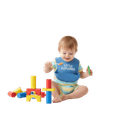
Hand-eye coordination is improving fast. Your toddler might be stacking blocks, knocking them over, and trying again, or scribbling with crayons and proudly showing you their artwork. Using a spoon is part of their baby activities now, though more food may end up on the floor than in their mouth. Do not worry because it is all part of learning, exploring, and growing independence. It also shows that their fine motor skills are developing.

Energy Burst
Toddlers at this stage are almost never still. Curiosity sends them wandering around, climbing anything climbable, and testing their balance at every turn. These bursts of energy are exhausting for you but vital for their standing, coordination, and confidence. Just be ready to follow them around, marvel at their persistence, and maybe, occasionally, laugh at the chaos.
Cognitive Development
Your toddler’s mind is full of curiosity and little moments of understanding that will make you laugh, and sometimes wonder how they figured that out. This stage of your 14-month-old baby’s development is full of discoveries that show how quickly they are learning about the world. Here is what to expect at 14 months:
Problem-Solving: Your little one is starting to figure out how things work. They might open a box, peek inside, and shut it again just to test if it behaves the same way each time. Matching shapes, stacking blocks, or figuring out how a toy works shows that their problem-solving skills are growing fast. Every small success is a milestone in brain development, and a reason to cheer.
Memory Growth: You will notice your toddler remembering routines, favorite people, and beloved toys. They may go straight to their favorite cup at snack time or squeal with delight when Grandma walks in. These little signs of memory show how your toddler's brain is developing.
Cause and Effect: When your toddler drops a spoon just to watch it fall or knocks over a tower of blocks just to see what happens, that is not intentional trouble but learning. Toddlers at this age are fascinated by how their actions create results. This growing understanding of cause and effect helps them explore independence, test limits, and learn how the world responds to them.
Language and Communication
Your little toddler is now finding their voice at 14 months. At this stage, communication becomes more than just babbling; it is about connection, imitation, and those precious first real words that melt your heart. You will find yourself talking more, repeating familiar words, and clapping like a proud fan whenever they try to say something that sounds even remotely like “mama” or “ball.” Here is what to expect from your toddler’s growing language and communication skills:
Speech: Your toddler may be saying 3 to 5 recognizable words, though what is recognizable is sometimes up for debate. “Ba” could mean “ball,” “bottle,” or “bye-bye,” and only you might understand the difference. They still rely heavily on gestures and tone to get their message across. Every new word is a huge win, so celebrate those little sound victories like they just won a spelling bee.
Understanding More: Your child’s comprehension is racing ahead of their speech. When you say, “Come here,” or “Give it to me,” they will often respond unless they suddenly discover that pretending not to hear you is way more fun. This stage shows just how fast they are picking up communication skills and routines. They might not always cooperate, but they do understand you.
Gestures and Imitation: If your toddler waves, points, or copies your speech tone, it is a sign of healthy communication growth. You might notice them babbling in the same rhythm you use when talking on the phone or dramatically scolding a toy just like you did earlier. It is not to poke you, but learning in action. Toddlers this age love to imitate adults, and it is one of their favorite baby activities. So go ahead and chat, wave, and exaggerate because your little one is watching, listening, and soaking it all in.
Read This Next
No posts available
Social and Emotional Development
Your 14-month-old baby’s development is all about big feelings in a tiny body and the joy of daily interactions. One moment they are proudly wobbling off on their own, determined to do everything by themselves, and the next, they are racing back for a cuddle because you dared to step away. This tug-of-war between courage and comfort is one of the sweetest experiences. It is their little way of saying, “I want to do it alone, but please don’t go too far.” If they cry when you leave the room, it is not manipulation, but separation anxiety, a sign of how deeply attached they are to you.
As emotions grow, your toddler begins to show early signs of temperament, with a few tantrums here and a little frustration there. Their temper might flare when you refuse to let them chew on the remote or when snack time does not come fast enough. Those mini meltdowns are not bad behavior; they are simply big feelings in a small package. Their words are few, their patience is still under construction, and you are their safe space to figure it all out. Stay calm, offer comfort, and remember that every tear and tiny tantrum is helping your baby learn to manage frustration and express themselves better each day.
Your little one now loves playful connections with games like peekaboo, pat-a-cake, and pretending to feed you their half-chewed biscuit. These playful baby activities are how your child learns empathy, communication skills, and the joy of connection. Imitating your laugh, waving bye-bye, or “helping” you sweep the floor builds their confidence and sense of belonging.
Feeding and Nutrition
Mealtimes at this stage are a mix of joy, laughter, and a whole lot of mess. Your 14-month-old toddler now enjoys soft table foods and loves the freedom of self-feeding. Whether it is tiny bits of cooked veggies, diced fruits, or rice, they are eager to explore textures and tastes. If you are still breastfeeding or formula feeding, that is perfectly fine; it is all part of their balanced routine. What is most exciting is watching those little fingers grab snacks with pride, even if half of them end up on the floor.
There will be days when your little one eats like they just discovered food for the first time, and others when they will shake their head at every bite like a picky eater. Do not panic because appetite changes are completely normal baby development behavior around 14 months. Growth has slowed a bit, so some days they will be hungry enough to finish your plate, and other days they will not. Just keep offering a variety of healthy meals, and trust that they’ll get what they need over time.
Your baby’s enthusiasm for using utensils may be both adorable and messy, but still introduce it to them. Expect food flying, bowls tipping, and proud smiles after every successful attempt. It is tempting to jump in and help, but letting them practice builds confidence and fine motor skills. So, keep calm, keep the wipes close, and remember that behind every splatter of mashed potato is a happy and growing baby finding their rhythm at the family table.
Sleep Patterns
Bedtime these days feels like a beautiful negotiation. Around this stage, many toddlers are moving from two naps to one, and it can feel like your baby is personally testing the limits of nap schedules everywhere. One day, they will snooze peacefully with two short naps, and the next, they will decide naps are for amateurs. Do not worry, this transition phase is a normal part of your 14-month-old baby’s development. It is just their growing body learning to balance playtime, learning activities, and rest.
At night, most little ones sleep for about 11 to 12 hours. This is a reality you probably never thought would come to light during your 1-week-old baby's development. Still, there might be the occasional midnight wake-up, often for comfort, a quick cuddle, or just to make sure you have not vanished forever. It is a phase tied to separation anxiety and emotional growth, so those midnight check-ins are more about love than troubles. A calm reassurance or gentle pat usually does the trick.
When it comes to bedtime routines, consistency should be your best friend. A soothing bath, dim lights, or a quiet lullaby can help signal that the day is winding down. See it as your baby’s emotional reset button and a chance to slow that toddler energy before sleep takes over. Whether it is storytime, soft humming, or a favorite blanket, these baby routines help your child feel secure, loved, and ready to sleep off peacefully.
How to Encourage Development
Your toddler is growing fast and learning from everything you do right now. The best way to support their development is not through fancy toys or strict routines, but through everyday moments filled with love, patience, and play.
- Encourage communication by talking often, reading books, and naming objects around your toddler to build their language and understanding.
- Promote independence by letting your toddler try simple tasks like feeding themselves, stacking toys, or helping with little chores, even if it gets messy.
- Set limits gently by using calm redirection instead of harsh “no’s;” help your toddler learn boundaries with love and patience.
- Provide nutritious food by offering balanced meals of fruits, vegetables, grains, and proteins to support their energy, growth, and overall baby development.
When to Talk to Your Doctor
Every parent worries sometimes, it is part of the job. You watch your little one grow, hit new baby milestones, and still wonder if everything is happening on time. Basically, every toddler develops differently, but there are moments when checking in with your doctor is the right call.
- If your toddler is not attempting to stand, cruise, or take steps, it is a good idea to bring it up during your next appointment.
- If your child shows little interest in sounds or interacting with people, it might be more than a quiet personality.
- If your toddler is not babbling or saying any recognizable words, mention it to your pediatrician.
A Word from Mindsmaking
Take a moment to celebrate how far your little one has come. From the moment you first held them in your hands to now, as they use new words and take their first steps, every part of your toddler’s journey is something truly special.
It is easy to compare, but remember: every child grows at their own pace and in their own way.
Be patient with the process, playful in the moments, and present in the journey. Some days will feel messy, loud, and a little unpredictable, but they’re also filled with love, laughter, and tiny victories that matter more than you realize.
Was this article helpful?
How many stars are you giving this article?
Leave a comment
Your email address will not be published.