Why Toddlers Throw Things and How to Make Them Stop
Pexels

Written by Mindsmaking Medical Writer

Fact Checked by Mindsmaking Professionals
19th, October, 2025
Understand what’s behind your toddler’s throwing phase from curiosity to communication and learn science-backed tips to help them stop safely and calmly.
If your little one just launched a spoonful of peas across the kitchen, flung a plate, or decided that their sippy cup belongs on the floor, you’re not alone. Throwing food and other objects is a common phase that nearly every parent experiences.
Throwing things isn’t “bad behavior.” It’s actually a normal and healthy part of development, helping toddlers explore boundaries, practice coordination, and reach important developmental milestones.
Key Takeaways
Toddlers throw things out of curiosity, to seek attention, to test boundaries, and to express emotions. Throwing things is completely normal with toddlers.
To respond without overreacting, you should remain calm and not laugh or yell, redirect the child to throw something else, like a toy, set clear boundaries about throwing, and praise them when they listen to you.
Include them in activities like sensory play, throwing soft toys, rolling objects instead of throwing, and a game of throwing objects into a basket, to redirect their energy.
Worry about a toddler's behavior when they constantly throw things out of frustration, intentionally want to hurt people, don't understand firm boundaries, don't maintain eye contact, don't speak after age 2, and throw objects in response to loud noises.
Why Do Toddlers Throw Things?
Throwing is one of the earliest ways little ones explore the world and communicate before they have all the words. It can be about curiosity, emotions, testing limits, or simply getting your attention. Let’s break down the main reasons behind this classic toddler behavior.
Exploration and Curiosity (Ages 1–2)
Ever watched your tiny human pick up a toy, eye it suspiciously, and then hurl it across the room like they’re auditioning for the Olympics? Around ages 1–2, toddlers are basically little scientists in sneakers. They’re starting to realize, “Hey, I have power over this thing!” and throwing it becomes their way of asking, “What happens if I do this?” So when that block sails across the floor (or your coffee table), it’s not a personal attack it’s a hands-on physics lesson. Gravity? Check. Cause and effect? Check. Hand-eye coordination? Double check. Sure, your nerves might be tested, but your toddler is actually leveling up their brain and motor skills, one flying object at a time.
Attention-Seeking Behavior
Ever been hit by a flying sippy cup and thought, “Why me?” Welcome to toddler life. Your tiny human has discovered a foolproof way to get your attention: throwing stuff. And let’s be honest, it works every time. Whether you gasp, groan, or do your best dramatic “Oh no!” hey’re soaking it all up like gold. Before your toddler has the words to say, “Hey, notice me!” or “I exist!” their arms do the talking. So, that mid-air toy? It’s basically their version of waving hello… with a little chaos sprinkled in.
Emotional Expression
Ever been on the receiving end of a flying toy during a toddler meltdown and felt like it was personal? Take a deep breath. It’s not. Sometimes toddlers throw things because they are overwhelmed. A missed nap, a broken crayon, or a denied cookie can feel like a tragedy of epic proportions to them. Without the words to say “I am mad” or “I am sad,” their little hands do the talking. Think of it as a very dramatic, very tiny way of expressing feelings. It’s not aggression or defiance; it’s emotional chaos in action. Your calm response is basically giving them a masterclass in handling big feelings safely. Consider it extra credit if you can stay calm and dodge the flying toys without losing your cool this time.
Testing Boundaries
Sometimes things get thrown just to see what will happen. It’s like an endless experiment of let’s try it again and see how Mom or Dad reacts. Each toss is a tiny test of limits, with you as the main participant. Consistency and gentle boundaries give a sense of security. When rules flip from no throwing one day to laughter the next, it only creates confusion. Staying steady with your responses teaches them what’s safe and what’s not, without turning every moment into a battle. Think of it as giving them a framework to explore limits while keeping chaos in check.
How to Respond Without Overreacting
Stay Calm and Neutral: This looks easier said than done, right? But staying calm is key, because shouting, laughing, or showing frustration gives toddlers what they’re often seeking, which is a reaction. Model the composure you want to see by keeping your tone soft and steady. You can say, “I see you threw your toy. Let’s pick it up together.” This approach teaches a gentle discipline method that works far better than punishment.
Redirect the Behavior: Some toddlers throw things because they love motion, and you can give that motion a safe outlet. You can offer soft balls, bean bags, or plush toys that they can toss without hurting themselves or causing damage. You can also redirect with alternatives like, “We throw balls outside,” or “You can roll your car on the floor”.
Label Emotions: When your toddler is upset, you can use simple and validating language like, “You’re mad because you wanted more milk.” This helps them link what they’re feeling to words and build early communication skills and emotional awareness. Over time, they’ll replace throwing things with verbal expressions.
Set Clear Boundaries: Setting boundaries early provides structure. You can use short, consistent phrases like, “We don’t throw food. Food stays on the plate”. Most times, toddlers need repetition to learn certain things, so don’t be quick to think it’s defiance; it’s part of development. When you're consistent, they will learn over time.
Praise Positive Behavior: When your toddler listens and doesn't throw things, it's important to praise or reinforce their behavior with positive words or gestures like saying, “I love how you gave me the toy instead of throwing it.” Positive feedback is the secret sauce of positive parenting techniques as it motivates better behavior.
Activities to Help Channel Energy Positively
Toddlers are tiny tornadoes that are constantly bursting with a lot of energy, and as parents, there are ways you can help them release it constructively. Activities such as:
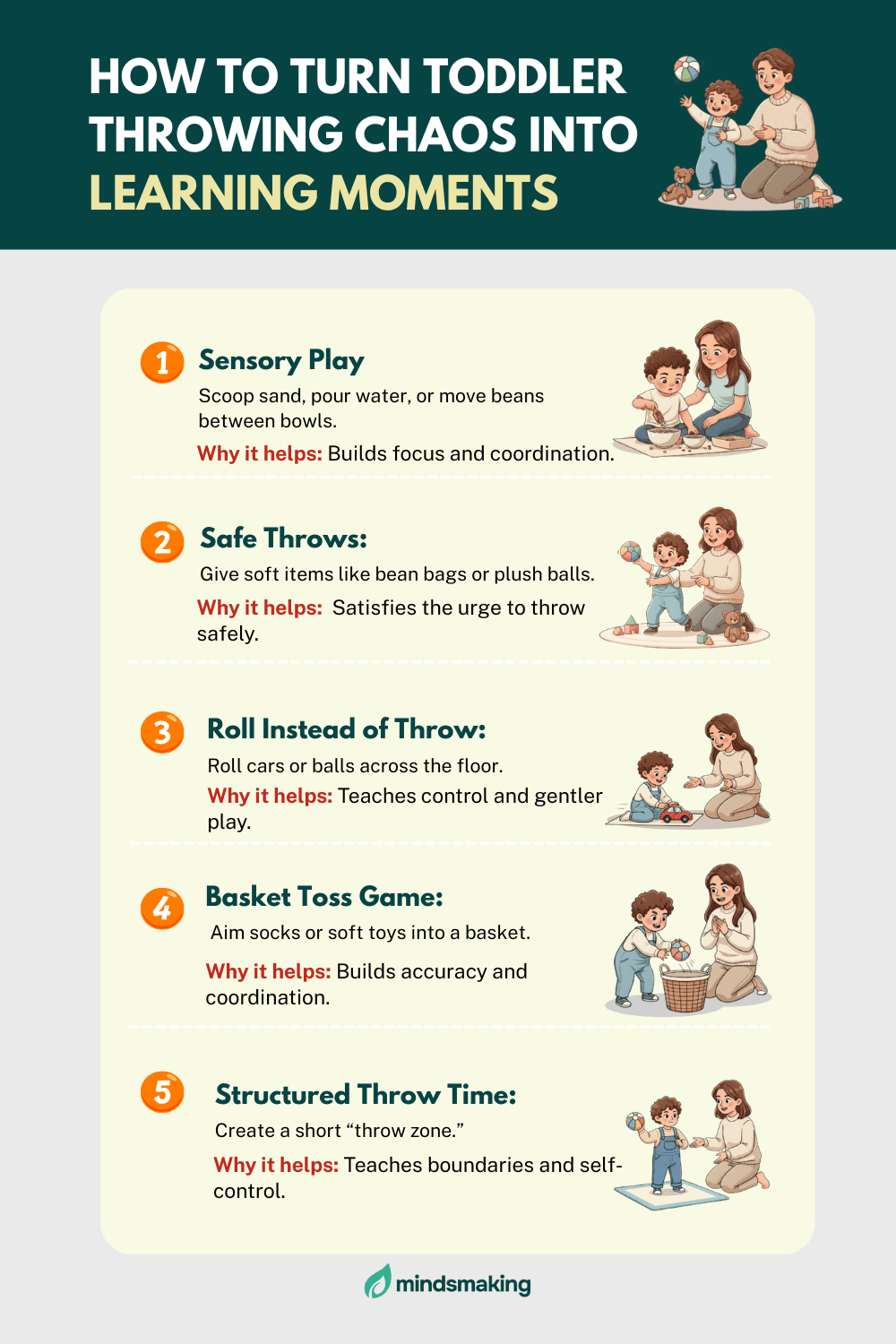
- Sensory play activities like scooping sand, pouring water, or transferring dry beans between bowls keep hands busy while teaching focus and coordination.
- Give them soft, lightweight objects like bean bags, plush toys, or fabric balls they can toss freely. This satisfies their craving for action without risk.
- Rolling toys instead of throwing them across the floor. Try rolling cars or balls across a safe space.
- Turn throwing into a game by setting up a “basket toss” game using stuffed animals, socks, or foam balls. Simply have your child aim for a laundry basket or box.
- Create structured playtime that allows safe throwing so they can master self-control in a fun way. These activities can turn toddler behavior challenges into an opportunity for learning.
Read This Next
No posts available
When to Worry About Throwing Behavior
Throwing in toddlers is often a normal part of exploring the world, but it can sometimes signal underlying frustration, communication delays, or sensory challenges that may need closer attention. Signs to watch for include:
- Constantly hurling objects out of frustration
- Aggressively throwing with the intent to hurt others
- Not responding to boundaries or simple redirection, even after consistent guidance
- Avoiding eye contact or not engaging in interactive play
- Not speaking by around two years of age
- Reacting to loud noises, bright lights, or certain food textures by throwing objects
In such cases, talking to a pediatrician, speech therapist, or child psychologist can help uncover what exactly could be behind the behavior, as early support can improve the chances of managing such toddler behavior.
A Word From Mindsmaking
Throwing things is a phase, a messy, noisy, occasionally nerve-testing phase that most toddlers would go through, but it’s temporary. Every flying toy or splattered banana is a toddler’s way of saying, “I’m learning!”, and with empathy, consistency, and a bit of humor, you can guide your child toward calmer ways of expressing themselves.
Every throw is a chance for you to teach calm, connection, and communication; the very foundations of lifelong emotional intelligence.
Was this article helpful?
How many stars are you giving this article?
Leave a comment
Your email address will not be published.